GS 2: GovernanceGS 3: Environment & EcologyGS 3: EconomyPrelimsGS 3: Changes in Industrial Policy and Effects on Industrial Growth
Critical Ban, Pg6
India bans lithium-ion battery black mass export to boost domestic recycling, but policy gaps threaten dumping and hinder critical mineral recovery.
Practice MCQs
898 Students attempted
Key Highlights:
- On November 10, the Directorate General of Foreign Trade (DGFT) banned the export of lithium-ion battery black mass.
- Black mass is an intermediate product from shredded spent batteries and factory scrap, containing valuable minerals like lithium, nickel, cobalt, manganese, and graphite.
- The ban aims to ensure feedstock for domestic refiners, increase their capacity utilization, and attract investment in India's recycling sector.
- India is heavily dependent on imports for critical minerals used in battery inputs.
- The current Battery Waste Management Rules, 2022, face challenges with undervalued Extended Producer Responsibility (EPR) certificates.
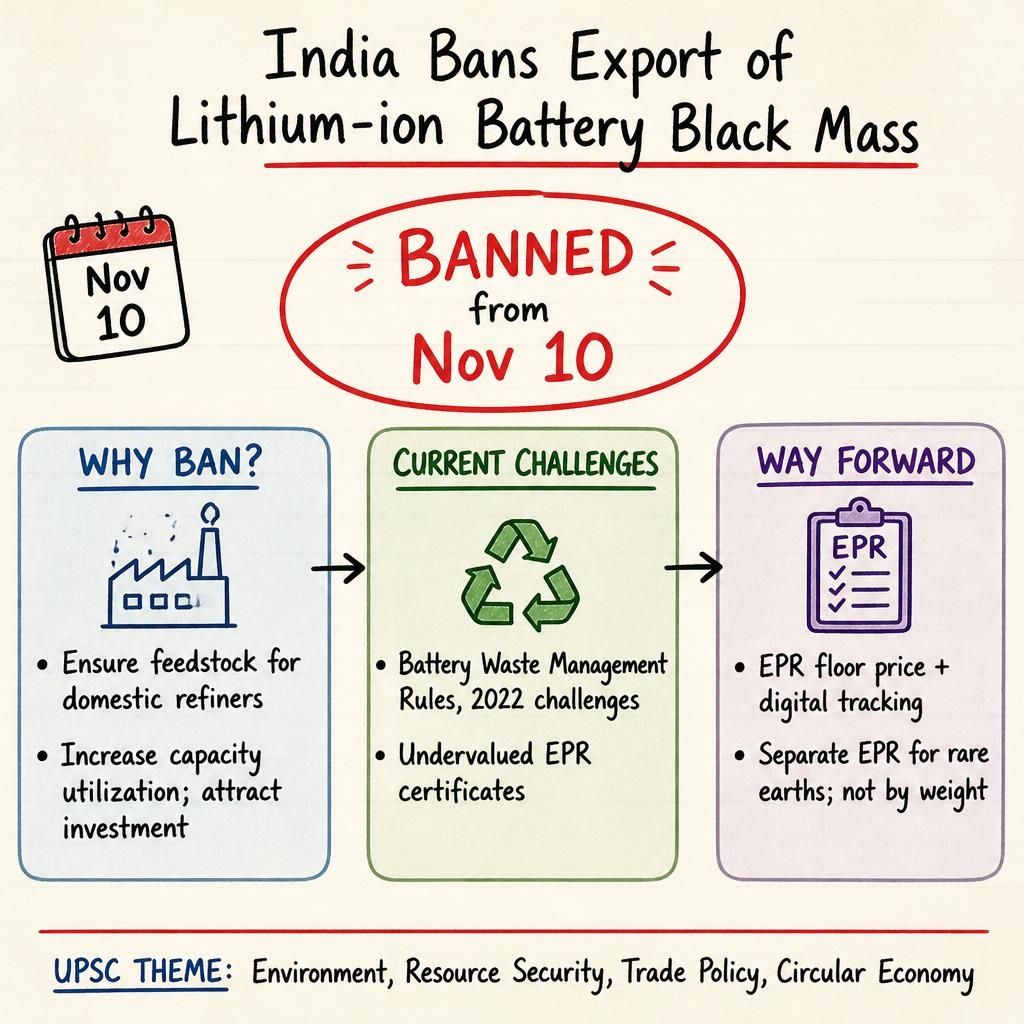
Li Ion Battery Exports.jpg
Detailed Insights:
- The export of black mass was moved from the "free" to the "prohibited" list of exports.
- While the ban redirects supply, it will not automatically create a market and ecosystem for recycling, potentially leading to dumping if downstream processing is not developed.
- Further investment and policy support are crucial for specialized chemical processing units downstream, which can directly feed into indigenous lithium-ion battery manufacture.
- Lithium-ion battery recycling is an emerging segment in India with only a few dozen licensed operators, unlike the established ecosystem for lead-acid battery recycling.
- To foster a robust recycling market, the government must address the price gap and ensure EPR certificates reflect the full cost of recovery.
- A floor price for EPR certificates, coupled with digital tracking, is suggested to incentivize high-yield recycling plants over mere "on-paper" compliance.
- Rare earths recycling remains a missed opportunity for India due to policy gaps, despite the presence of resources like monazite beach sands.
- Current e-waste rules do not mandate the separation of rare earths, and a separate EPR category with appropriate payment mechanisms (not by weight) is needed for these critical minerals.
Key Concepts Involved:
- Black mass: An intermediate product obtained from shredding spent batteries and factory scrap, rich in valuable metals like lithium, nickel, and cobalt.
- Extended Producer Responsibility (EPR): A policy approach where producers are responsible for the post-consumer treatment or disposal of their products.
- Rare earths: A group of 17 chemically similar metallic elements crucial for various high-tech applications.
- Monazite beach sands: Naturally occurring mineral deposits found in coastal areas, known to contain rare earth elements.

SuperKalam is your personal mentor for UPSC preparation, guiding you at every step of the exam journey.
Download the App


STUDY RESOURCES
CONTACT US
ⓒ Snapstack Technologies Private Limited