GS 1: Indian SocietyGS 2: Social JusticeGS 3: EconomyPrelimsGS 3: Land Reforms in India
Why policy needs to focus on gender wealth inequality, Pg12
Expert criticizes global reports for ignoring critical gender wealth inequality, stressing asset ownership's vital role in women's economic empowerment and well-being.
Practice MCQs
869 Students attempted
Key Highlights:
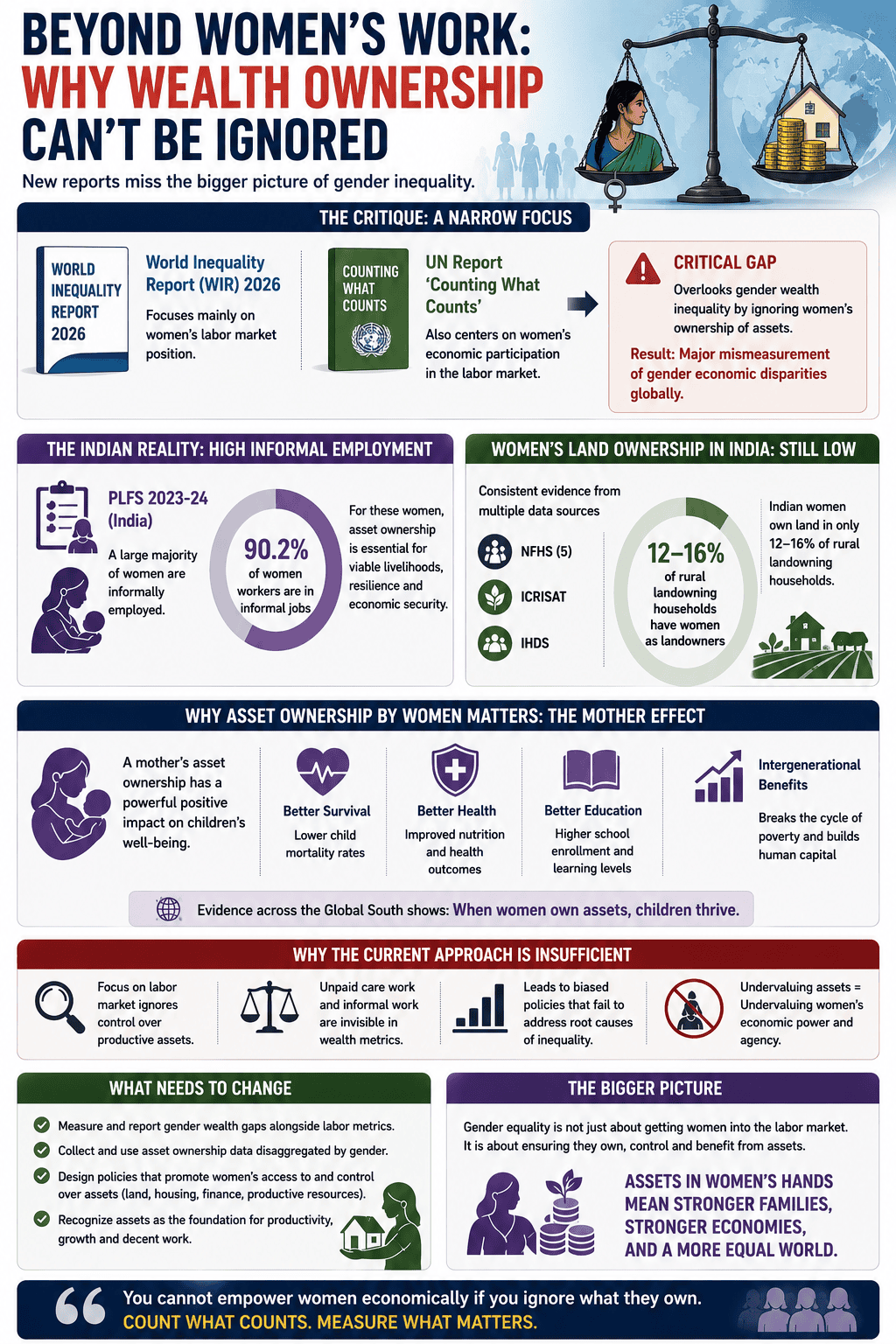
- The World Inequality Report (WIR) 2026 and the UN report 'Counting What Counts' are criticized for focusing primarily on women's labor market position, thereby overlooking gender wealth inequality.
- The article highlights that ignoring women's asset ownership leads to a significant mismeasurement of gender economic disparities globally.
- In India, the Periodic Labour Force Survey (PLFS) 2023-24 indicates that a high percentage of women are informally employed, for whom asset ownership is crucial for viable livelihoods.
- Data from sources like NFHS, ICRISAT, and IHDS consistently show that Indian women own land in only 12-16% of rural landowning households.
- The author argues that a mother's asset ownership significantly improves child survival, health, and education outcomes, especially in the Global South.
Gender inequality.png
Detailed Insights:
- Academic research has historically concentrated on women's labor market status, creating a bias that obscures the true extent of gender economic inequality.
- Wealth and asset ownership are critical for women's and children's well-being, impacting productivity, economic growth, and access to decent work.
- For women in the informal sector, particularly in agriculture, owning productive assets like land or equipment is essential for viable earnings.
- The World Inequality Lab has established that inheritance, rather than earnings, is the primary contributor to overall wealth inequality.
- Measuring gender inequality solely by average hourly earnings is problematic, especially for self-employed individuals who do not track hours worked.
- Policies addressing gender wealth inequality are crucial for reducing overall global wealth disparities and must also consider intra-household inequalities.
Key Concepts Involved:
- Gender Wealth Inequality: Disparities in asset and wealth ownership between men and women, often overlooked in economic analyses.
- Informal Sector: Economic activities that are not regulated or protected by the state, characterized by lack of formal contracts and social security.
- Asset Ownership: Legal possession of tangible or intangible property, including land, housing, financial instruments, and productive resources.
- Intra-household Inequalities: Unequal distribution of resources, power, and opportunities among members within the same household.

SuperKalam is your personal mentor for UPSC preparation, guiding you at every step of the exam journey.
Download the App


STUDY RESOURCES
CONTACT US
ⓒ Snapstack Technologies Private Limited