GS 3: EconomyPrelimsGS 3: Indian Economy, Planning, Mobilization of Resources, Growth, Development and Employment
Trade deficit jumps 430% as imports surge, Pg1
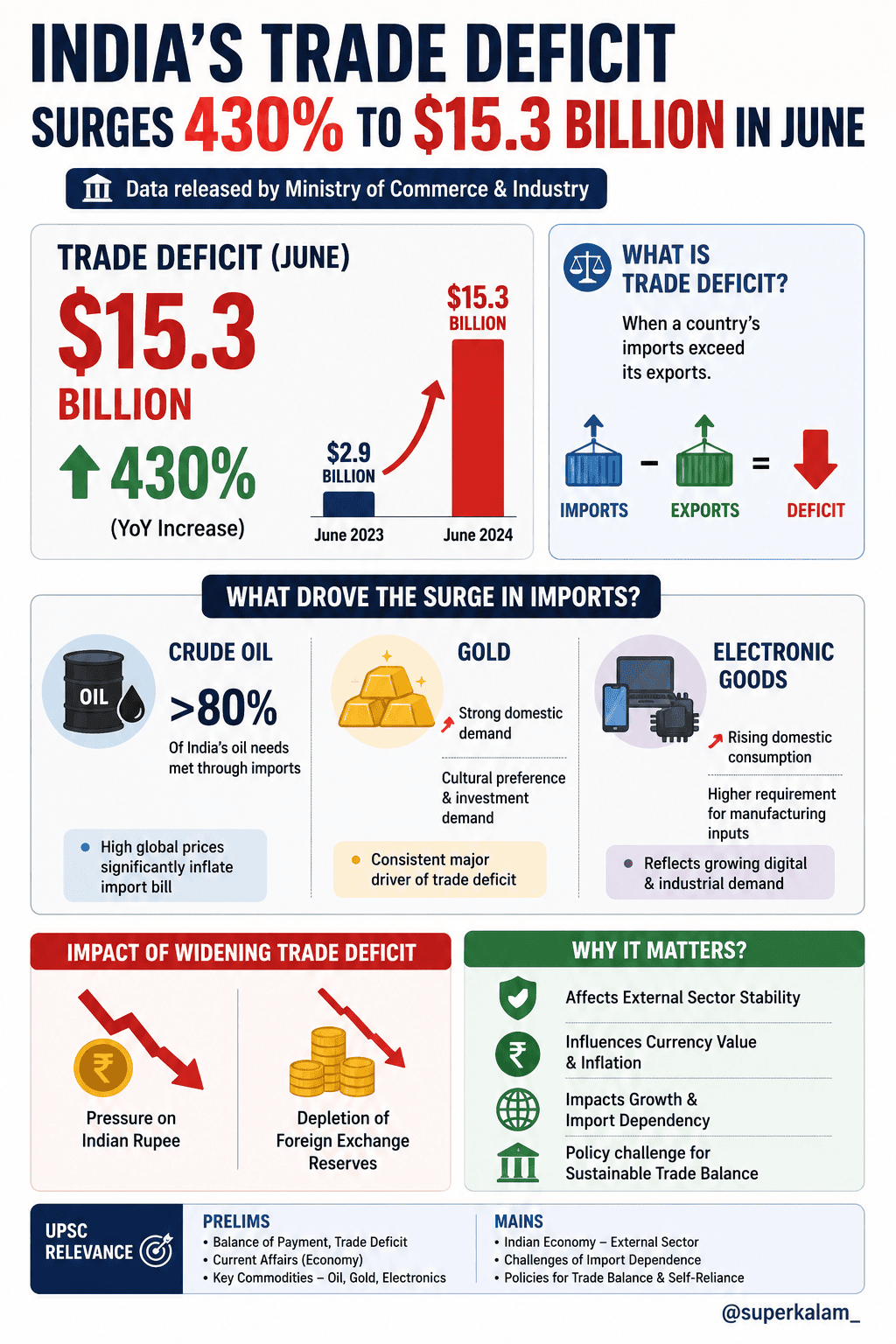
India's trade deficit skyrockets 430% to $15.3 billion in June, driven by surging crude oil and gold imports.
Practice MCQs
869 Students attempted
Key Highlights:
- India's overall trade deficit surged by 430% to $15.3 billion in June.
- This significant increase was primarily driven by a sharp rise in merchandise imports.
- Key commodities contributing to the import surge included crude oil, gold, and electronic goods.
- The data was released by the Ministry of Commerce and Industry.
Trade Deficit.png
Detailed Insights:
- The trade deficit represents the difference when a country's imports exceed its exports.
- India's substantial reliance on crude oil imports, accounting for over 80% of its needs, significantly impacts its import bill and trade balance.
- High gold imports are a consistent factor in India's trade deficit, influenced by strong domestic demand and cultural preferences.
- Rising imports of electronic goods also contributed to the widening deficit, reflecting increased domestic consumption and manufacturing input requirements.
- A widening trade deficit can put pressure on the Indian Rupee and deplete foreign exchange reserves.
- While India typically maintains a surplus in services trade, this was insufficient to offset the large merchandise trade deficit in June.
- A persistent and large trade deficit can lead to a higher Current Account Deficit (CAD), impacting the nation's macroeconomic stability.
Key Concepts Involved:
- Trade Deficit: Occurs when the value of a country's imports of goods and services exceeds the value of its exports over a specific period.
- Merchandise Imports: Refer to the import of physical goods, as opposed to services.
- Current Account Deficit (CAD): A broader measure than the trade deficit, it occurs when a country's total payments for goods, services, income, and transfers to the rest of the world are greater than its total receipts.

SuperKalam is your personal mentor for UPSC preparation, guiding you at every step of the exam journey.
Download the App


STUDY RESOURCES
CONTACT US
ⓒ Snapstack Technologies Private Limited