GS 2: GovernanceGS 3: EconomyPrelimsGS 3: Indian Economy, Planning, Mobilization of Resources, Growth, Development and EmploymentGS 3: Major Crops, Cropping Patterns and Irrigation Systems
Rising Food Prices Push Retail Inflation to 5.54% in Sept, Pg1
Retail inflation surges to 5.54% in September, highest in two years, driven by food prices, intensifying pressure on RBI for further rate hikes.
Practice MCQs
883 Students attempted
Key Highlights:
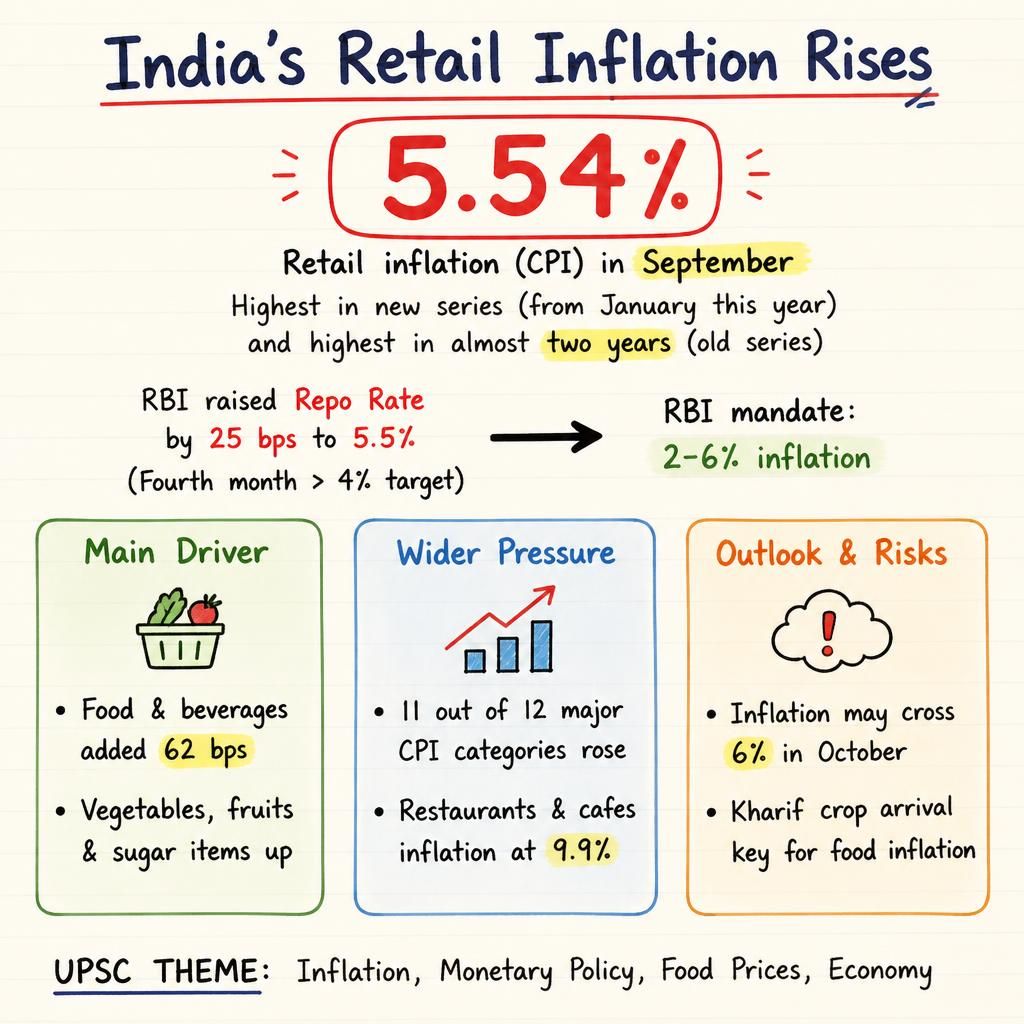
- India's retail inflation, measured by the Consumer Price Index (CPI), rose to 5.54% in September.
- This September inflation figure is the highest in the new series (starting January this year) and the highest in almost two years when considering the old series.
- The primary driver of this increase was higher prices in the 'food and beverages' category, contributing 62 basis points (bps) to the 71 bps rise.
- The Reserve Bank of India (RBI), which has a mandate to keep inflation between 2-6%, recently raised the Repo Rate by 25 bps to 5.5%.
- This marks the fourth consecutive month that inflation has exceeded the 4% target.
Inflation Numbers.jpg
Detailed Insights:
- The surge in food prices, particularly vegetables, fruits, and sugar-related items, significantly impacted the overall inflation rate.
- Beyond food, rising prices of consumer electronics, attributed to a shortage of memory chips, also contributed to the inflationary pressure.
- Economists anticipate headline inflation to potentially cross 6% in October, with data expected on November 12.
- A key concern is the "generalisation of inflation," where a broad range of household consumption items are experiencing price increases.
- In September, 11 out of 12 major CPI categories showed higher inflation, indicating a widespread inflationary trend.
- The 'restaurants and cafes' sub-category saw its inflation rise sharply to 9.9% in September from 2.73% in February, partly due to higher cooking gas prices and other input costs, possibly influenced by the West Asia war.
- Month-on-month increases in the CPI and specific categories like 'restaurants and cafes' signal inflationary momentum closely monitored by policymakers.
- Producers, including those in durables, FMCG, and automobile sectors, are expected to pass on higher costs to consumers, which will likely reflect in the CPI in coming months.
- The state of the kharif crop is crucial, as its arrival will significantly influence future food inflation.
Key Concepts Involved:
- Consumer Price Index (CPI): A measure that tracks the average change over time in the prices paid by urban consumers for a market basket of consumer goods and services.
- Repo Rate: The interest rate at which the Reserve Bank of India (RBI) lends money to commercial banks, used to control liquidity and inflation.
- Basis Points (bps): A unit of measure equal to one one-hundredth (1/100) of a percentage point, or 0.01%, used to express small changes in interest rates.
- Inflation Targeting: A monetary policy strategy where the central bank sets a specific inflation rate as its goal to maintain price stability.

SuperKalam is your personal mentor for UPSC preparation, guiding you at every step of the exam journey.
Download the App


STUDY RESOURCES
CONTACT US
ⓒ Snapstack Technologies Private Limited