GS 1: Art & CultureGS 3: EconomyPrelimsGS 1: Art FormsGS 3: Indian Economy, Planning, Mobilization of Resources, Growth, Development and Employment
Garba in Gujarat: From dancing in villages to multi-crore enterprise, Pg13
Gujarat's traditional Garba dance transforms from devotional ritual to multi-crore enterprise, gaining UNESCO Intangible Cultural Heritage status.
Practice MCQs
883 Students attempted
Key Highlights:
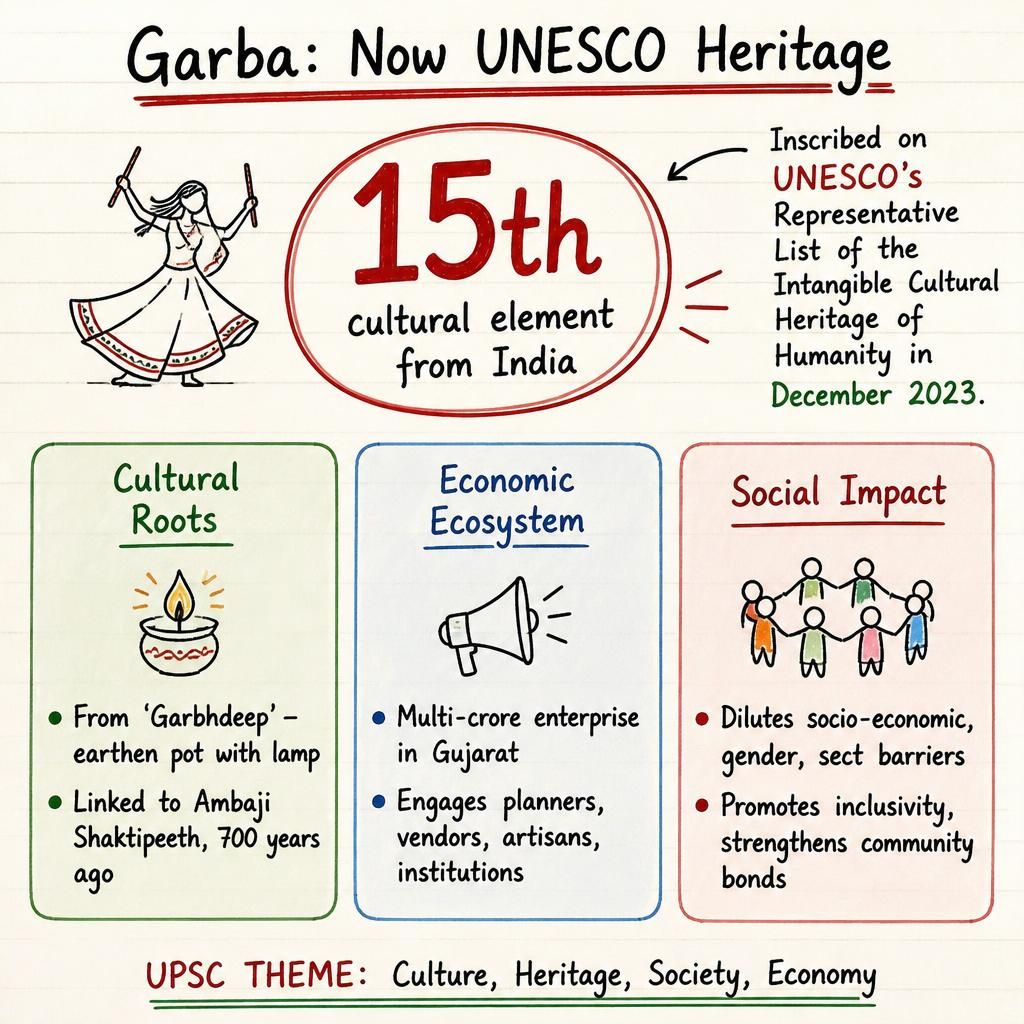
- Garba, the traditional folk dance of Gujarat, was inscribed on UNESCO's Representative List of the Intangible Cultural Heritage of Humanity in December 2023.
- This inclusion marks Garba as the 15th cultural element from India to receive this prestigious recognition.
- The dance is a central part of the nine-night Navratri festival, dedicated to the worship of feminine energy or Shakti.
- Garba has evolved from a devotional ritual performed in homes and temples to a multi-crore economic enterprise in Gujarat.
- Modern Garba celebrations encompass diverse forms, including theme-based events, traditional 'mandli' and 'sheri' Garba, and large-scale commercial events.
Garba.jpg
Detailed Insights:
- The term 'Garba' originates from the Sanskrit word 'Garbhdeep', signifying an earthen pot with a lamp, symbolizing the human body and divine soul.
- Its origins are linked to ancient dynasties, agricultural communities, and the era of Lord Krishna, with significant association with the Ambaji Shaktipeeth established around 700 years ago.
- Traditionally performed by women, Garba has expanded to become a community celebration involving various social groups, event planners, and clubs.
- The economic ecosystem surrounding Navratri Garba includes party plot owners, choreographers, sound and light providers, food vendors, and artisans involved in textiles, jewelry, pottery, and carpentry.
- Educational institutions now offer professional courses in dance, music, costume design, and event management, further contributing to the Garba industry.
- While evolving with contemporary styles and fashion, Garba faces challenges from increasing commercialization and the visible presence of communal elements.
- Garba fosters social equality by diluting socio-economic, gender, and rigid sect structures, promoting inclusivity and strengthening community bonds.
Key Concepts Involved:
- Garba: A devotional and ritualistic folk dance from Gujarat, performed primarily during the Navratri festival to honor feminine energy.
- Navratri: A nine-night Hindu festival celebrated in autumn, dedicated to the worship of the goddess Durga and her nine forms.
- Intangible Cultural Heritage of Humanity: Cultural practices, expressions, knowledge, and skills recognized by UNESCO as vital for cultural diversity and human creativity.## Key Highlights:
- Garba, the traditional folk dance of Gujarat, was inscribed on UNESCO's Representative List of the Intangible Cultural Heritage of Humanity in December 2023.
- This inclusion marks Garba as the 15th cultural element from India to receive this prestigious recognition.
- The dance is a central part of the nine-night Navratri festival, dedicated to the worship of feminine energy or Shakti.
- Garba has evolved from a devotional ritual performed in homes and temples to a multi-crore economic enterprise in Gujarat.
- Modern Garba celebrations encompass diverse forms, including theme-based events, traditional 'mandli' and 'sheri' Garba, and large-scale commercial events.
Detailed Insights:
- The term 'Garba' originates from the Sanskrit word 'Garbhdeep', signifying an earthen pot with a lamp, symbolizing the human body and divine soul.
- Its origins are linked to ancient dynasties, agricultural communities, and the era of Lord Krishna, with significant association with the Ambaji Shaktipeeth established around 700 years ago.
- Traditionally performed by women, Garba has expanded to become a community celebration involving various social groups, event planners, and clubs.
- The economic ecosystem surrounding Navratri Garba includes party plot owners, choreographers, sound and light providers, food vendors, and artisans involved in textiles, jewelry, pottery, and carpentry.
- Educational institutions now offer professional courses in dance, music, costume design, and event management, further contributing to the Garba industry.
- While evolving with contemporary styles and fashion, Garba faces challenges from increasing commercialization and the visible presence of communal elements.
- Garba fosters social equality by diluting socio-economic, gender, and rigid sect structures, promoting inclusivity and strengthening community bonds.
Key Concepts Involved:
- Garba: A devotional and ritualistic folk dance from Gujarat, performed primarily during the Navratri festival to honor feminine energy.
- Navratri: A nine-night Hindu festival celebrated in autumn, dedicated to the worship of the goddess Durga and her nine forms.
- Intangible Cultural Heritage of Humanity: Cultural practices, expressions, knowledge, and skills recognized by UNESCO as vital for cultural diversity and human creativity.

SuperKalam is your personal mentor for UPSC preparation, guiding you at every step of the exam journey.
Download the App


STUDY RESOURCES
CONTACT US
ⓒ Snapstack Technologies Private Limited