GS 2: GovernanceGS 2: International RelationsGS 3: EconomyPrelimsGS 2: Bilateral, Regional and Global Groupings and Agreements
BRICS condemns unilateral tariffs, backs WTO reforms, Pg15
BRICS nations condemn rising unilateral tariffs and protectionist measures, advocating for comprehensive World Trade Organization reforms to strengthen the multilateral trading system.
Practice MCQs
876 Students attempted
Key Highlights:
- BRICS nations, in the New Delhi Declaration 2026, condemned the rise of unilateral tariff and non-tariff measures, citing actions by the US and EU.
- The declaration stated that these protectionist measures distort trade and are inconsistent with World Trade Organisation (WTO) rules.
- BRICS members advocated for comprehensive WTO reforms to enhance its responsiveness to emerging markets and developing economies.
- The group also condemned the imposition of unilateral coercive measures, such as economic sanctions, highlighting their negative implications for human rights and development.
- BRICS reaffirmed support for foundational WTO principles, including Most-Favoured-Nation (MFN) Treatment and Special and Differential Treatment (S&DT).
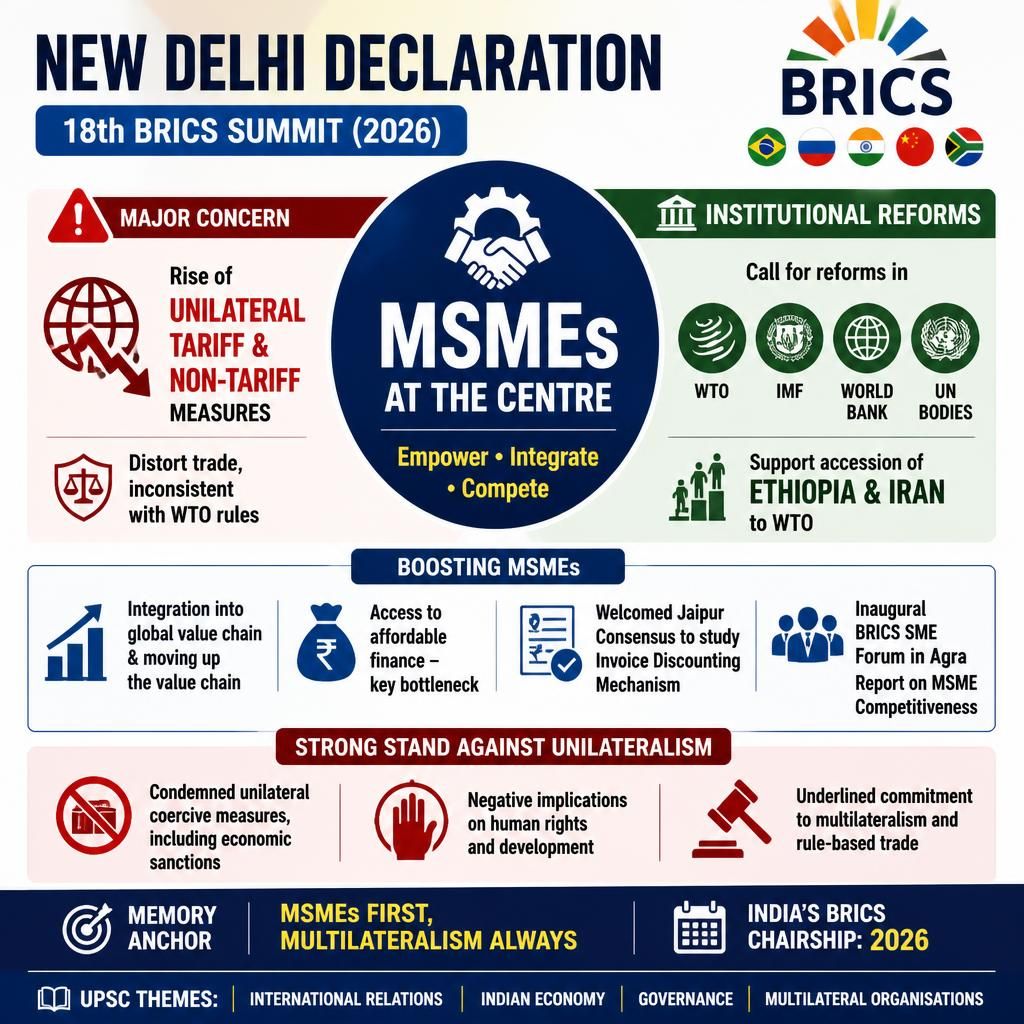
Call for Reforms.jpg
Detailed Insights:
- The BRICS condemnation addresses protectionist policies like US tariffs and EU carbon tariffs, which are seen as trade-restrictive actions.
- EU carbon tariffs are specifically criticized for disregarding Special and Differential Treatment (S&DT) provisions meant for developing nations.
- Unilateral sanctions are noted to disproportionately harm vulnerable populations, exacerbating economic disparities and environmental challenges.
- BRICS aims to strengthen a non-discriminatory, open, equitable, transparent, fair, inclusive, predictable, and rules-based multilateral trading system.
- The group seeks constructive engagement in WTO reforms to bolster its authority, effectiveness, inclusiveness, and relevance.
- BRICS also recognizes the importance of integrating plurilateral initiatives into the WTO legal framework, particularly those focused on development.
Key Concepts Involved:
- BRICS: An association of five major emerging national economies: Brazil, Russia, India, China, and South Africa.
- World Trade Organisation (WTO): An intergovernmental organization that regulates and facilitates international trade.
- Most-Favoured-Nation (MFN) Treatment: A WTO principle ensuring that a country grants the same trade advantages to all its trading partners.
- Special and Differential Treatment (S&DT): Provisions in WTO agreements offering developing countries special rights and flexibilities due to their unique challenges.
- Unilateral Coercive Measures: Actions taken by one state to compel another state to change its policy, often through economic sanctions, without multilateral agreement.

SuperKalam is your personal mentor for UPSC preparation, guiding you at every step of the exam journey.
Download the App


STUDY RESOURCES
CONTACT US
ⓒ Snapstack Technologies Private Limited