GS 2: GovernanceGS 2: Social JusticeGS 2: International RelationsPrelimsGS 2: Government policies and interventions for development in various sectors
Mizoram to count refugees separately during Census, Pg14
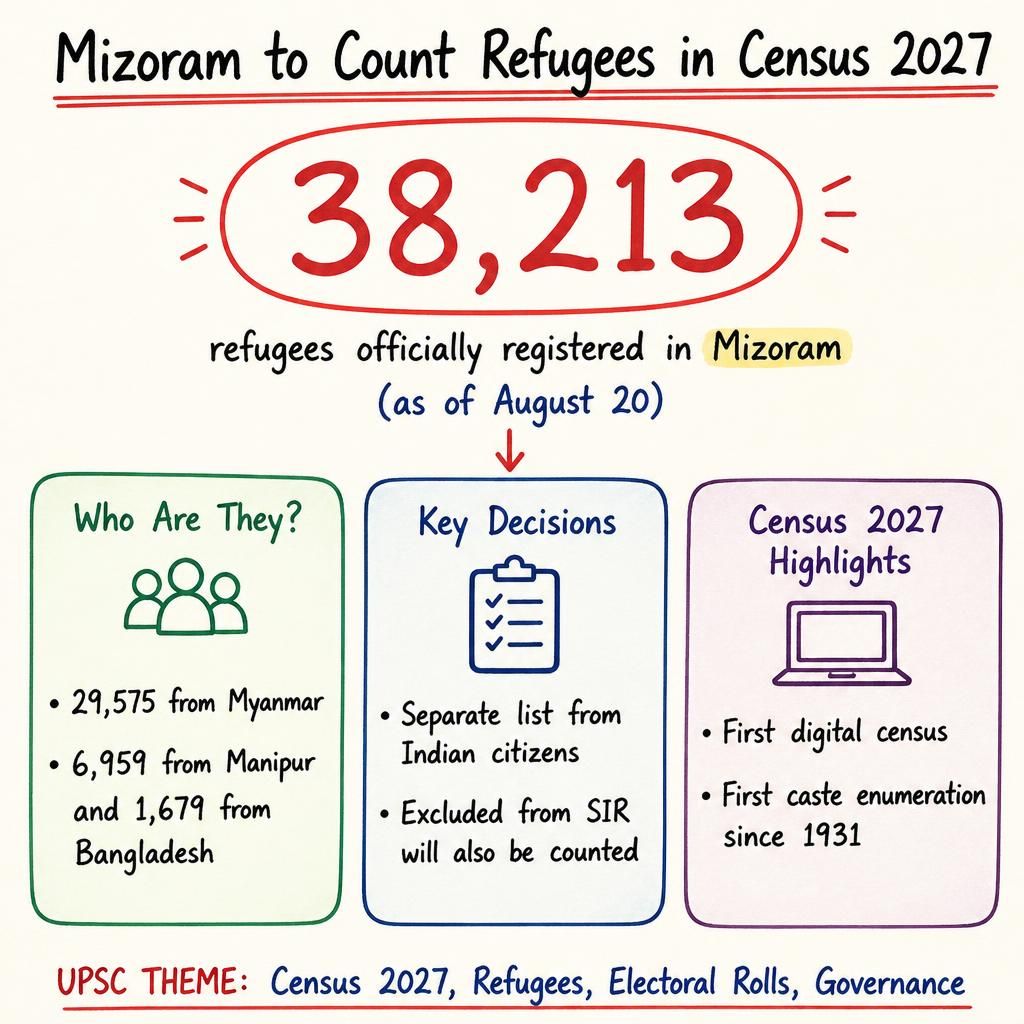
Mizoram decides to separately enumerate over 38,000 refugees from Myanmar, Manipur, and Bangladesh in the 2027 Census, aiming for early completion.
Practice MCQs
876 Students attempted
Key Highlights:
- Mizoram has decided to enumerate refugees temporarily residing in the state as part of the Census 2027, recording their details on a list separate from Indian citizens.
- The state aims to be the first in India to complete the Census 2027 work.
- As of August 20, 38,213 refugees were officially registered, with 29,575 from Myanmar, 6,959 from Manipur, and 1,679 from Bangladesh.
- Biometric enrollment for the Bawm and Chin communities is largely complete, but individuals are not compelled to disclose their Aadhaar numbers.
- People excluded from the Special Intensive Revision (SIR) of electoral rolls will also be counted in the census.
Mizoram Census.jpg
Detailed Insights:
- The Census 2027 will be India's first digital census, conducted in two phases: Houselisting (April-September 2026) and Population Enumeration (February 2027).
- This census will include caste enumeration for the first time since 1931.
- Refugees from Myanmar, primarily the Chin community, began arriving in Mizoram following the military coup in February 2021.
- The Bawm community from Bangladesh sought refuge in Mizoram in November 2022 due to a military offensive.
- Kuki-Zomi people from Manipur fled to Mizoram in May 2023, escaping ethnic conflicts.
- These refugee communities share ethnic ties with Mizoram's dominant Mizo community.
- India is not a signatory to the 1951 Refugee Convention or its 1967 Protocol, and lacks a specific national law for refugees.
- Refugee status in India is determined on a case-by-case basis by the Central Government, often with assistance from the UNHCR.
- The separate enumeration aims to gather data for policy formulation without conferring Indian citizenship to the refugees.
- The Special Intensive Revision (SIR) is an exercise by the Election Commission of India (ECI) to verify and update electoral rolls, ensuring accuracy and inclusivity.
Key Concepts Involved:
- Census of India: A decennial enumeration of the Indian population, providing crucial demographic and socio-economic data for governance and policy planning.
- Refugee: A person who has been forced to leave their country due to persecution, war, or violence, seeking protection in another country.
- Aadhaar: A 12-digit unique identification number issued by the Unique Identification Authority of India (UIDAI) to residents, based on biometric and demographic data.
- Special Intensive Revision (SIR): A rigorous exercise conducted by the Election Commission of India to update and purify electoral rolls through detailed verification processes.
- 1951 Refugee Convention: A United Nations multilateral treaty that defines who is a refugee and outlines the rights of refugees and the legal obligations of states to protect them.

SuperKalam is your personal mentor for UPSC preparation, guiding you at every step of the exam journey.
Download the App


STUDY RESOURCES
CONTACT US
ⓒ Snapstack Technologies Private Limited