GS 3: Environment & EcologyPrelimsGS 3: Conservation, Pollution and DegradationGS 1: Changes in Critical Geographical Features, Water Bodies, Ice Caps, Flora and Fauna
Global warming is turning sex reversal in frogs into extinction risk, Pg2
Rising temperatures cause sex reversal in frogs, leading to reduced reproductive success and heightened extinction risk for amphibians globally.
Practice MCQs
876 Students attempted
Key Highlights:
- Global warming is increasing sex reversal in amphibians, posing a significant extinction risk.
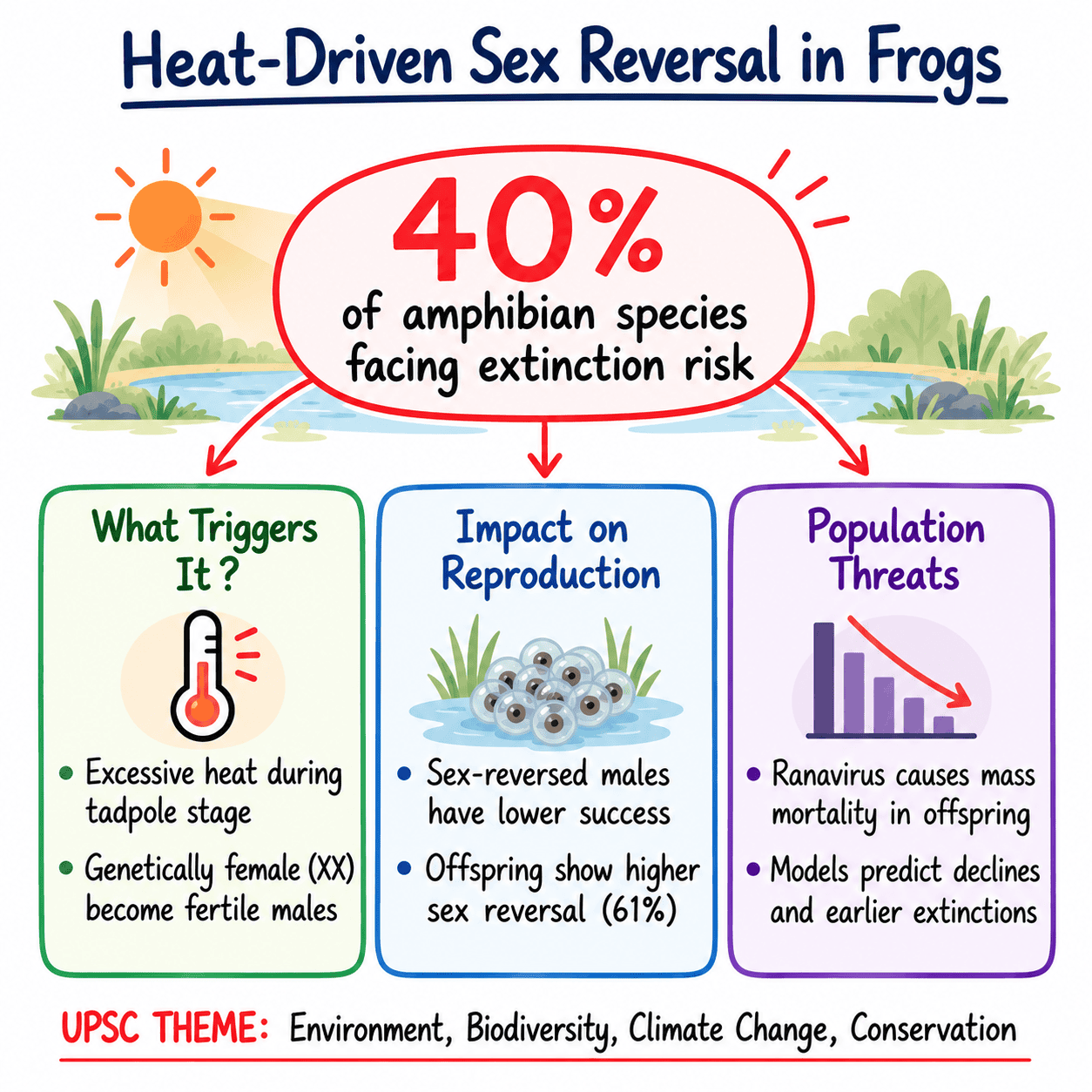
- A study on agile frogs (Rana dalmatina) in Hungary found that excessive heat during the tadpole stage induces sex reversal.
- Genetically female tadpoles (XX) can develop into physically normal and fertile males (XX males) due to high temperatures.
- Sex-reversed males exhibit lower reproductive success in the wild and sire offspring that are more vulnerable to heat and infectious diseases.
- Computer models predict that these factors will lead to population declines and earlier extinctions for agile frogs, exacerbated by pathogens like ranavirus.
Climate Change effects.jpg
Detailed Insights:
- Sex reversal, where an individual begins life as one sex and later switches or develops as another, is a well-documented phenomenon across the animal kingdom.
- Amphibians are the most threatened vertebrate group, with approximately 40% of species facing extinction risk.
- The research, published in Science Advances, highlights how environmental factors like temperature can override genetic sex determination in species like agile frogs.
- Female agile frogs often employ a "split clutch strategy," laying only a portion of their eggs with sex-reversed males, indicating a preference for sex-concordant mates.
- Offspring sired by sex-reversed males show a significantly higher rate of sex reversal (61%) compared to those from sex-concordant males (17%).
- Ranavirus, a highly pathogenic virus, further amplifies the threat by causing mass mortality events in amphibian populations, particularly in offspring of sex-reversed males.
- Small populations are especially vulnerable to these combined pressures, as the loss of even a few breeding females can severely impact reproductive capacity.
- The study underscores the urgent need for conservation strategies to incorporate the impacts of climate-driven sex reversal on species survival.
Scientific/Technical Concepts Involved:
- Sex Reversal: A biological phenomenon where an individual develops or switches to a sex different from its genetic sex due to environmental or internal factors.
- Genetic Sex Determination: The process where an individual's sex is determined by specific chromosomes inherited from parents, such as XX for female and XY for male.
- Environmental Sex Determination: The process where an individual's sex is determined by external environmental factors, such as temperature during embryonic development.
- Ranavirus: A genus of highly virulent viruses belonging to the Iridoviridae family, known to cause severe disease and mass mortality in amphibians, fish, and reptiles.

SuperKalam is your personal mentor for UPSC preparation, guiding you at every step of the exam journey.
Download the App


STUDY RESOURCES
CONTACT US
ⓒ Snapstack Technologies Private Limited