GS 3: Science & TechnologyGS 2: International RelationsGS 3: EconomyPrelimsGS 3: Indian Economy, Planning, Mobilization of Resources, Growth, Development and Employment
RBI, BRICS in talks to link payment systems, CBDCs: Governor, Pg15
RBI Governor reveals talks with BRICS to link payment systems and CBDCs, boosting Rupee internationalization for faster, cheaper cross-border trade.
Practice MCQs
862 Students attempted
Key Highlights:
- The Reserve Bank of India (RBI) is actively working to increase the use of the rupee in cross-border trade and payments.
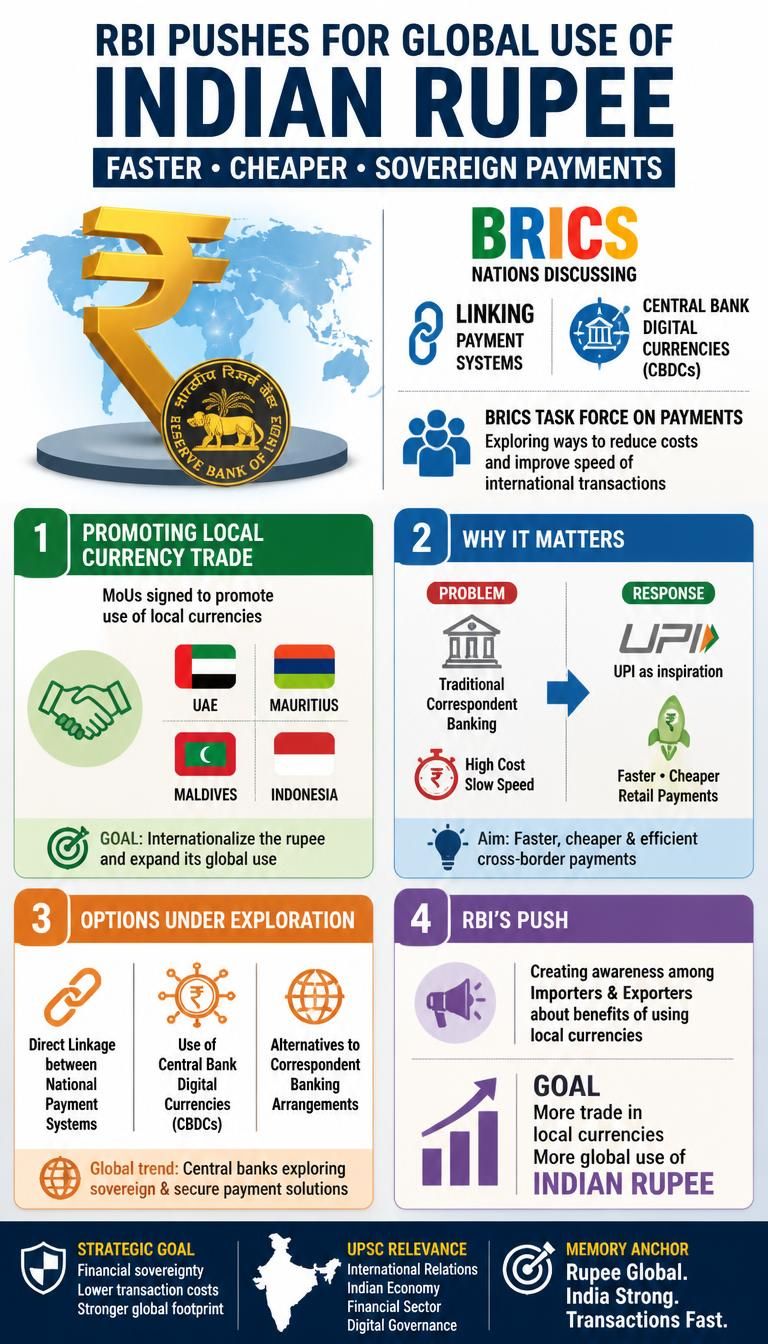
- RBI Governor Sanjay Malhotra stated that BRICS nations are discussing linking their payment systems and Central Bank Digital Currencies (CBDCs).
- A BRICS task force on payments is exploring ways to reduce costs and improve speed for international transactions.
- India has signed Memoranda of Understanding with the UAE, Mauritius, Maldives, and Indonesia to promote local currency trade.
- The initiative aims to find alternatives to traditional correspondent banking arrangements and internationalize the rupee.
RBI.jpg
Detailed Insights:
- The discussions within BRICS focus on making international transactions faster and cheaper, particularly for retail payments.
- The Unified Payments Interface (UPI) is cited as an example of an instantaneous payment system that could inspire cross-border solutions.
- Various options are being considered, including direct linkages between national payment systems and the potential use of CBDCs.
- The RBI is promoting awareness among importers and exporters about the benefits of using local currencies in international trade.
- This push aligns with a global trend among central banks to explore alternatives to the existing correspondent banking arrangements.
- The internationalization of the rupee is closely tied to broader efforts to facilitate trade in local currencies.
Key Concepts Involved:
- BRICS: An acronym for an association of five major emerging national economies: Brazil, Russia, India, China, and South Africa.
- Unified Payments Interface (UPI): An instant real-time payment system developed by the National Payments Corporation of India (NPCI).
- Central Bank Digital Currency (CBDC): A digital form of a country's fiat currency, issued and backed by its central bank.
- Internationalization of Rupee: Efforts to increase the acceptance and use of the Indian rupee in global trade and financial transactions.
- Correspondent Banking Arrangements: A system where one financial institution provides banking services to another in a different country, facilitating cross-border transactions.

SuperKalam is your personal mentor for UPSC preparation, guiding you at every step of the exam journey.
Download the App


STUDY RESOURCES
CONTACT US
ⓒ Snapstack Technologies Private Limited