GS 3: Science & TechnologyGS 3: Environment & EcologyPrelimsGS 3: Conservation, Pollution and DegradationGS 3: Biotechnology
Deadly bird virus PaBV-4 identified for first time in India, Pg13
Scientists confirm deadly PaBV-4 virus in Indian captive parrots, posing severe threat to exotic pet health and endangered psittacine species conservation.
Practice MCQs
855 Students attempted
Key Highlights:
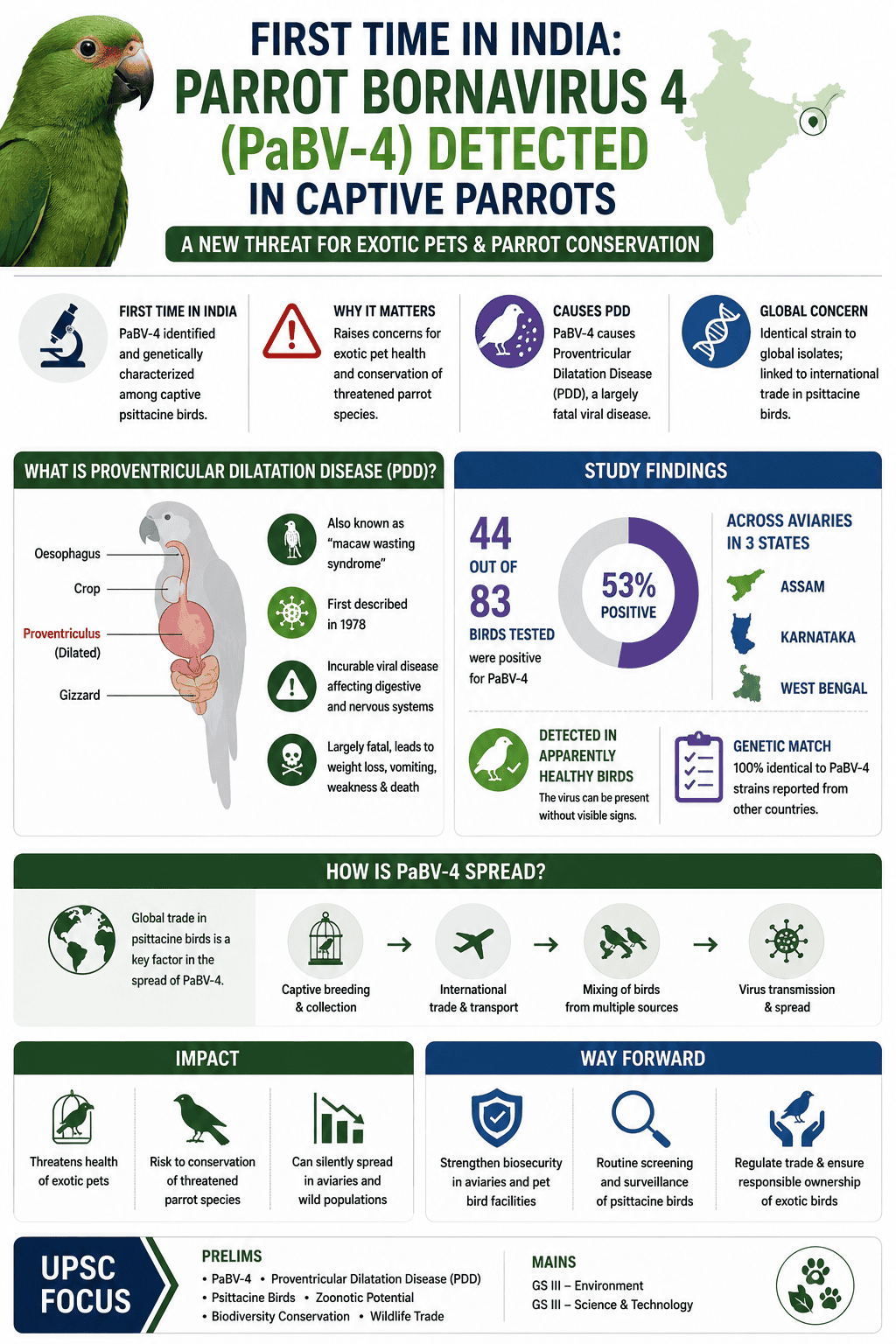
- Parrot Bornavirus 4 (PaBV-4) has been identified and genetically characterized for the first time in India among captive psittacine birds.
- The study, led by scientists from the Assam Veterinary and Fishery University, Guwahati, raises concerns for the health of exotic pets and the conservation of threatened parrot species.
- PaBV-4 causes Proventricular Dilatation Disease (PDD), a largely fatal viral condition affecting the digestive and nervous systems of birds.
- The virus was detected in 44 out of 83 tested birds across aviaries in Assam, Karnataka, and West Bengal, including apparently healthy individuals.
- The global trade in psittacine birds is suggested as a key factor in the virus's spread, as the detected strain is identical to those found internationally.
PaBV4.png
Detailed Insights:
- Proventricular Dilatation Disease (PDD), also known as "macaw wasting syndrome," was first described in 1978 and is an incurable viral disease primarily affecting psittacine birds.
- PaBV-4 is a highly contagious, single-stranded RNA virus belonging to the species Orthobornavirus alphapsittaciforme, which is considered a significant threat to psittacine aviculture.
- The virus can be shed intermittently in feces, saliva, and nasal secretions, and many infected birds can be asymptomatic carriers, silently spreading the infection.
- The study found PaBV-4 in nine psittacine species, some of which are classified as near-threatened to endangered, highlighting risks to captive breeding programs.
- The uniform genetic profile of PaBV-4 across Indian regions and its similarity to strains in Canada, Israel, Japan, South Korea, and the U.S. points to the role of international bird trade in its dissemination.
- India's Wildlife (Protection) Act, 1972, primarily protects native species, but amendments in 2022 (effective April 2023) and new rules in 2024 aim to regulate exotic species, especially those listed under CITES.
- The Ministry of Environment, Forest and Climate Change (MoEFCC) has introduced rules for reporting and registration of exotic wild animals to manage the growing exotic pet trade.
- The exotic pet trade in India, driven by demand for parrots, poses risks of zoonotic disease transmission and ecological impact if escaped pets establish wild populations.
- CITES (Convention on International Trade in Endangered Species of Wild Fauna and Flora) regulates the international trade of endangered species, with many parrot species listed in its Appendices.
Scientific/Technical Concepts Involved:
- Parrot Bornavirus 4 (PaBV-4): A highly contagious RNA virus that is the primary cause of Proventricular Dilatation Disease in psittacine birds.
- Proventricular Dilatation Disease (PDD): A fatal viral condition in birds, characterized by inflammation of the nerves affecting the digestive and nervous systems.
- Psittacine Birds: An order of birds (Psittaciformes) that includes parrots, macaws, cockatoos, and parakeets, known for their strong curved beaks and clawed feet.
- Orthobornavirus alphapsittaciforme: The specific species of avian bornavirus to which PaBV-4 belongs, recognized for its significant veterinary relevance in psittacine aviculture.

SuperKalam is your personal mentor for UPSC preparation, guiding you at every step of the exam journey.
Download the App


STUDY RESOURCES
CONTACT US
ⓒ Snapstack Technologies Private Limited