GS 2: GovernanceGS 1: Indian SocietyGS 2: Social JusticeGS 3: EconomyPrelims
More women work but in informal and less secure jobs, Pg7
Despite rising women's workforce participation to 38%, most gains are in informal agriculture and low-paying sectors, exacerbating wage gaps and unpaid care burdens.
Practice MCQs
876 Students attempted
Key Highlights:
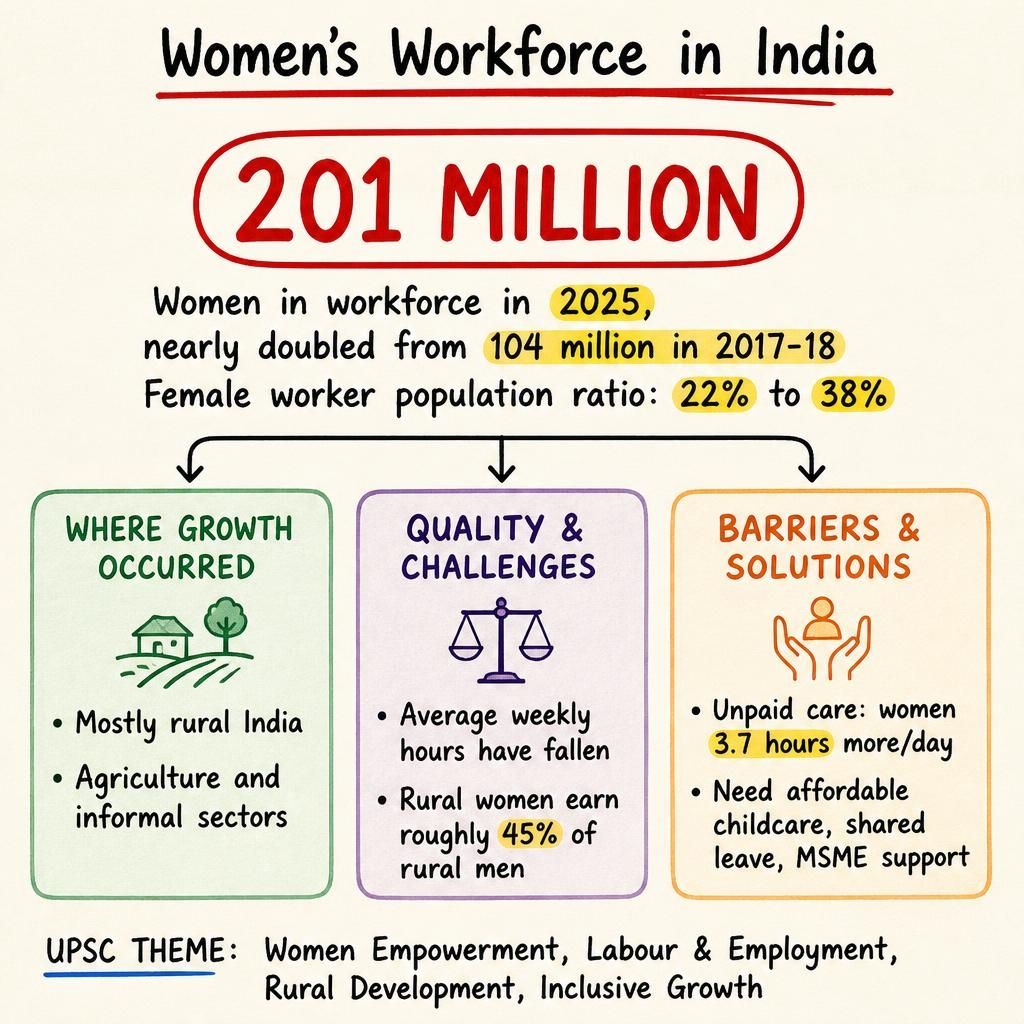
- Women's workforce participation in India nearly doubled from 104 million in 2017-18 to 201 million in 2025, with the female worker population ratio rising from 22% to 38%.
- Most of this increase is concentrated in rural India, primarily in agriculture and informal sectors like own-account and unpaid family work.
- The share of rural women in agriculture rose from 70.7% to 73.3%, while men's share in the sector declined.
- Average weekly working hours have fallen for women, indicating that much of the new employment is marginal and low in intensity.
- The wage gap persists, with rural women earning roughly 45% of what rural men earn, a decline from 53%.
- Unpaid care work remains a significant barrier, with women spending an average of 3.7 hours more per day than men on domestic work, as per the 2024 Time Use Survey.
Women Workforce.jpg
Detailed Insights:
- The surge in women's employment is largely absorbed by agriculture, a sector from which structural transformation typically expects workers to move out.
- Outside agriculture, women's employment gains are concentrated in informal sectors like garments, retail, and construction, dominated by micro and own-account enterprises.
- The decline in average weekly working hours for women, especially rural women, suggests that much of the new employment is part-time or seasonal.
- The widening gender gap in working hours in manufacturing (e.g., textiles) indicates women remain in home-based, piece-rate, or own-account work rather than regular factory jobs.
- The widest hourly earnings gaps are found in sectors employing most women, such as tobacco manufacturing, education, textiles, and crop production.
- Childcare and household commitments are cited by 60% of women as reasons for not being in the labor force, a stark contrast to men.
- Taking up paid work does not significantly reduce women's burden of unpaid domestic and care work, which remains high for working women.
- Policy recommendations include affordable childcare, paid paternity/shared parental leave, and MSME policies that incentivize hiring women and provide support like finance, technology, hostels, and transport.
- Creating paid work for rural women close to home through place-based enterprise clusters, livelihood missions, and women-led producer organizations is crucial.
Key Concepts Involved:
- Worker Population Ratio: The percentage of the population that is employed.
- Informal Sector: Economic activities that are not regulated or protected by the state, often characterized by low wages and lack of social security.
- Unpaid Care Work: Domestic and caregiving tasks performed without monetary compensation, primarily by women.
- Structural Transformation: The shift of an economy from reliance on agriculture to manufacturing and services.

SuperKalam is your personal mentor for UPSC preparation, guiding you at every step of the exam journey.
Download the App


STUDY RESOURCES
CONTACT US
ⓒ Snapstack Technologies Private Limited