GS 2: PolityGS 2: International RelationsGS 3: EconomyPrelimsGS 3: Infrastructure: Energy, Ports, Roads, Airports, Railways etc.
Trump says Russia to supply diesel to US and global markets, Pg2
Trump administration temporarily lifts Russian diesel sanctions to lower fuel prices, sparking criticism from Ukraine and US lawmakers.
Practice MCQs
869 Students attempted
Key Highlights:
- President Donald Trump announced that Russia would supply diesel to global markets, including the U.S., to alleviate high fuel prices.
- The U.S. administration temporarily lifted sanctions on Russian fuel, which were initially imposed in October 2025 to curb Moscow's war revenues.
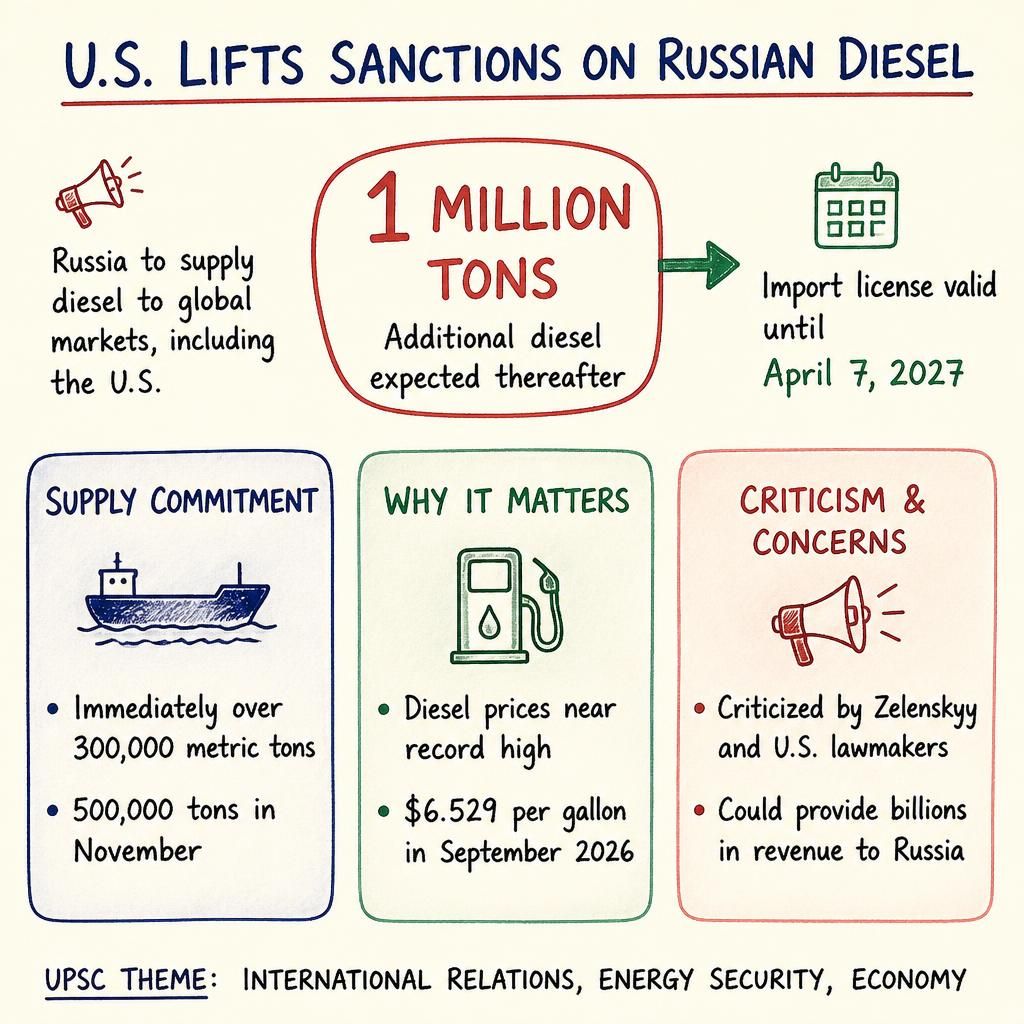
- Russia is expected to immediately supply over 300,000 metric tons of diesel, with further shipments of 500,000 tons in November and an additional 1 million tons thereafter.
- The deal was criticized by Ukrainian President Volodymyr Zelenskyy and U.S. lawmakers, who argued it would financially benefit Russia amidst the ongoing conflict.
- The U.S. Treasury Department issued a license authorizing the importation of Russian diesel until April 7, 2027.
US lifts Sanctions.jpg
Detailed Insights:
- The agreement follows a "highly successful" discussion between President Trump and Russian President Vladimir Putin.
- Diesel prices in the U.S. were near record highs, reaching $6.529 per gallon in September 2026, posing a risk for Republicans ahead of the November 3 congressional elections.
- Kirill Dmitriev, Russia's Special Presidential Envoy on Foreign Investment and Economic Cooperation, played a role in facilitating the deal, having previously requested licenses for Russian oil firms to export diesel to the U.S. market.
- Ukrainian drone attacks have significantly damaged Russian oil refineries, with estimates suggesting over 50% of Russia's refining capacity was disabled by October 2026, impacting their production capabilities.
- The temporary lifting of sanctions is a departure from the Ending Importation of Russian Oil Act of 2022, which banned Russian energy imports, and is considered a temporary executive waiver.
- Critics argue that the deal undermines efforts to pressure Russia economically and could provide billions in revenue to support its war efforts in Ukraine.
Key Concepts Involved:
- Sanctions: Economic penalties imposed by one country on another to influence policy or behavior.
- Geopolitics of Energy: The interplay of political power, international relations, and the global distribution and consumption of energy resources.
- Energy Security: The uninterrupted availability of energy sources at an affordable price.

SuperKalam is your personal mentor for UPSC preparation, guiding you at every step of the exam journey.
Download the App


STUDY RESOURCES
CONTACT US
ⓒ Snapstack Technologies Private Limited