GS 2: GovernanceGS 3: EconomyPrelimsGS 3: Indian Economy, Planning, Mobilization of Resources, Growth, Development and EmploymentGS 3: Infrastructure: Energy, Ports, Roads, Airports, Railways etc.
Rupee Near 97 Vs Dollar, RBI Unveils Measures To Curb Speculation, Pg3
RBI unveils special dollar window for oil companies and new FERR mechanism to defend rupee against dollar, curb speculation.
Practice MCQs
869 Students attempted
Key Highlights:
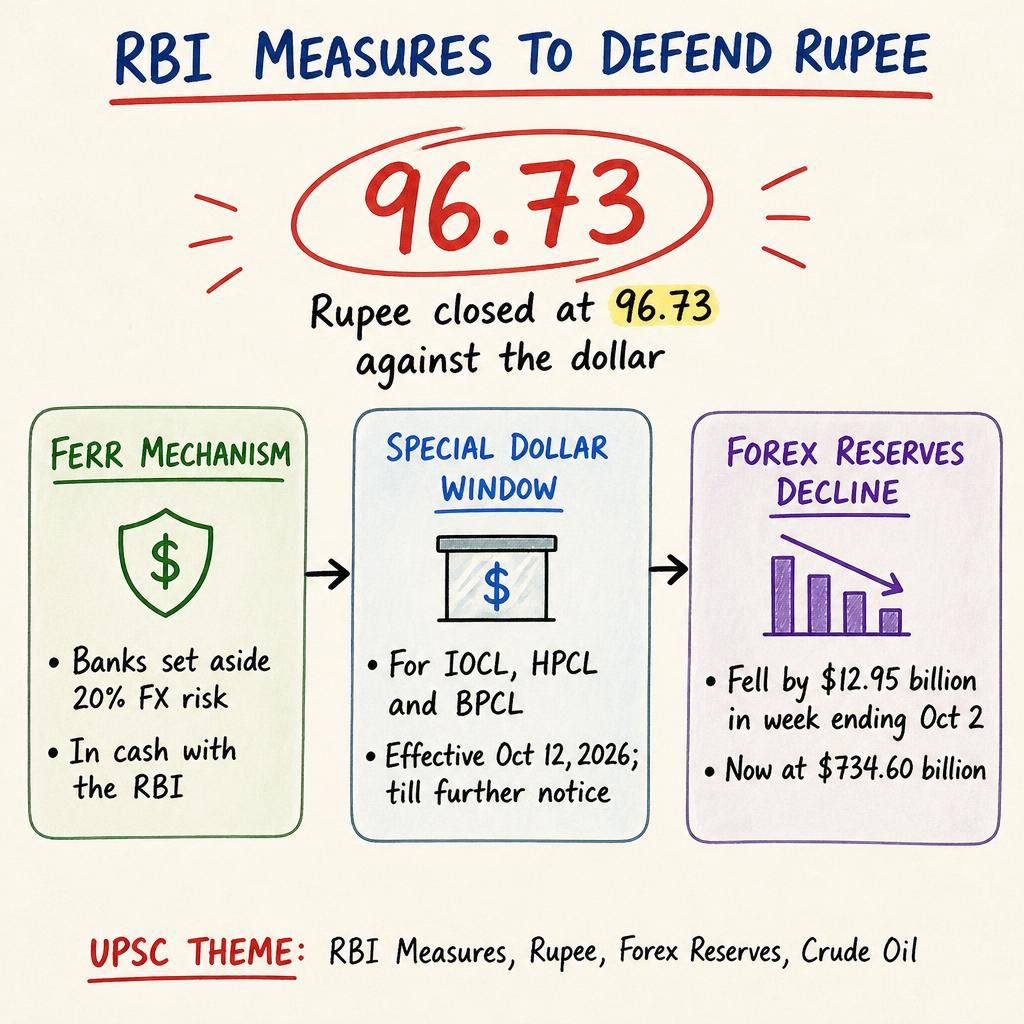
- The Reserve Bank of India (RBI) introduced measures to defend the rupee and curb speculation, including a Foreign Exchange Risk Reserve (FERR).
- The RBI opened a special dollar window for Indian Oil Corporation, Hindustan Petroleum Corporation, and Bharat Petroleum Corporation.
- This facility allows the three Public Sector Oil Marketing Companies (OMCs) to meet their entire daily dollar requirements directly from the RBI.
- The rupee was trading near 97 against the dollar, closing at 96.73 on Friday.
- India's forex reserves declined by $12.95 billion to $734.60 billion in the week ending October 2.
RBI.jpg
Detailed Insights:
- The FERR mechanism requires banks to set aside 20% of foreign exchange risk in cash with the RBI.
- The special dollar window became effective on October 12, 2026, and will remain in place until further notice.
- This intervention aims to cushion the impact of crude oil prices surging above $100 a barrel on India's oil sector.
- India imports over 88% of its crude oil requirements, making its economy vulnerable to global price fluctuations and rupee depreciation.
- Rising crude prices contribute to imported inflation, with retail inflation forecast to touch 5.2% in 2026-27.
- The RBI recently hiked the repo rate by 25 basis points to 5.50% on October 7, indicating a rate hiking cycle to combat inflation.
- The direct dollar supply to OMCs is expected to ease pressure on the rupee by reducing their demand in the open market.
Key Concepts Involved:
- Foreign Exchange Risk Reserve (FERR): A mechanism requiring banks to set aside a percentage of foreign exchange risk in cash with the central bank.
- Special Dollar Window: A direct facility provided by the central bank to specific entities to meet their foreign currency requirements, bypassing the open market.
- Imported Inflation: Inflation caused by an increase in the price of imported goods and services, often due to currency depreciation or rising global commodity prices.
- Repo Rate: The rate at which the central bank lends money to commercial banks in the event of any shortfall of funds.

SuperKalam is your personal mentor for UPSC preparation, guiding you at every step of the exam journey.
Download the App


STUDY RESOURCES
CONTACT US
ⓒ Snapstack Technologies Private Limited