GS 2: GovernanceGS 2: PolityGS 1: Indian SocietyGS 3: Environment & EcologyPrelims
Assam, Meghalaya villagers oppose hydropower project, Pg9
Villagers and traditional chiefs in Assam-Meghalaya oppose a 55MW Kulsi hydropower project, citing endangered Gangetic dolphins and inter-state boundary disputes.
Practice MCQs
869 Students attempted
Key Highlights:
- Villagers from Assam and Meghalaya are opposing a joint 55-megawatt hydropower-cum-irrigation project on the Kulsi river.
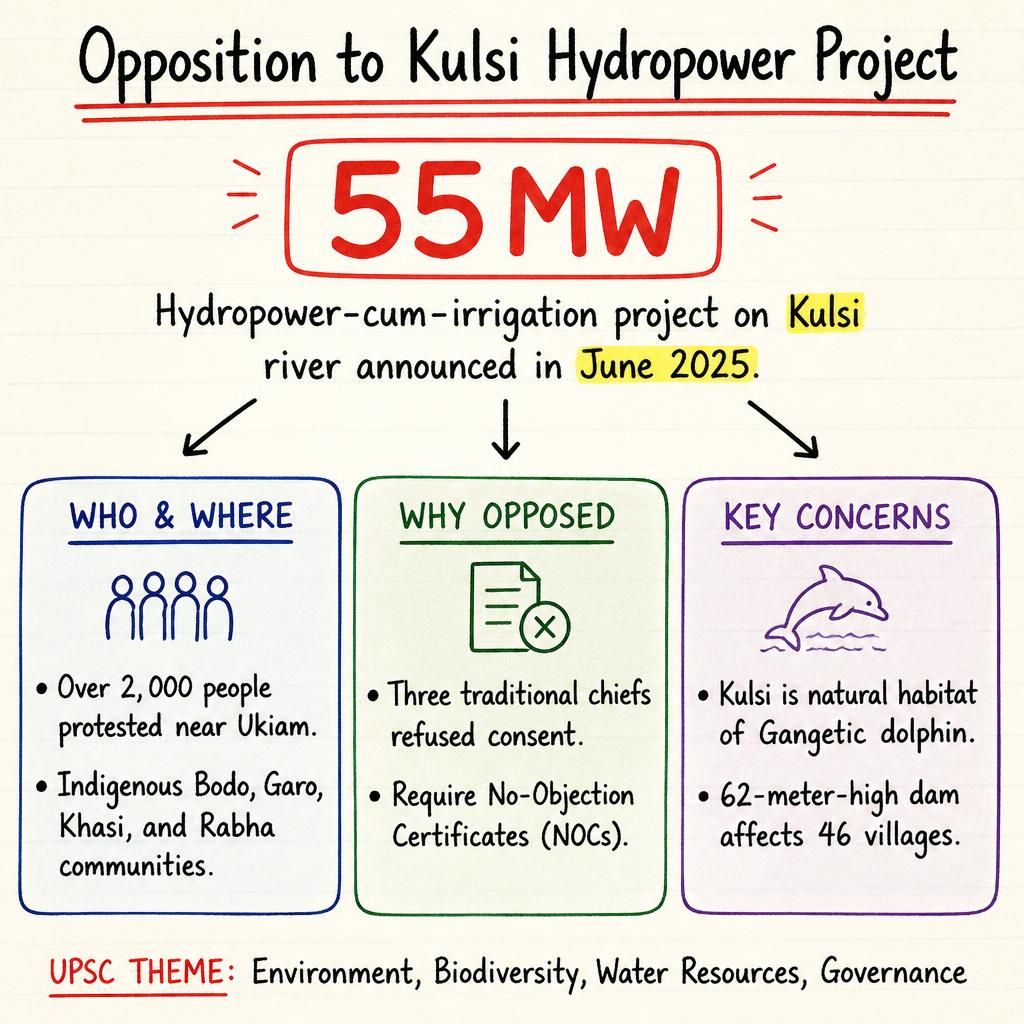
- The project, announced in June 2025, is planned for the Kulsi river, a natural habitat of the endangered Gangetic dolphin.
- Over 2,000 people from indigenous Bodo, Garo, Khasi, and Rabha communities protested near Ukiam, a site close to the proposed dam.
- Three traditional chiefs from Meghalaya have refused to grant consent for the project, citing the requirement for No-Objection Certificates (NOCs) for land-related developments.
- The opposition is coordinated by the Assam-Meghalaya Joint Protection Committee (AMJPC), formed in 2025.
Hydropower Project.jpg
Detailed Insights:
- The proposed dam is located on the Assam-Meghalaya border, approximately 80 km southwest of Guwahati, at the confluence of the Dron, Shree, and Dilma rivers, which form the Kulsi.
- The project aims to generate 55 MW of power, irrigate about 26,000 hectares, and mitigate floods.
- The Gangetic dolphin is India's National Aquatic Animal, listed as endangered by the IUCN, and protected under Schedule I of the Wildlife Protection Act, 1972.
- Hydropower projects, including dams and barrages, are recognized as significant threats to river dolphin populations due to habitat fragmentation and altered river flows.
- The project site is near disputed border sectors like Borduar and Langpih, which are part of the long-standing Assam-Meghalaya border dispute that originated in 1972.
- In Meghalaya, traditional chiefs hold significant authority over land, and their consent is crucial for projects, especially in areas governed under the Sixth Schedule of the Constitution.
- The proposed 62-meter-high dam is projected to affect 46 villages across both states, raising concerns about displacement and long-term ecological and social impacts.
Key Concepts Involved:
- Gangetic Dolphin: India's National Aquatic Animal, an endangered freshwater cetacean protected under Schedule I of the Wildlife Protection Act, 1972, primarily found in the Ganga-Brahmaputra river systems.
- Traditional Chiefs (Meghalaya): Hereditary or elected leaders in Meghalaya's tribal communities who manage communal land and customary laws, often requiring their No-Objection Certificates (NOCs) for land development.
- Assam-Meghalaya Border Dispute: A territorial conflict between the two states since Meghalaya's formation in 1972, involving 12 disputed sectors along their shared 884-km border.
- Sixth Schedule: A constitutional provision under Article 244(2) and Article 275(1) that allows for the administration of certain tribal areas in Assam, Meghalaya, Tripura, and Mizoram through Autonomous District Councils (ADCs).

SuperKalam is your personal mentor for UPSC preparation, guiding you at every step of the exam journey.
Download the App


STUDY RESOURCES
CONTACT US
ⓒ Snapstack Technologies Private Limited