GS 3: Internal SecurityGS 2: International RelationsGS 3: EconomyGS 3: Infrastructure: Energy, Ports, Roads, Airports, Railways etc.GS 3: Security Challenges and Management in Border Areas
‘Maritime security is of primordial importance to Indian Ocean Region’, Pg14
India to prioritize maritime security amidst West Asia tensions during its IORA chairmanship, focusing on economic and safety concerns.
Practice MCQs
833 Students attempted
Key Highlights:
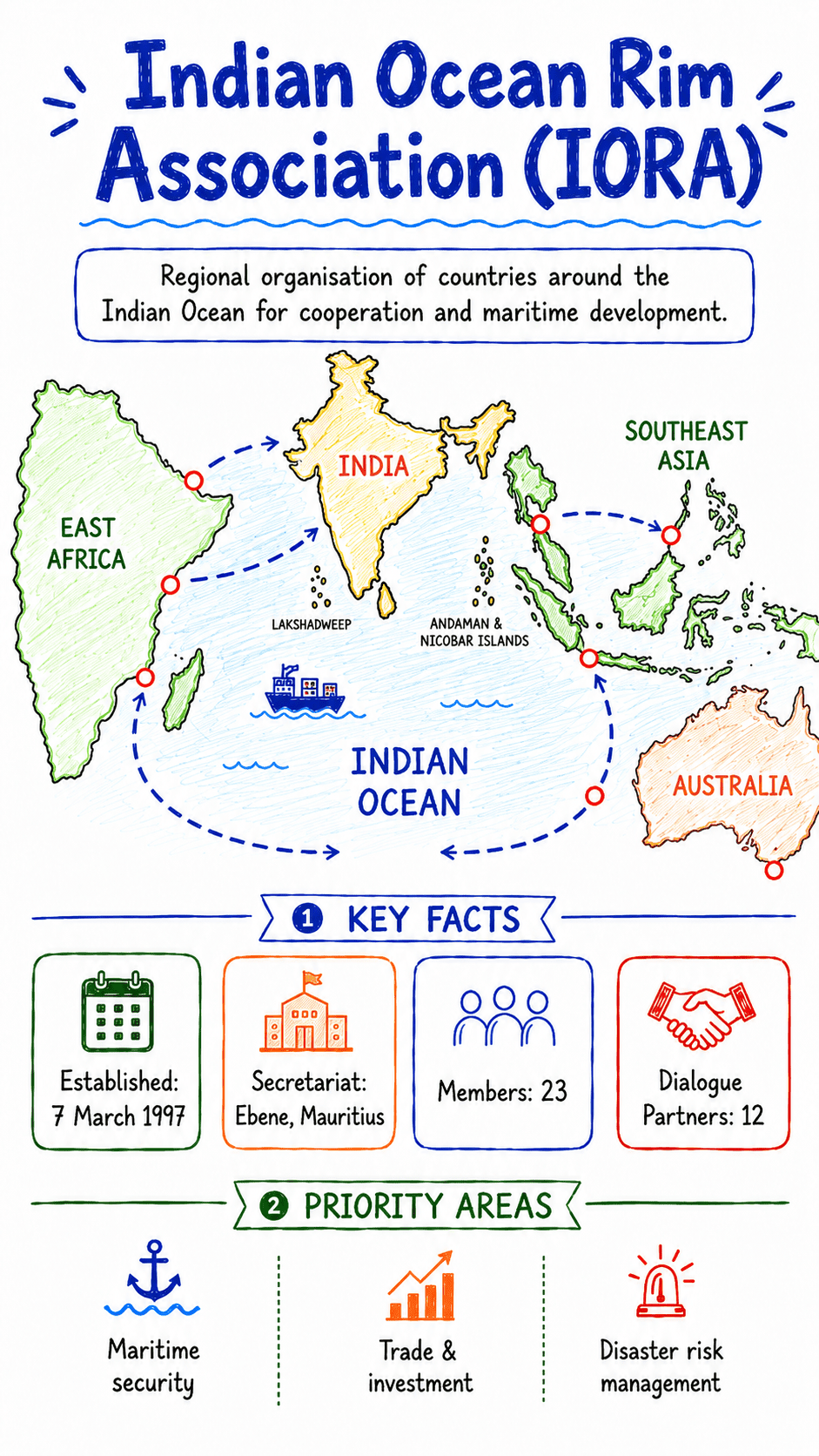
- India chairs the 23-nation Indian Ocean Rim Association (IORA), with a leaders’ summit expected in 2027.
- The government is expected to focus on challenges arising from the West Asia conflict, including violence and Hormuz Strait blockades.
- Mauritius Foreign Minister Dhananjay Ramful stated that the "ideal of the Indian Ocean as a zone of peace” has been negated.
- The IORA Summit in 2027 will mark the organisation’s 30th anniversary.
Detailed Insights:
- The war in West Asia has raised concerns about maritime safety and security, impacting energy security, food security, and livelihoods in the Indian Ocean Region (IOR).
- IORA will discuss the socio-economic impact of the conflict, focusing on maritime safety, trade, fisheries, disaster risk management, tourism, cultural exchanges, blue economy, and women’s economic empowerment.
- Disruptions in the Indian Ocean can deeply affect the region's economy, impacting tourism, fuel prices, and agricultural productivity due to potential fertilizer shortages.
- The Indian Ocean Dialogue, a "track 1.5" conference, will initiate a series of meetings as India aims to revitalize the IORA.
- Formed in 1997, the IORA has not achieved the prominence of other regional groupings like SAARC, BIMSTEC, SCO, or Quad.
- IORA is significant in India’s MAHASAGAR maritime policy and Indo-Pacific strategy, and is less contentious for India as Pakistan has never been admitted to its ranks.
Key Concepts Involved:
- MAHASAGAR: India's vision for the Indian Ocean, emphasizing cooperation and collective responsibility for maritime security.
- Blue Economy: Sustainable use of ocean resources for economic growth, improved livelihoods, and jobs while preserving the health of ocean ecosystems.
- MFN Status: Treating all trade partners equally, so that they enjoy the best treatment a country offers to any trade partner.
IORA

SuperKalam is your personal mentor for UPSC preparation, guiding you at every step of the exam journey.
Download the App


STUDY RESOURCES
CONTACT US
ⓒ Snapstack Technologies Private Limited