GS 2: International RelationsGS 3: EconomyPrelimsGS 2: Bilateral, Regional and Global Groupings and AgreementsGS 2: Effect of Policies and Politics of Developed and Developing Countries on India's Interests
Putin Vows Closer Ties With Former Soviet Neighbours, Pg1
Putin pledges stronger economic and cultural ties with former Soviet states within CIS, promoting national currency trade to counter Western sanctions.
Practice MCQs
862 Students attempted
Key Highlights:
- Russian President Vladimir Putin affirmed closer cooperation with former Soviet nations at the Commonwealth of Independent States (CIS) summit in Turkmenistan.
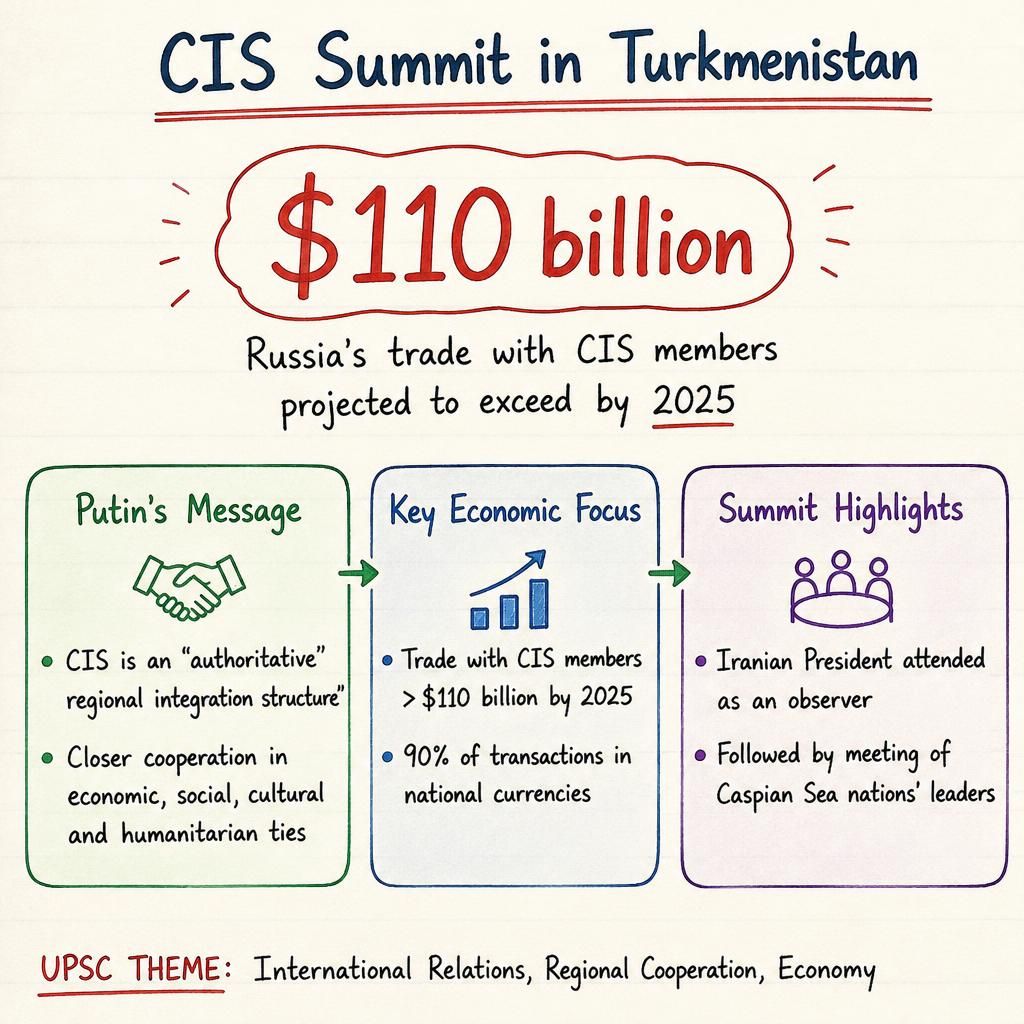
- Putin highlighted the CIS as an "authoritative regional integration structure" fostering economic, social, cultural, and humanitarian ties.
- He noted that Russia's trade with CIS members is projected to exceed $110 billion by 2025, with 90% of transactions conducted in national currencies.
- Iranian President Masoud Pezeshkian attended the summit as an observer and held separate talks with Putin.
- The summit took place in Avaza, Turkmenistan, and was followed by a meeting of Caspian Sea nations' leaders.
CIS Summit.jpg
Detailed Insights:
- The Commonwealth of Independent States (CIS) was established in 1991 following the dissolution of the Soviet Union to facilitate cooperation among its member states in various domains.
- Russia's emphasis on strengthening economic ties and using national currencies within the CIS framework is a strategic move amidst Western sanctions imposed due to the conflict in Ukraine.
- The shift to national currencies aims to build a stable financial infrastructure that is less susceptible to external geopolitical pressures.
- The meeting of Caspian Sea nations' leaders, which included Iran, Russia, Azerbaijan, Kazakhstan, and Turkmenistan, focused on environmental challenges and broader regional cooperation.
- President Putin acknowledged Iran's efforts towards peaceful resolution of regional conflicts during his discussions with President Masoud Pezeshkian.
Key Concepts Involved:
- Commonwealth of Independent States (CIS): A regional intergovernmental organization formed by former Soviet republics to promote cooperation in political, economic, and security affairs.
- National Currencies: The use of a country's own currency for international trade and transactions, reducing reliance on foreign currencies like the US dollar.
- Caspian Sea Nations: The five countries bordering the Caspian Sea—Azerbaijan, Iran, Kazakhstan, Russia, and Turkmenistan—who cooperate on regional issues, including environmental protection.

SuperKalam is your personal mentor for UPSC preparation, guiding you at every step of the exam journey.
Download the App


STUDY RESOURCES
CONTACT US
ⓒ Snapstack Technologies Private Limited