GS 2: GovernanceGS 3: Science & TechnologyGS 2: International RelationsGS 3: EconomyPrelims
Critical Minerals Stockpiling Policy Likely In A Month, Pg22
India to unveil critical minerals stockpiling policy, allocating ₹500 crore to secure supply chains and boost domestic processing for clean energy.
Practice MCQs
862 Students attempted
Key Highlights:
- India is set to introduce a new policy on stockpiling critical minerals within a month to reduce import dependency and mitigate supply chain disruptions.
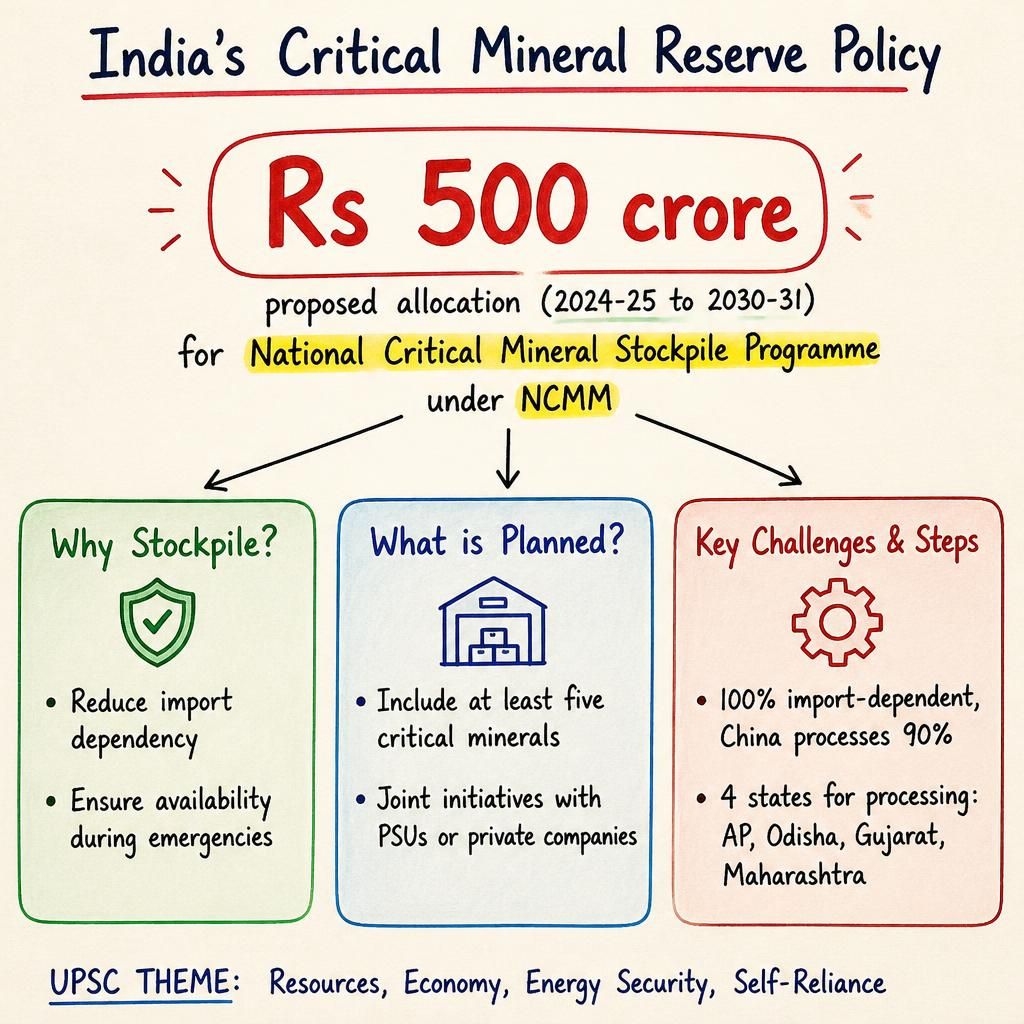
- The policy aims to establish a National Critical Mineral Stockpile Programme under the National Critical Minerals Mission (NCMM).
- An allocation of Rs 500 crore has been proposed for the mission period from 2024-25 to 2030-31 to develop this reserve.
- The National Critical Mineral Stockpile will initially include at least five critical minerals to ensure domestic availability during emergencies.
- India is 100% import-dependent for most critical minerals and has limited domestic processing capacity.
Critical Mineral Reserve Policy.jpg
Detailed Insights:
- Critical minerals like lithium, cobalt, nickel, and rare earth elements are crucial for clean energy technologies such as electric vehicles and wind turbines.
- Khanij Bidesh India Ltd (KABIL), India's overseas acquisition vehicle, has faced challenges in securing mineral assets globally, with limited success in Argentina for lithium blocks.
- China currently dominates 90% of global critical mineral processing, posing a strategic vulnerability for India.
- The government plans to institutionalize joint initiatives with central Public Sector Undertakings (PSUs) or private companies for the stockpiling program.
- To boost domestic processing, four states—Andhra Pradesh, Odisha, Gujarat, and Maharashtra—have been identified for setting up processing plants.
- Gujarat and Andhra Pradesh are slated to focus on rare earth processing, while Odisha will concentrate on nickel and Maharashtra on lithium.
- There is also an emphasis on developing indigenous technology for critical mineral processing to enhance self-reliance.
Key Concepts Involved:
- Critical Minerals: Essential raw materials vital for high-tech industries, clean energy, and national security.
- Strategic Reserve/Stockpile: A national reserve of essential goods or materials maintained to ensure supply during crises or disruptions.
- Supply Chain Disruptions: Interruptions or inefficiencies in the flow of goods, services, or information from origin to consumption.

SuperKalam is your personal mentor for UPSC preparation, guiding you at every step of the exam journey.
Download the App


STUDY RESOURCES
CONTACT US
ⓒ Snapstack Technologies Private Limited