GS 2: GovernanceGS 3: Environment & EcologyGS 3: EconomyPrelimsGS 3: Infrastructure: Energy, Ports, Roads, Airports, Railways etc.
India achieves 300 GW RE capacity, 60% of 2030 target, Pg15
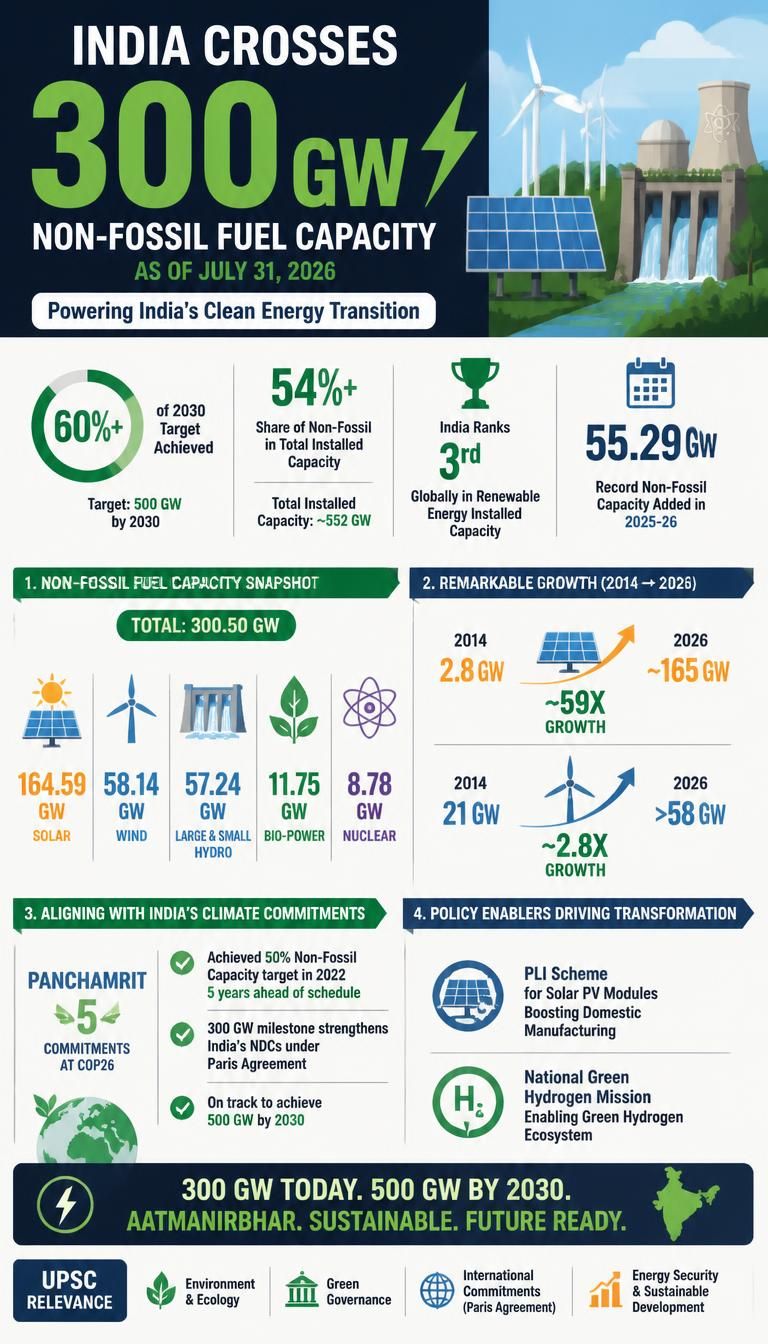
India crosses 300 GW non-fossil fuel power capacity, achieving 60% of its 2030 target, marking a major milestone in clean energy transition.
Practice MCQs
847 Students attempted
Key Highlights:
- India achieved 300 GW of non-fossil fuel-based electricity generation capacity as of July 31, 2026.
- This milestone represents over 60% of the nation's target to achieve 500 GW of non-fossil fuel capacity by 2030.
- The Ministry of New and Renewable Energy (MNRE) announced this significant progress in India's clean energy transition.
- Non-fossil sources now constitute over 54% of India's total installed electricity generation capacity, which stands at approximately 552 GW.
Renewable Energy.jpg
Detailed Insights:
- The 300.50 GW non-fossil fuel capacity includes 164.59 GW from solar power, 58.14 GW from wind power, 57.24 GW from large and small hydro, 11.75 GW from bio-power, and 8.78 GW from nuclear power.
- India's solar capacity has seen substantial growth, increasing from 2.8 GW in 2014 to nearly 165 GW, while wind power capacity rose from 21 GW to over 58 GW in the same period.
- A record 55.29 GW of non-fossil fuel-based electricity capacity was installed during 2025-26, with solar power contributing 44.6 GW and wind power adding 6 GW.
- This achievement aligns with India's Nationally Determined Contributions (NDCs) under the Paris Agreement, particularly the Panchamrit commitments made at COP26.
- India had already achieved its 2022 NDC target of 50% non-fossil capacity five years ahead of schedule.
- Policy enablers like the Production Linked Incentive (PLI) scheme for solar PV modules and the National Green Hydrogen Mission are driving this expansion.
- India ranks third globally in renewable energy installed capacity.
Key Concepts Involved:
- Non-fossil fuel capacity: Electricity generation capacity derived from sources that do not involve burning fossil fuels, including renewables and nuclear power.
- Installed capacity: The maximum electrical output a power plant or system can produce under specific conditions.
- Nationally Determined Contributions (NDCs): Climate action plans submitted by countries under the Paris Agreement, outlining their efforts to reduce emissions and adapt to climate change.
- Panchamrit: Five key climate action pledges announced by India at COP26 in Glasgow, including the 500 GW non-fossil fuel capacity target by 2030.
- Ministry of New and Renewable Energy (MNRE): The nodal ministry of the Government of India responsible for policy formulation, promotion, and development of new and renewable energy sources.

SuperKalam is your personal mentor for UPSC preparation, guiding you at every step of the exam journey.
Download the App


STUDY RESOURCES
CONTACT US
ⓒ Snapstack Technologies Private Limited