GS 2: GovernanceGS 3: Science & TechnologyGS 2: Social JusticePrelimsGS 2: Development Processes and Role of NGOs, SHGs and Other Stakeholders
Closing the Gaps in Early Childhood Eye Care, Pg II
Despite existing health programs, India's system misses preventable childhood blindness, requiring integrated vision screening, frontline worker training, and robust referral pathways for vulnerable children.
Practice MCQs
855 Students attempted
Key Highlights:
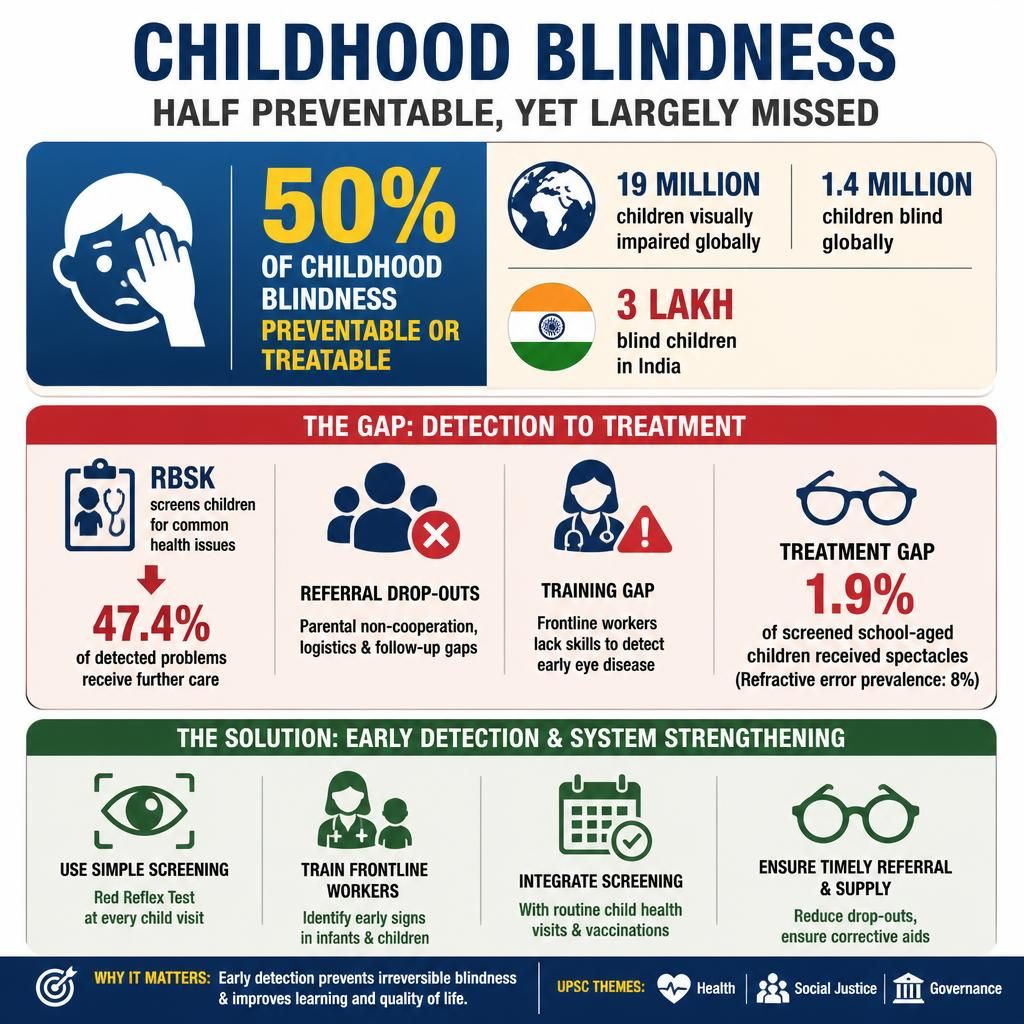
- Approximately 19 million children globally are visually impaired, with 1.4 million blind; India accounts for 3 lakh blind children.
- Nearly half of these childhood blindness cases are preventable or treatable if detected and managed early.
- A significant challenge is missed opportunities within the existing healthcare system, where visual impairments go unnoticed during routine child health visits.
- Programmes like Rashtriya Bal Swasthya Karyakram (RBSK), designed for child health screening, face operational issues, referral drop-outs, and training gaps among frontline workers.
- In Karnataka, only 1.9% of screened school-aged children received spectacles, despite an estimated 8% prevalence of refractive errors.
- Simple, effective screening methods like the red reflex examination are underutilized due to insufficient training for health personnel.
Early Childhood Eyecare.jpg
Detailed Insights:
- Early detection is crucial as a child's visual system develops significantly post-birth; delayed intervention can lead to irreversible conditions like amblyopia (lazy eye).
- The current healthcare system often lacks proper integration of vision screening into routine child health check-ups and vaccination schedules.
- Rashtriya Bal Swasthya Karyakram (RBSK), despite its broad mandate, shows a significant treatment gap, with only 47.4% of detected health problems receiving further care.
- Frontline health workers, including ASHA workers, often lack specific training to identify early signs of eye diseases in infants and young children.
- Operational challenges contributing to the gap include parental non-cooperation for follow-ups, logistical barriers, and delays in the supply chain for corrective aids.
- Solutions involve training RBSK mobile health teams, primary health centre nurses, and pediatric residents in quick, non-verbal screening techniques like the red reflex test.
- Establishing clear, practical, and monitored referral pathways, along with leveraging digital systems and tele-ophthalmology, can improve access to specialized care.
- The objective is to ensure every interaction with a child within the health system serves as an opportunity for vision protection, with effective follow-through from screening to treatment.
Key Concepts Involved:
- Rashtriya Bal Swasthya Karyakram (RBSK): A national program for early identification and intervention for 4 D's (Defects at birth, Deficiencies, Diseases, Development delays including disability) in children from birth to 18 years.
- ASHA workers: Accredited Social Health Activists, community health workers who act as a link between the community and the public health system in India.
- Amblyopia (Lazy Eye): A condition where vision in one eye is reduced because the eye and brain are not working together properly, often due to lack of clear visual input during critical developmental periods.
- Red Reflex Examination: A quick, non-verbal eye test using an ophthalmoscope to detect major sight-threatening abnormalities like cataracts, retinoblastoma, and high refractive errors in infants and young children.

SuperKalam is your personal mentor for UPSC preparation, guiding you at every step of the exam journey.
Download the App


STUDY RESOURCES
CONTACT US
ⓒ Snapstack Technologies Private Limited