GS 2: GovernanceGS 2: PolityGS 3: Science & TechnologyPrelimsGS 2: Government policies and interventions for development in various sectors
Govt examining Meta's recommendation system, Pg13
Government scrutinizes Meta's recommendation systems, questioning its intermediary status under IT Act's safe harbour provisions, potentially increasing platform liability.
Practice MCQs
840 Students attempted
Key Highlights:
- The Indian government is examining whether Meta's recommendation systems and paid content promotion align with its status as an intermediary under Indian law.
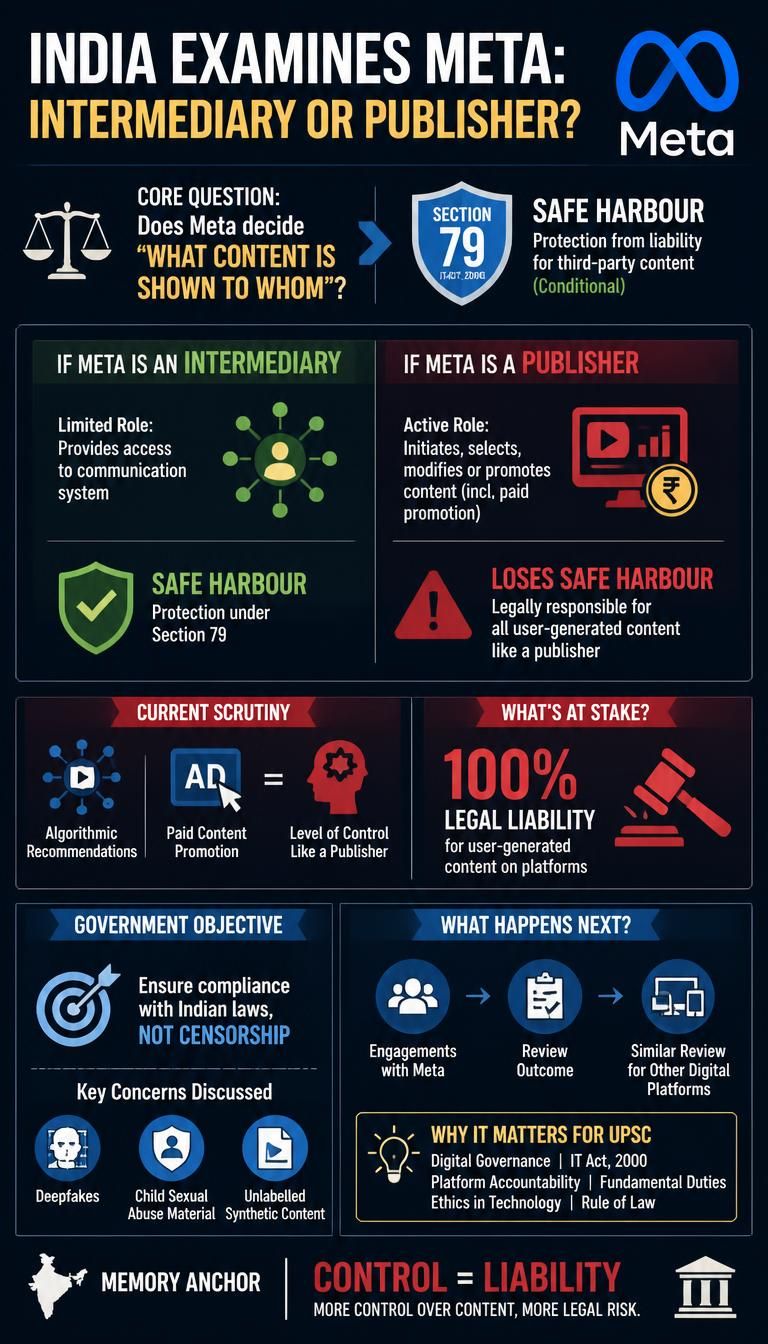
- The core issue is if Meta crosses into the role of a publisher by actively deciding "what content is shown to whom".
- This scrutiny is significant because Section 79 of the Information Technology Act, 2000, grants intermediaries "safe harbour" from liability for third-party content.
- If Meta is deemed a publisher, it could lose these legal protections and become directly responsible for content on its platforms.
Meta.jpg
Detailed Insights:
- Section 79 of the Information Technology Act, 2000, provides conditional immunity to intermediaries from liability for third-party information or data.
- Conditions for availing safe harbour include the intermediary's role being limited to providing access to a communication system, and not initiating, selecting, or modifying the transmission.
- If Meta's algorithms actively curate content and promote it for payment, it suggests a level of control typically associated with a publisher.
- Losing intermediary status would mean Meta would be held legally responsible for all user-generated content, similar to a traditional media publisher.
- The government's objective is to ensure compliance with Indian laws and not to impose censorship.
- Discussions with Meta also include addressing concerns regarding deepfakes, child sexual abuse material, and unlabelled synthetic content.
- The government plans to review the outcome of these engagements and may extend similar examinations to other digital platforms.
Key Concepts Involved:
- Intermediary: A platform that facilitates the transmission, storage, or hosting of third-party content without initiating, selecting, or modifying it.
- Publisher: An entity that creates, selects, or modifies content, thereby assuming legal responsibility for it.
- Safe Harbour: A legal principle under Section 79 of the Information Technology Act, 2000, protecting intermediaries from liability for third-party content under specific conditions.
- Information Technology Act, 2000: The primary legislation in India dealing with cybercrime and electronic commerce, defining legal frameworks for digital activities.

SuperKalam is your personal mentor for UPSC preparation, guiding you at every step of the exam journey.
Download the App


STUDY RESOURCES
CONTACT US
ⓒ Snapstack Technologies Private Limited