GS 2: GovernanceGS 3: Science & TechnologyGS 3: Environment & EcologyGS 3: EconomyPrelims
Up to 30% of cotton area under 'illegal' GM hybrids, finds study, Pg3
Study reveals 24-30% of India's cotton cultivation uses unapproved GM hybrids, bypassing biosafety regulations due to farmer demand for weed management.
Practice MCQs
847 Students attempted
Key Highlights:
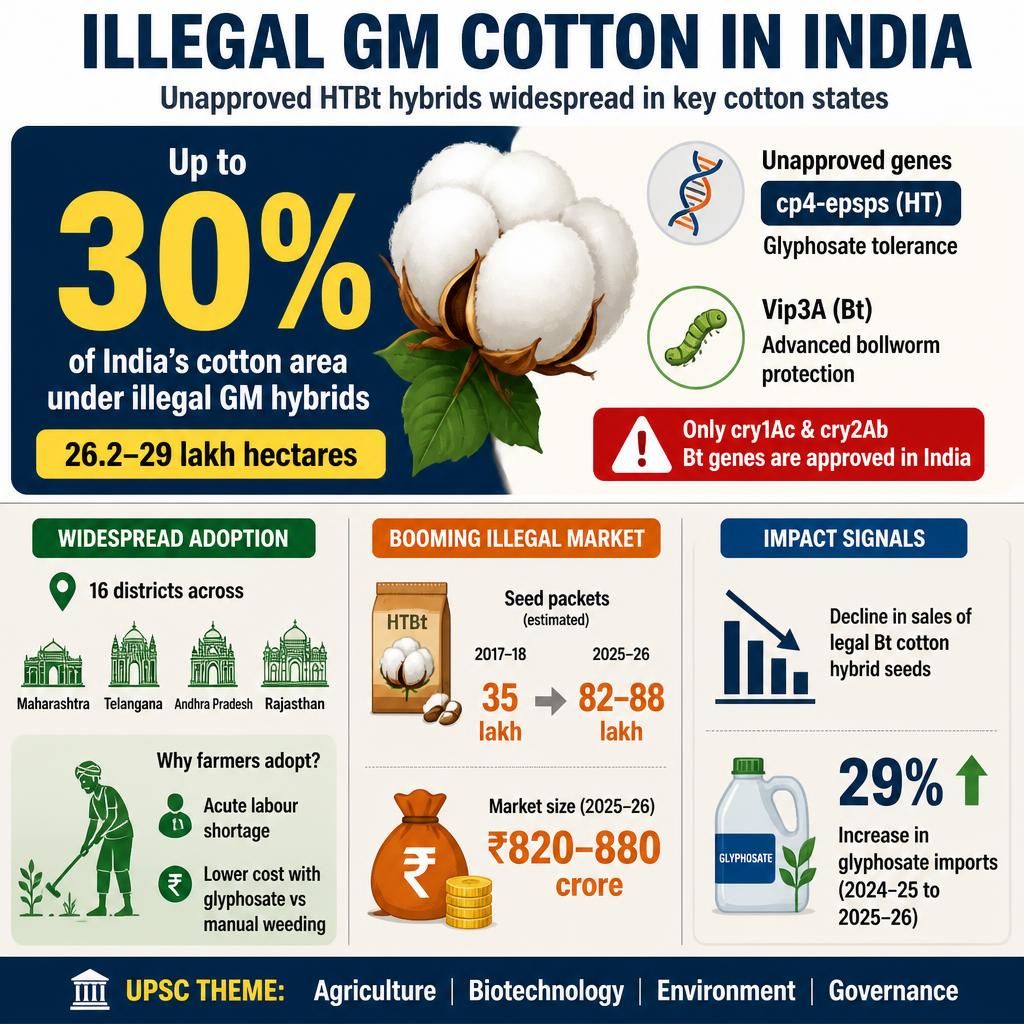
- Up to 30% of India's total cotton cultivation area, approximately 26.2-29 lakh hectares, is under "illegal" genetically modified (GM) hybrids.
- A study commissioned by the Federation of Seed Industry of India (FSII) and National Seed Association of India (NSAI) revealed the presence of unapproved herbicide-tolerant (HT) and Bacillus thuringiensis (Bt) genes.
- The unapproved genes identified are cp4-epsps, which confers glyphosate tolerance, and Vip3A, an advanced insect-resistance gene.
- The study covered 16 districts across Maharashtra, Telangana, Andhra Pradesh, and Rajasthan, identifying widespread adoption of these illegal traits.
GM Cotton.jpg
Detailed Insights:
- India currently permits only Bt cotton hybrids containing cry1Ac and cry2Ab genes, which provide resistance against certain bollworm pests.
- The cp4-epsps gene, derived from an agrobacterium, allows cotton plants to tolerate glyphosate, enabling chemical weed management.
- The Vip3A gene, also from Bt, offers broader protection against bollworm larvae, addressing the declining effectiveness of first-generation Bt hybrids.
- Farmers are adopting illegal HTBt cotton due to acute labor shortages and significantly lower costs for glyphosate-based weed management compared to manual weeding.
- The market for unauthorized HTBt seeds has expanded from 35 lakh packets in 2017-18 to an estimated 82-88 lakh packets in 2025-26, valued at approximately Rs 820-880 crore.
- This illegal adoption is reflected in a decline in sales of legal Bt cotton hybrid seeds and a 29% increase in glyphosate imports between 2024-25 and 2025-26.
Key Concepts Involved:
- Genetically Modified (GM): Organisms whose genetic material has been altered using genetic engineering techniques.
- Bacillus thuringiensis (Bt): A soil bacterium that produces proteins toxic to certain insect pests, used in Bt cotton for pest resistance.
- Herbicide-Tolerant (HT): A trait engineered into crops allowing them to withstand the application of specific herbicides, like glyphosate.
- Glyphosate: A broad-spectrum herbicide used to kill weeds, which normally also harms non-tolerant crops.

SuperKalam is your personal mentor for UPSC preparation, guiding you at every step of the exam journey.
Download the App


STUDY RESOURCES
CONTACT US
ⓒ Snapstack Technologies Private Limited