GS 2: International RelationsGS 3: EconomyPrelimsGS 3: Changes in Industrial Policy and Effects on Industrial GrowthGS 3: Indian Economy, Planning, Mobilization of Resources, Growth, Development and Employment
India’s Trade Caught In The Middle, Pg8
India's trade caught between US tariffs and China deficit, risking rupee depreciation and forex reserves as US talks plateau.
Practice MCQs
847 Students attempted
Key Highlights:
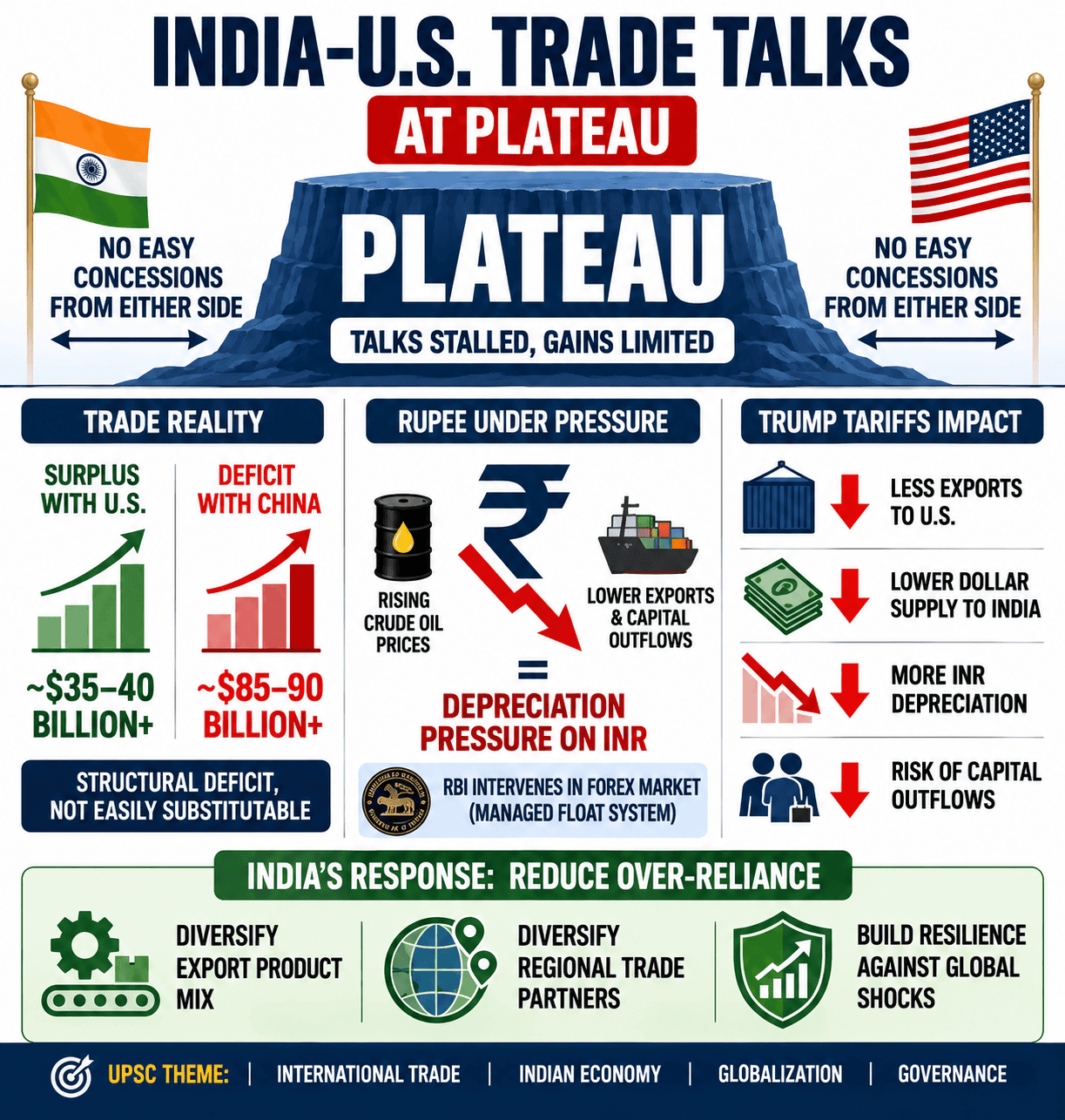
- Finance Minister Nirmala Sitharaman stated that India-U.S. trade talks have reached a "plateau," indicating difficulty in further concessions from either side.
- India maintains a significant trade surplus with the U.S. but faces a structural trade deficit with China.
- The potential imposition of Trump tariffs and the rise of Artificial Intelligence (AI) pose threats to India's trade surplus with the U.S.
- India's Indian Rupee (INR) faces depreciation pressure due to rising crude oil prices and potential trade disruptions.
India-US Trade Talks.jpg
Detailed Insights:
- The article suggests that while a trade deal with some relaxations is beneficial, the current situation should be evaluated against the pre-Trump tariff status quo.
- India's trade deficit with China is considered structural, as it involves goods that are not easily substitutable in the short term.
- The value of the Indian Rupee (INR) is influenced by the demand for dollars (from imports and capital outflows) and the supply of dollars (from exports and capital inflows).
- India operates under a managed float system, where the Reserve Bank of India (RBI) intervenes in the forex market to maintain the rupee's value within a preferred range.
- Rising crude oil prices increase the demand for dollars, potentially leading to rupee depreciation and requiring the RBI to utilize its forex reserves.
- Trump tariffs would reduce the supply of dollars to India by decreasing exports to the U.S., further exacerbating rupee depreciation and potentially triggering capital outflows.
- The article advocates for India to diversify its export product mix and regional trade partners to reduce reliance on the U.S. market.
Key Concepts Involved:
- Trade Surplus: Occurs when a country's total value of exports exceeds its total value of imports.
- Trade Deficit: Occurs when a country's total value of imports exceeds its total value of exports.
- Exchange Rate: The value of one country's currency in relation to another currency.
- Managed Float System: An exchange rate regime where the central bank intervenes in the foreign exchange market to influence the currency's value without a fixed peg.
- Forex Reserves: Foreign currency assets held by a central bank to manage the exchange rate and meet external payment obligations.

SuperKalam is your personal mentor for UPSC preparation, guiding you at every step of the exam journey.
Download the App


STUDY RESOURCES
CONTACT US
ⓒ Snapstack Technologies Private Limited