GS 3: Science & TechnologyGS 2: International RelationsPrelimsGS 2: Bilateral, Regional and Global Groupings and AgreementsGS 3: Indigenization of Technology and New Technology Development
Why NASA wants to build a nuclear reactor on the moon, Pg14
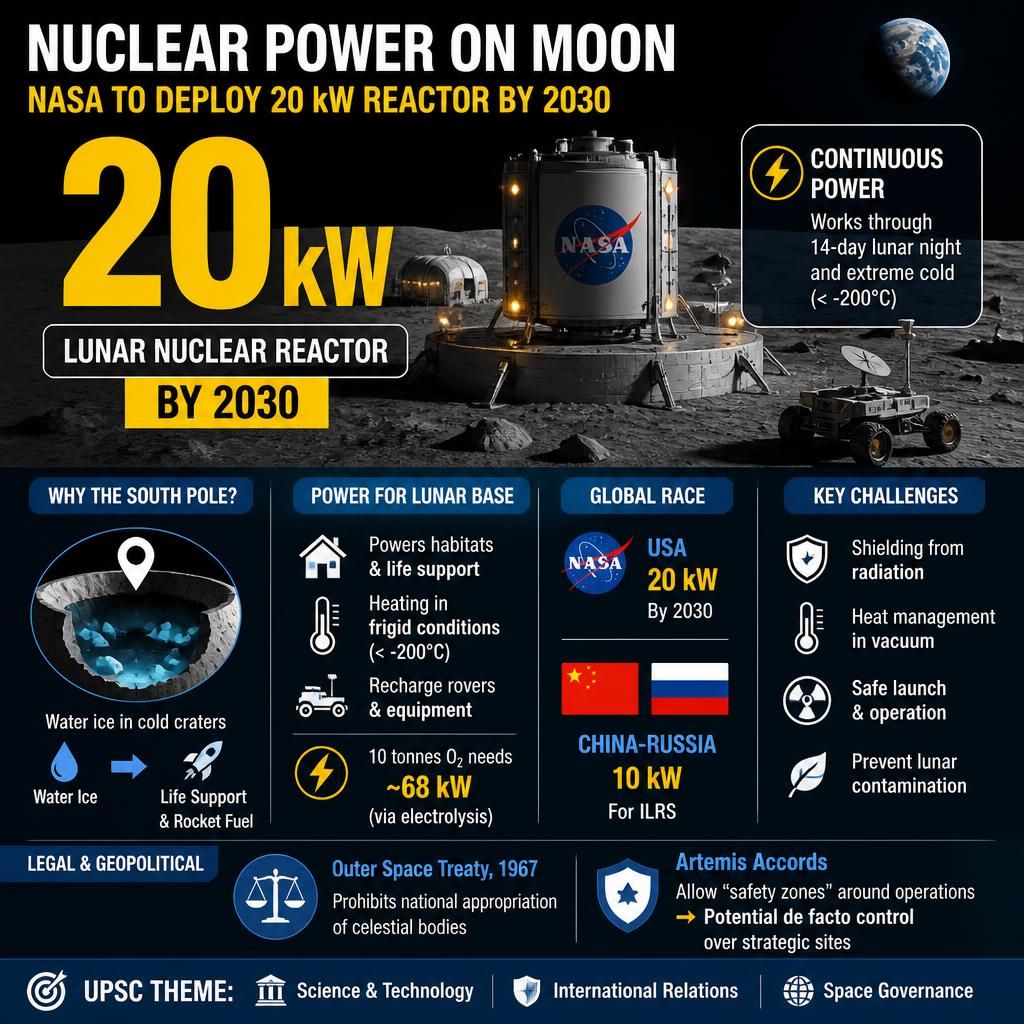
NASA plans to install a 20 kW nuclear reactor near the moon's south pole by 2030, crucial for powering future lunar bases amidst global space race.
Practice MCQs
840 Students attempted
Key Highlights:
- NASA plans to install a 20-kilowatt (kW) nuclear reactor near the Moon's south pole by 2030 to support a semi-permanent base.
- This initiative is part of a global race, with China and Russia also planning a 10 kW reactor for their International Lunar Research Station (ILRS).
- Nuclear reactors offer continuous power, unlike solar panels, which are affected by the Moon's two-week-long nights and extreme temperatures.
- The Moon's south pole is targeted for its potential water ice reserves, crucial for life support and rocket fuel production.
- The deployment faces significant technical challenges, including shielding, heat management, and preventing contamination.
NASA on Moon.jpg
Detailed Insights:
- The planned 20 kW output from NASA's reactor could power several households on Earth, providing essential energy for lunar habitats.
- Lunar bases require reliable electricity for heating, life support systems, and recharging rovers, especially in shadowed, frigid areas below -200°C.
- Water ice in cold craters can be electrolyzed to produce hydrogen and oxygen, with 10 tonnes of oxygen requiring approximately 68 kW of power.
- The Outer Space Treaty 1967 prohibits national appropriation of celestial bodies, but the Artemis Accords propose "safety zones" around lunar operations.
- These "safety zones" could allow nations to limit access to specific areas, potentially creating de facto control over strategic lunar locations.
- Technical hurdles include launching reactor components safely, managing waste heat, and preventing contamination from potential reactor failures.
- The race to establish lunar reactors is driven by geopolitical competition, with nations aiming to gain a strategic advantage on the Moon.
Key Concepts Involved:
- Outer Space Treaty 1967: An international agreement preventing national appropriation of outer space, including the Moon.
- Artemis Accords: A U.S.-led international agreement outlining principles for lunar exploration and resource utilization, including "safety zones."
- International Lunar Research Station (ILRS): A joint lunar base project primarily led by China and Russia.
Previous14/14

SuperKalam is your personal mentor for UPSC preparation, guiding you at every step of the exam journey.
Download the App


STUDY RESOURCES
CONTACT US
ⓒ Snapstack Technologies Private Limited