GS 2: GovernanceGS 2: Social JusticeGS 3: Environment & EcologyPrelimsGS 2: Government policies and interventions for development in various sectors
Nicobar gram sabhas signed off on infra project without 50% quorum, Pg1
Andaman & Nicobar administration bypassed FRA quorum norms for ₹92,000-crore Great Nicobar project, raising tribal consent concerns.
Practice MCQs
804 Students attempted
Key Highlights:
- The Andaman and Nicobar Islands (A&NI) administration allegedly failed to meet the mandated 50% quorum in gram sabha meetings for the ₹92,000-crore Great Nicobar Island project.
- Attendance figures ranged from 2% to 15% of the population, which the administration claimed constituted a "proper quorum" in the Calcutta High Court.
- Petitioners allege violations of the Forest Rights Act (FRA) in obtaining consent for the project, arguing that the Tribal Council should have been consulted instead of the gram sabhas.
Detailed Insights:
- The FRA mandates a 50% quorum of the adult population, with one-third being women, for gram sabha meetings to reach a decision.
- The administration argued that due process was followed, with "prior notice and proper quorum," and that "adequate representation" was ensured through the Sub-Divisional Level Committee (SDLC).
- The petitioner claims that the Nicobarese and Shompen tribal communities are represented through the Tribal Council, not the gram sabha structure, making the consultations invalid.
- Discrepancies were noted in the attendee lists, with names appearing in multiple gram sabha meetings and repeated within the same meeting.
- The Great Nicobar Island project aims to develop the island into a major trade, tourism, and logistics hub.
Key Concepts Involved:
- Gram Sabha: A village assembly consisting of all adults residing in the village.
- Quorum: The minimum number of members required to be present for a meeting to be valid.
- Forest Rights Act (FRA): Indian legislation that grants rights to forest-dwelling communities over forest land and resources.
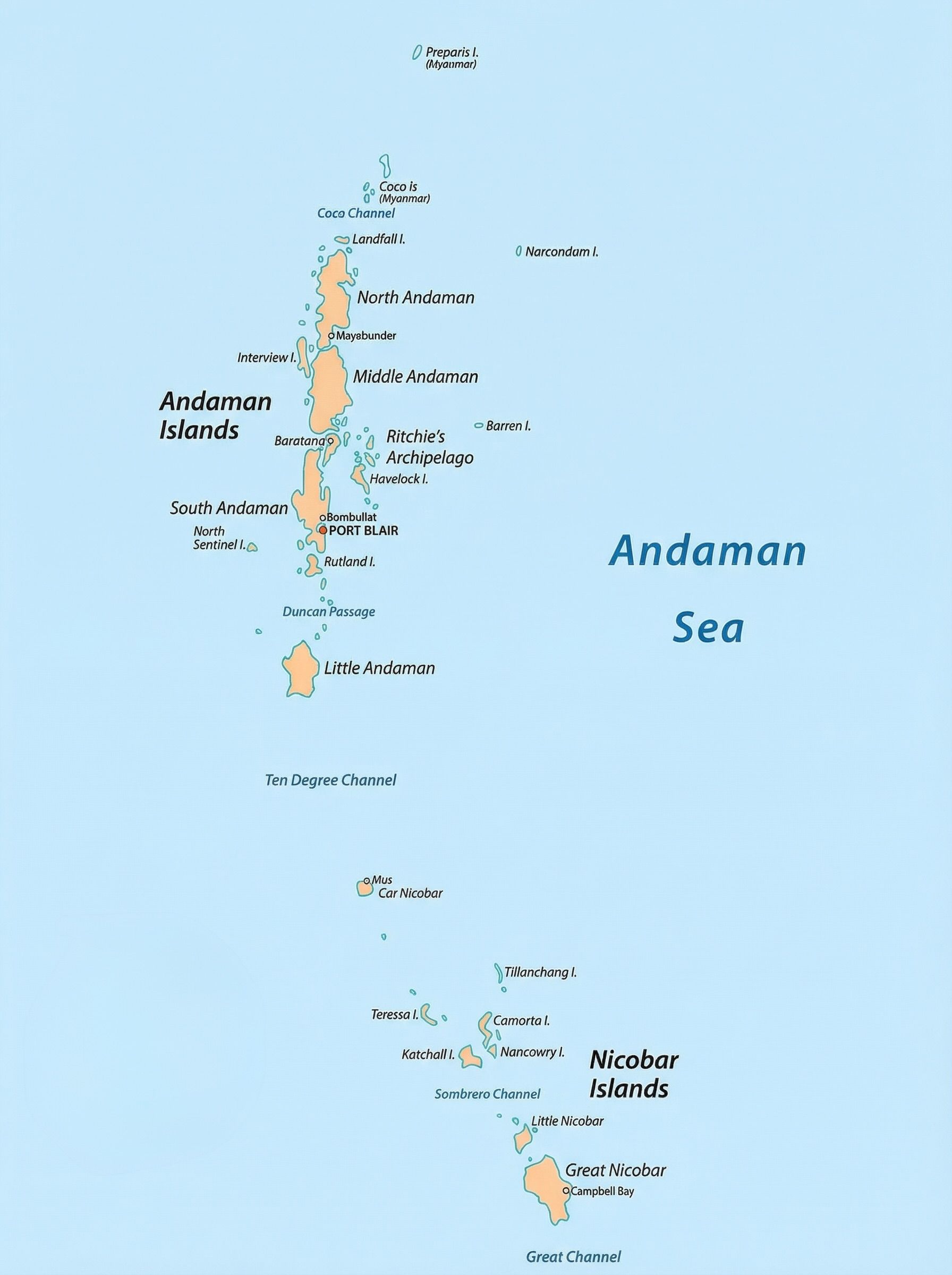
Andaman and Nicobar Islands

SuperKalam is your personal mentor for UPSC preparation, guiding you at every step of the exam journey.
Download the App


STUDY RESOURCES
CONTACT US
ⓒ Snapstack Technologies Private Limited