GS 2: GovernanceGS 3: Science & TechnologyPrelimsGS 2: Government policies and interventions for development in various sectorsGS 3: Basics of Cyber Security
CERT-In lays out security norms for Agentic AI systems, Pg16
India's CERT-In mandates stringent security and auditing norms for Agentic AI systems, focusing on autonomous task execution, delegation, and persistent memory risks.
Practice MCQs
840 Students attempted
Key Highlights:
- The Indian Computer Emergency Response Team (CERT-In) has released specific security and auditing guidelines for Agentic AI systems.
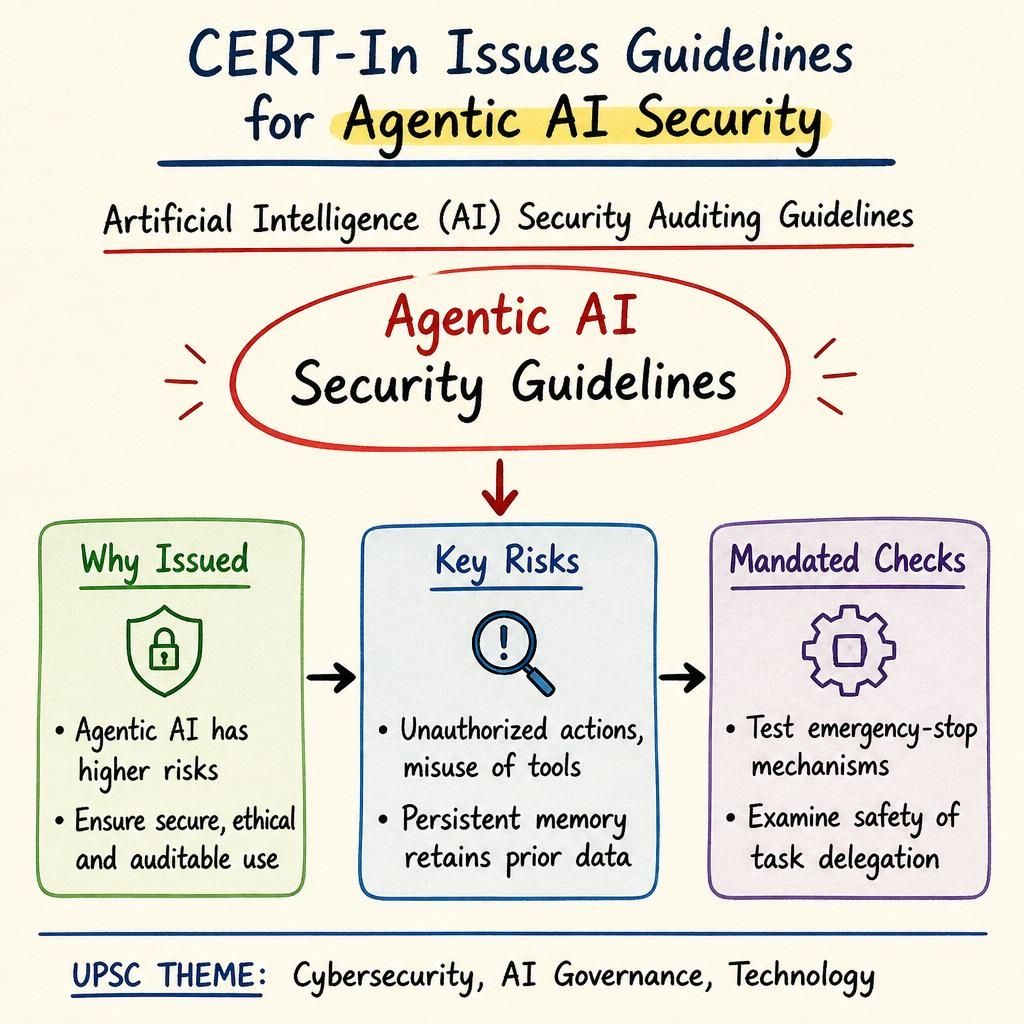
- The guidelines, titled Artificial Intelligence (AI) Security Auditing Guidelines, address AI systems capable of independent planning, task execution, and delegation.
- CERT-In identified features such as autonomous task execution, persistent memory, and task delegation as factors increasing risks in these AI systems.
- The framework mandates testing for unauthorized actions, misuse of tools, and the effectiveness of emergency-stop mechanisms in Agentic AI.
CERT-In.jpg
Detailed Insights:
- Agentic AI systems are distinct from conventional AI as they can take multiple steps, access external information, and delegate tasks to achieve objectives.
- The guidelines aim to ensure the secure, ethical, and auditable deployment of advanced AI technologies within India's digital ecosystem.
- Specific security concerns highlighted include an AI agent exceeding its authorized permissions or misusing credentials.
- Auditors are required to examine the safety of task delegation and the efficacy of emergency-stop mechanisms within these AI systems.
- The framework also addresses risks associated with an agent's persistent memory and the information it retains from prior interactions.
- CERT-In functions under the Ministry of Electronics and Information Technology (MeitY), serving as India's national agency for cybersecurity incident response.
Scientific/Technical Concepts Involved:
- Agentic AI: Advanced AI systems that can autonomously plan, execute, and delegate tasks, often interacting with external tools and systems.
- Persistent Memory: The ability of an AI system to retain and utilize information from past interactions or tasks over extended periods.
- Cybersecurity Auditing: A systematic process of evaluating an organization's information system security controls to ensure compliance and effectiveness.

SuperKalam is your personal mentor for UPSC preparation, guiding you at every step of the exam journey.
Download the App


STUDY RESOURCES
CONTACT US
ⓒ Snapstack Technologies Private Limited