GS 2: GovernanceGS 3: Science & TechnologyGS 2: Social JusticePrelimsGS 2: E Governance
To fight cancer better, make every diagnosis count, Pg15
Supreme Court urges states to declare cancer a notifiable disease, pushing for national guidelines and digital infrastructure for better health planning.
Practice MCQs
833 Students attempted
Key Highlights:
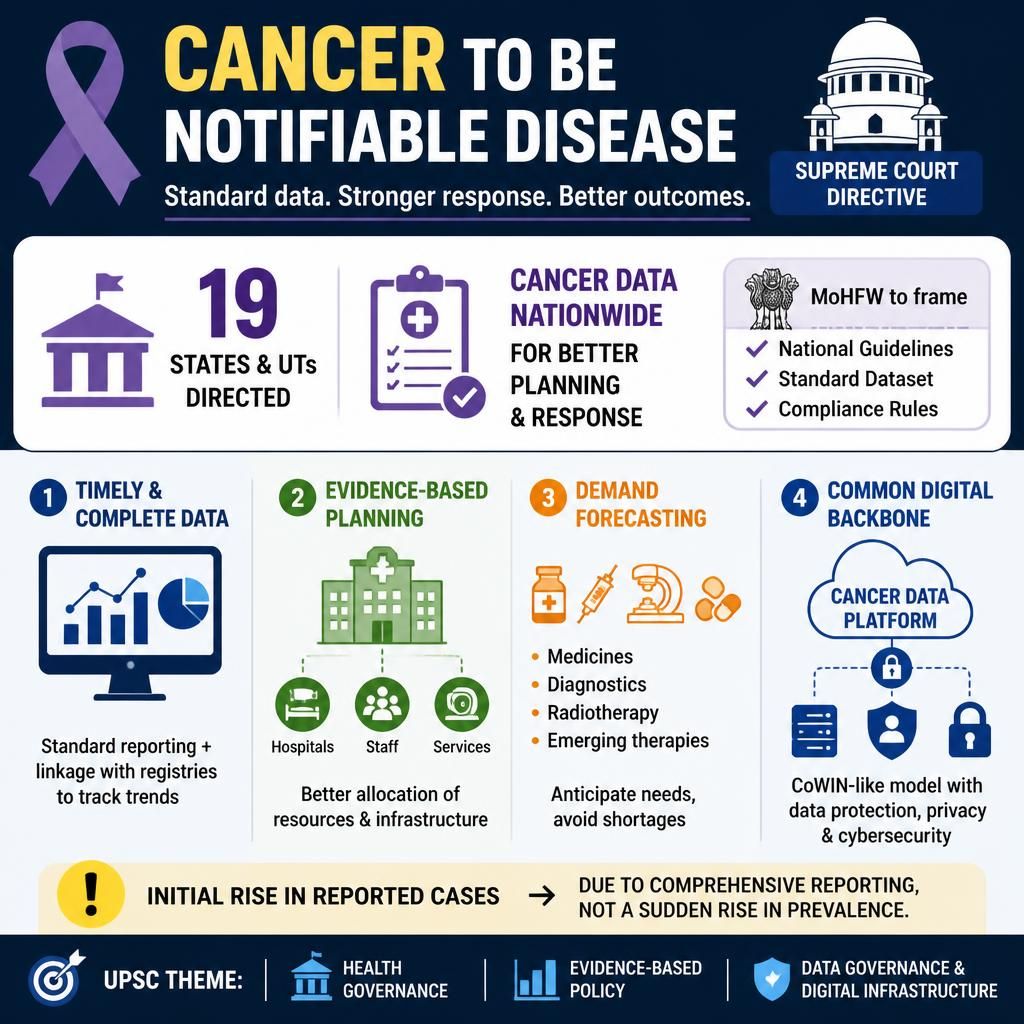
- The Supreme Court has directed 19 states and Union Territories to consider declaring cancer a notifiable disease.
- This initiative aims to standardize cancer data collection nationwide for improved planning and response.
- The Ministry of Health and Family Welfare is expected to formulate national guidelines, a standard dataset, and compliance rules.
- The Indian Cancer Society, established in 1951, has consistently advocated for stronger cancer surveillance.
Cancer Disease.jpg
Detailed Insights:
- Declaring cancer a notifiable disease will provide timely information on diagnosed cases, crucial for public health.
- This data, when linked with cancer registries, can help understand incidence, patterns, and trends of the disease.
- Better data enables evidence-based health planning, including resource allocation for hospitals, staff, and specialized services.
- It also assists in anticipating demand for medicines, diagnostics, radiotherapy, and emerging therapies.
- A common digital backbone, drawing parallels from CoWIN, is proposed to integrate existing systems and ensure shared standards.
- Robust data protection, privacy, and cybersecurity measures are essential for handling sensitive cancer information.
- An initial increase in reported cancer numbers due to comprehensive reporting should not be misinterpreted as a sudden rise in prevalence.
Key Concepts Involved:
- Notifiable Disease: A disease that healthcare providers are legally required to report to government authorities for public health monitoring and intervention.
- Cancer Registry: A systematic collection of data on cancer cases within a defined population, used for epidemiological research and public health planning.
- Interoperability: The ability of different information systems, devices, or applications to connect, exchange, and cooperatively use data.
- Data Protection: Legal and technical safeguards implemented to prevent unauthorized access, use, disclosure, or alteration of personal information.
Previous12/12

SuperKalam is your personal mentor for UPSC preparation, guiding you at every step of the exam journey.
Download the App


STUDY RESOURCES
CONTACT US
ⓒ Snapstack Technologies Private Limited