GS 2: GovernanceGS 3: EconomyPrelimsGS 3: Indian Economy, Planning, Mobilization of Resources, Growth, Development and EmploymentGS 2: E Governance
GST process reforms pin hope on data, tech to ensure compliance, Pg4
GST Council proposes major process reforms, including removing arrest powers and increasing prosecution thresholds, leveraging data and tech for compliance and ease of doing business.
Practice MCQs
833 Students attempted
Key Highlights:
- The GST Council is set to discuss significant process reforms on October 8, aiming to stabilize the Goods and Services Tax (GST) regime for the next 5-6 years.
- Key proposals include removing the power to arrest by GST officers and resolving disputes through civil consequences.
- The threshold for prosecution is likely to be increased from ₹1 crore to ₹5 crore.
- Sentencing provisions are proposed to be softened, with the minimum sentence potentially removed and fines offered as an alternative.
- No notices will be issued for amounts below ₹10,000, applying to both new and pending cases.
- Reforms also include redesigning processes like registration, returns, and refunds, leveraging technology and data for compliance.
- The place of supply rules for export of services are being aligned to follow the customer's location, boosting sectors like testing and certification.
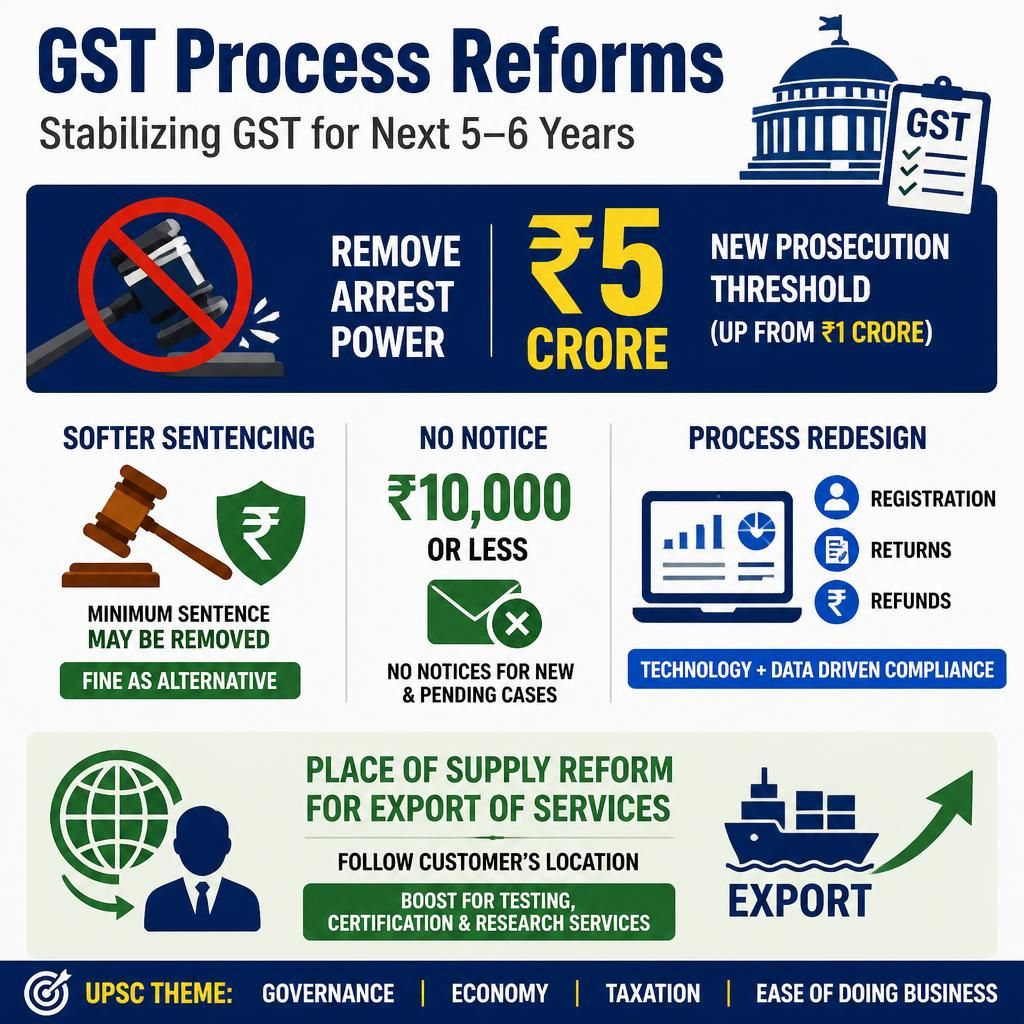
GST Process Reforms.jpg
Detailed Insights:
- These process reforms follow the GST rate rationalization in September 2025, which reduced tax slabs to 5% and 18%, with a 40% rate for demerit goods.
- The removal of arrest power aims to reduce undue leverage over businesses and foster a more predictable tax environment.
- Increasing the prosecution threshold and softening sentences are intended to make the GST regime less punitive for minor infractions.
- The decision to waive notices for small amounts (below ₹10,000) will significantly ease the compliance burden for small businesses and optimize officer resources.
- The redesign of core GST processes emphasizes data-driven compliance, reducing the need for subjective judgment by officers.
- Aligning the place of supply for services like testing and research with international practice will facilitate their classification as exports, promoting India's service sector.
- The successful implementation of the 2025 rate rationalization, without adverse revenue impact, has paved the way for these comprehensive process reforms.
Key Concepts Involved:
- GST Council: A constitutional body that makes recommendations to the Union and State Governments on issues related to Goods and Services Tax.
- Goods and Services Tax (GST): An indirect tax levied on the supply of goods and services, replacing multiple cascading taxes levied by the central and state governments.
- Prosecution: Legal proceedings initiated against an individual or entity for an alleged offense, in this context, for GST evasion or non-compliance.
- Place of Supply: A crucial concept in GST that determines whether a transaction is inter-state or intra-state, impacting tax applicability and revenue allocation.

SuperKalam is your personal mentor for UPSC preparation, guiding you at every step of the exam journey.
Download the App


STUDY RESOURCES
CONTACT US
ⓒ Snapstack Technologies Private Limited