GS 2: International RelationsGS 1: Modern HistoryPrelimsGS 4: Human Values, Lessons from Leaders, Reformers and AdministratorsGS 2: Bilateral, Regional and Global Groupings and Agreements
Jaishankar pays tribute to Indian rulers who sheltered Polish refugees during WWII, Pg5
EAM Jaishankar honors Indian rulers, Maharaja Digvijaysinhji Jadeja and Kolhapur, for sheltering Polish refugees during WWII, strengthening India-Poland ties.
Practice MCQs
826 Students attempted
Key Highlights:
- External Affairs Minister S Jaishankar recently visited two memorials in Warsaw, Poland, commemorating India's humanitarian role during World War II.
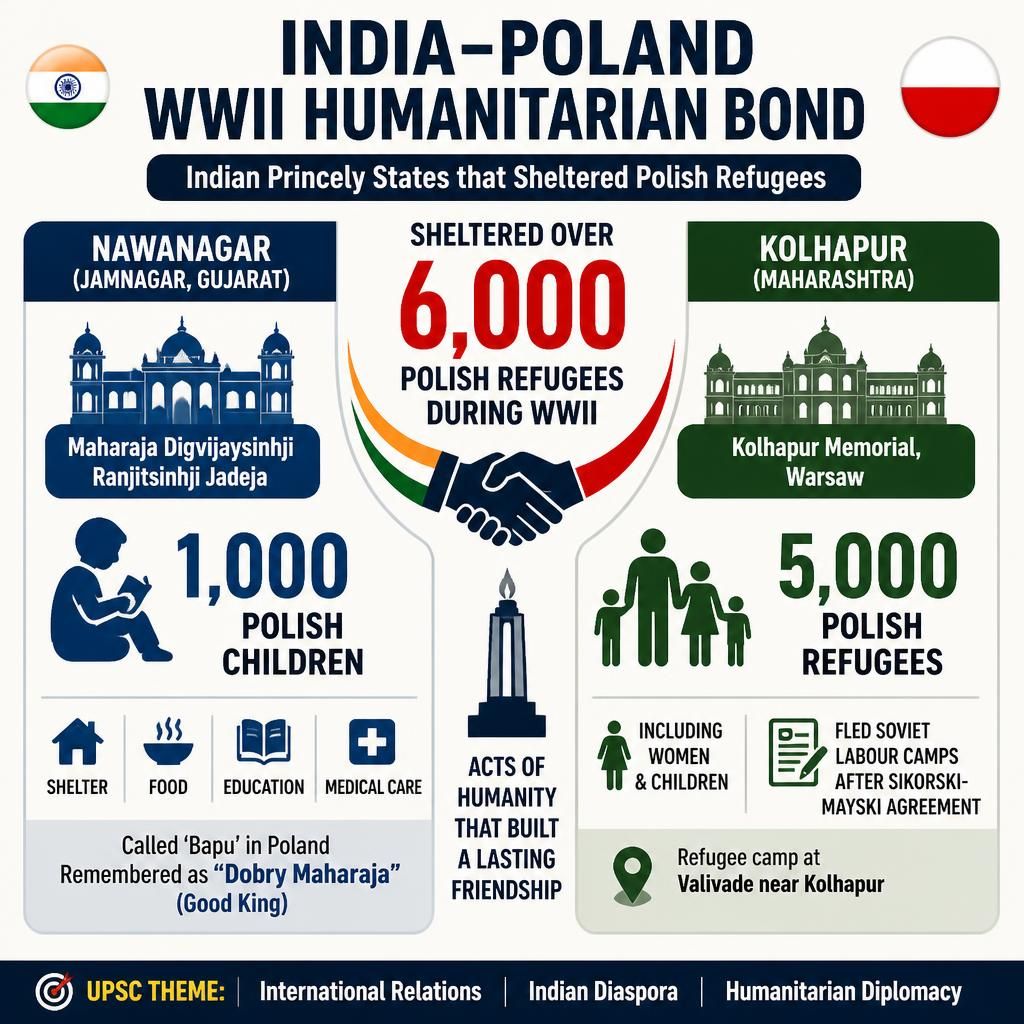
- He paid tribute to Maharaja Digvijaysinhji Ranjitsinhji Jadeja of Nawanagar (now Jamnagar, Gujarat) for sheltering around 1,000 Polish children.
- Jaishankar also honored the Kolhapur Memorial, which recalls the refuge provided by the princely state of Kolhapur to approximately 5,000 Polish refugees.
- These acts of generosity during World War II continue to strengthen the historical and diplomatic ties between India and Poland.
India-Poland.jpg
Detailed Insights:
- Maharaja Digvijaysinhji Ranjitsinhji Jadeja established a settlement at Balachadi near Jamnagar, providing accommodation, food, education, and medical care to Polish children.
- The children affectionately called the Maharaja 'Bapu' (father), and he is remembered in Poland as the "Dobry Maharaja" (Good King).
- The Kolhapur Memorial in Warsaw commemorates the camp at Valivade near Kolhapur, Maharashtra, which housed around 5,000 Polish refugees, including women and children.
- Many Polish refugees had fled Soviet labor camps after the Sikorski-Mayski Agreement during World War II.
- Prime Minister Narendra Modi also visited these memorials in August 2024, highlighting their importance in India-Poland relations.
- The Jam Saheb Memorial Youth Exchange Programme further fosters cultural ties between the two nations.
Key Concepts Involved:
- Princely State: A semi-sovereign state in British India ruled by a local monarch under indirect rule.
- Humanitarian Aid: Assistance provided for humanitarian purposes, typically in response to crises like war or natural disasters.
- World War II: A global war lasting from 1939 to 1945, involving the vast majority of the world's countries.

SuperKalam is your personal mentor for UPSC preparation, guiding you at every step of the exam journey.
Download the App


STUDY RESOURCES
CONTACT US
ⓒ Snapstack Technologies Private Limited