GS 3: Science & TechnologyGS 3: Environment & EcologyPrelimsGS 3: Conservation, Pollution and DegradationGS 1: Changes in Critical Geographical Features, Water Bodies, Ice Caps, Flora and Fauna
Dragonflies are bellwethers of earth’s ecosystems, Pg13
Dragonflies, ancient insect predators, serve as crucial ecological bellwethers, with dwindling populations signaling environmental degradation from pesticides and climate change.
Practice MCQs
826 Students attempted
Key Highlights:
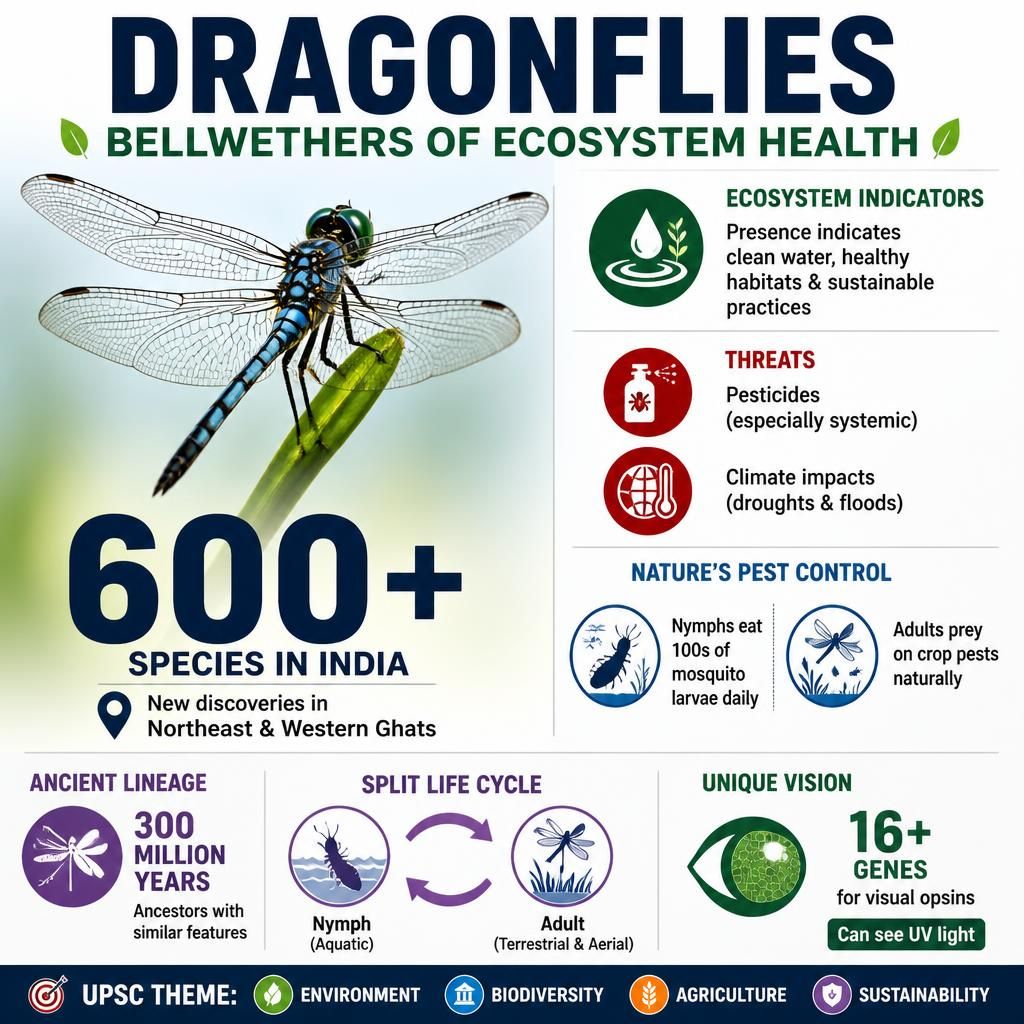
- Dragonflies, belonging to the order Odonata, serve as crucial bellwethers for the health of Earth's ecosystems.
- India is home to approximately 600 species of Odonata, with new discoveries often made in the Northeastern States and Western Ghats.
- Dragonfly populations are declining globally due to excessive pesticide use, particularly systemic pesticides, and adverse climate change impacts like droughts and floods.
- These insects are vital predators, with aquatic nymphs consuming mosquito larvae and adults preying on agricultural pests.
- Their unique visual system involves 16 or more genes for visual opsins, allowing them to perceive ultraviolet light.
Dragonflies.jpg
Detailed Insights:
- Dragonflies have an ancient lineage, with ancestors dating back 300 million years, possessing similar aerodynamic features but much larger wingspans.
- Their life cycle is split, with larvae (nymphs) living in water and adults being terrestrial and aerial.
- Nymphs are highly effective biological control agents, capable of consuming hundreds of mosquito larvae daily.
- The presence of healthy dragonfly populations in agricultural areas indicates sustainable farming practices with minimal pesticide use.
- Climate change impacts, such as altered rainfall patterns, severely affect endemic species like the blue hawklet in the Western Ghats.
- Research into dragonfly eyes reveals a highly sensitive visual system far more complex than that of humans.
Key Concepts Involved:
- Odonata: An order of predatory flying insects that includes dragonflies and damselflies, characterized by large eyes and two pairs of strong, transparent wings.
- Nymphs: The immature, aquatic larval stage of insects like dragonflies, which undergo gradual metamorphosis without a pupal stage.
- Systemic pesticides: Chemical compounds absorbed by plants and distributed throughout their tissues, making the entire plant toxic to feeding insects.
- Bellwether species: Organisms whose health or presence indicates the overall condition or health of a particular ecosystem or environment.

SuperKalam is your personal mentor for UPSC preparation, guiding you at every step of the exam journey.
Download the App


STUDY RESOURCES
CONTACT US
ⓒ Snapstack Technologies Private Limited