GS 2: GovernanceGS 3: Science & TechnologyPrelimsGS 2: Government policies and interventions for development in various sectorsGS 2: Important International Institutions, Agencies and Fora
3 widely used medicines classified as carcinogenic by WHO research agency, Pg12
WHO's IARC classifies three widely used essential medicines, including hypertension and transplant drugs, as carcinogenic to humans, raising global health concerns.
Practice MCQs
811 Students attempted
Key Highlights:
- The International Agency for Research on Cancer (IARC), a World Health Organization (WHO) research agency, has classified three widely used medicines as "carcinogenic to humans" (Group 1).
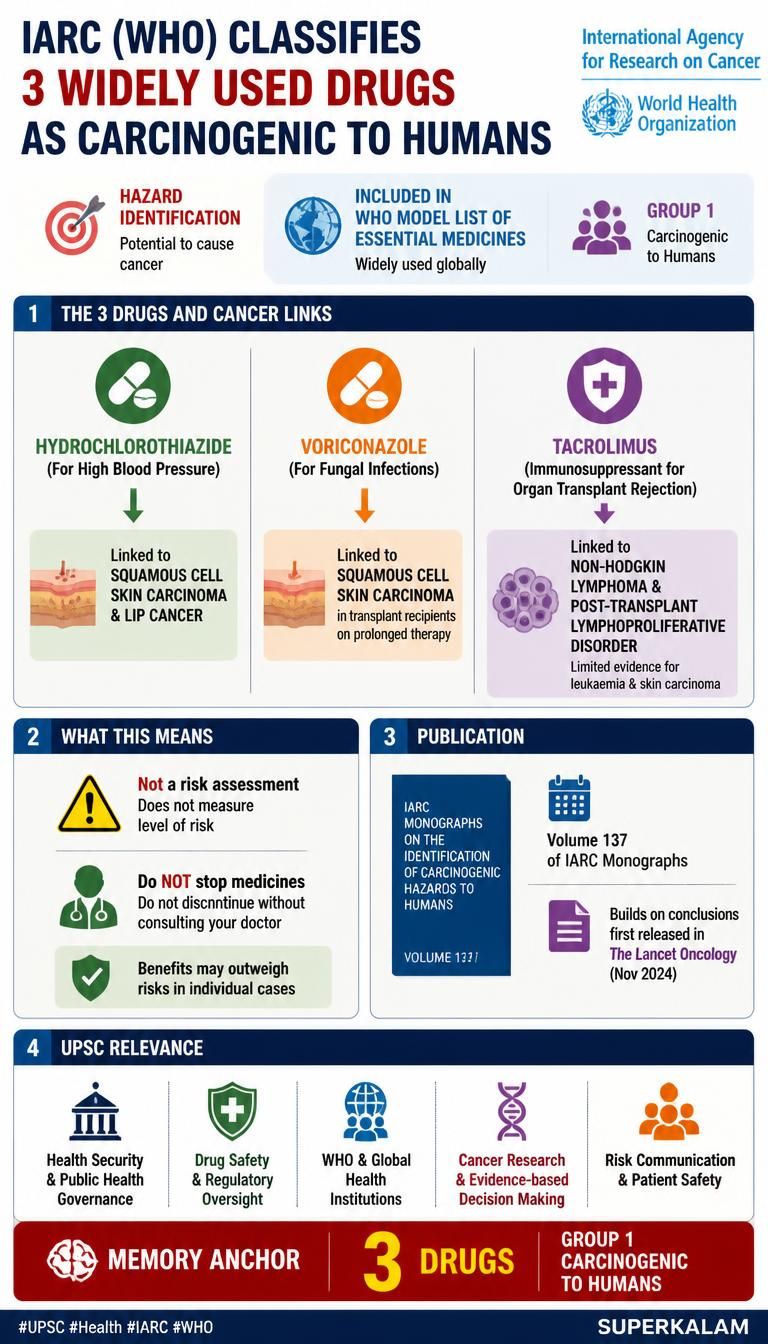
- The medicines are hydrochlorothiazide (for high blood pressure), voriconazole (for fungal infections), and tacrolimus (an immunosuppressant for organ transplant rejection).
- These three drugs are included in the WHO Model List of Essential Medicines, indicating their widespread use globally.
- Hydrochlorothiazide is linked to squamous cell skin carcinoma and lip cancer.
- Voriconazole is associated with squamous cell skin carcinoma in transplant recipients on prolonged therapy.
- Tacrolimus is linked to non-Hodgkin lymphoma and post-transplant lymphoproliferative disorder, with limited evidence for leukaemia and skin carcinoma.
WHO.jpg
Detailed Insights:
- The IARC classification is a hazard identification, meaning it indicates the potential to cause cancer, but does not assess the level of risk based on exposure.
- Medical experts advise patients not to discontinue these treatments without consulting their doctors, as the benefits may outweigh the risks for individual cases.
- The assessment was published as Volume 137 of the IARC Monographs, building upon conclusions initially released in The Lancet Oncology in November 2024.
- In India, concerns exist regarding the irrational prescribing, over-the-counter availability, and poor adherence to ethical prescribing practices for such medications.
- Hydrochlorothiazide has long been recognized for its risk, particularly in sun-exposed populations and outdoor workers.
- Voriconazole is also a concern due to its known association with skin cancer risk and its frequent prescription for off-label indications.
Scientific/Technical Concepts Involved:
- International Agency for Research on Cancer (IARC): The specialized cancer agency of the World Health Organization (WHO), responsible for conducting and coordinating research on the causes of cancer.
- WHO Model List of Essential Medicines: A list published by the WHO containing medicines considered most effective and safe to meet the most important health needs in a health system.
- Group 1 Carcinogen: A classification by IARC indicating that there is sufficient evidence that an agent causes cancer in humans.
- Squamous cell skin carcinoma: A common type of skin cancer that begins in the squamous cells, which are thin, flat cells in the outer layer of the skin.
- Non-Hodgkin lymphoma: A type of cancer that starts in white blood cells called lymphocytes, which are part of the body's immune system.
- Post-transplant lymphoproliferative disorder (PTLD): A condition where white blood cells (lymphocytes) multiply uncontrollably after an organ transplant, potentially leading to lymphoma.

SuperKalam is your personal mentor for UPSC preparation, guiding you at every step of the exam journey.
Download the App


STUDY RESOURCES
CONTACT US
ⓒ Snapstack Technologies Private Limited