GS 2: GovernanceGS 3: Environment & EcologyPrelimsGS 3: Conservation, Pollution and DegradationGS 2: Government policies and interventions for development in various sectors
Delhi Winter Action Plan Came Into Effect On Nov, Pg4
Delhi government levies Rs 75.6 lakh in fines, shutting down 10 sites as Winter Action Plan enforces construction ban and PUCC norms.
Practice MCQs
826 Students attempted
Key Highlights:
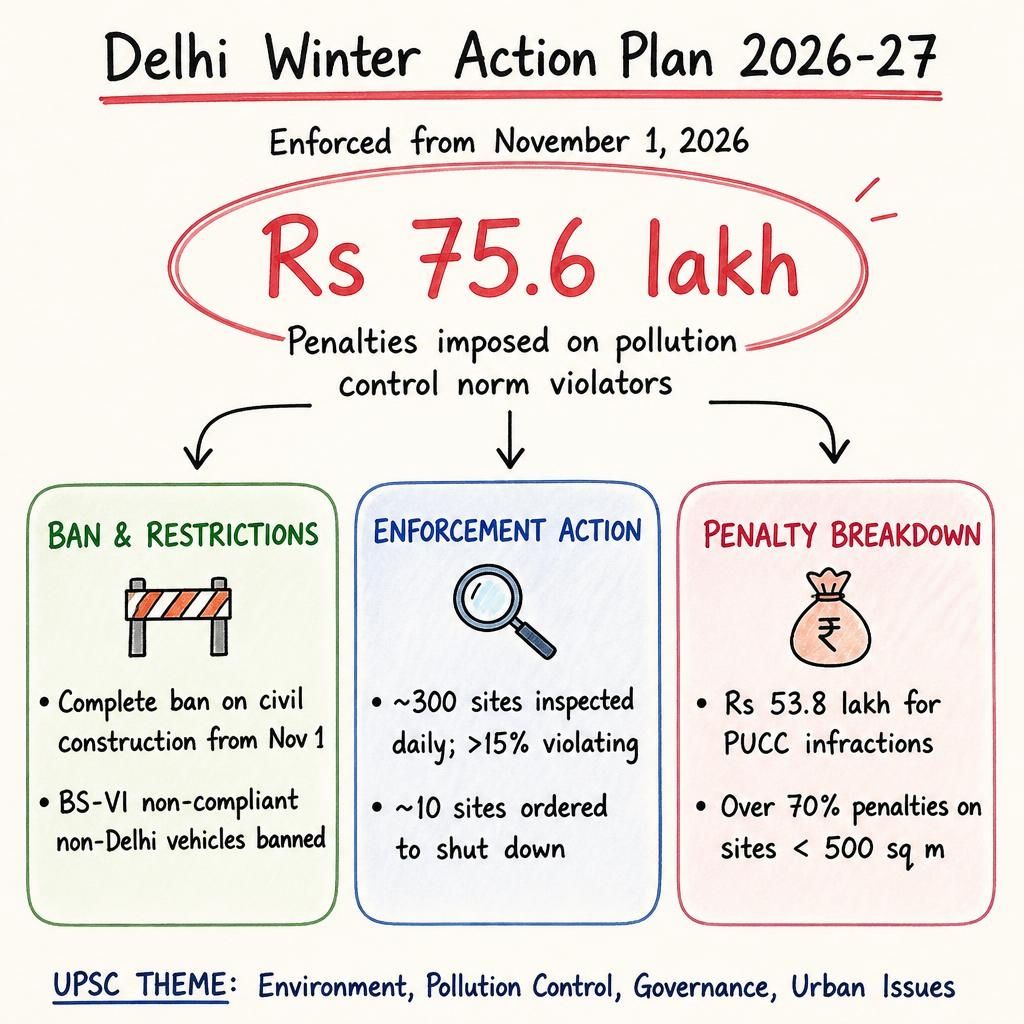
- The Delhi government's Winter Action Plan came into effect on November 1, initiating a complete ban on civil construction activities.
- Approximately 300 construction sites are inspected daily, with just over 15% found violating the ban.
- Penalties totaling Rs 75.6 lakh were imposed on violators of pollution control norms, including Rs 53.8 lakh for Pollution Under Control Certificate (PUCC) infractions.
- Over 70% of the penalties related to construction and demolition activities were levied against sites measuring less than 500 sq m.
- Around 10 construction sites have been ordered to shut down in the initial three days of enforcement.
Delhi Winter Action Plan.jpg
Detailed Insights:
- The Delhi Winter Action Plan for 2026-27 was announced on October 20, 2026, by Chief Minister Rekha Gupta, with measures effective from November 1, 2026, to February 28, 2027.
- Key components of the plan include restrictions on polluting vehicles, a 'No PUC, No Fuel' policy, work-from-home directives, increased parking charges, and stringent construction controls.
- The ban on dust-generating demolition and outdoor civil construction activities is in force from November 1 to January 31.
- A more comprehensive ban on all construction and demolition activities, with specific exemptions, is scheduled from December 10 to January 20.
- The plan also prohibits non-Delhi registered vehicles that do not comply with BS-VI emission norms from entering the capital between November 1 and January 31.
- Enforcement responsibilities are shared among various agencies, including the Transport Department, Delhi Traffic Police, Delhi Pollution Control Committee (DPCC), and municipal bodies.
- Major contributors to winter air pollution in Delhi include vehicular emissions, industrial activities, construction dust, waste burning, and agricultural stubble burning in adjacent states.
- The Graded Response Action Plan (GRAP), overseen by the Commission for Air Quality Management (CAQM), provides a structured framework for implementing pollution control measures based on Air Quality Index (AQI) levels.
- The DPCC has mandated daily enforcement reports from seven government agencies to ensure effective implementation of pollution control measures.
Key Concepts Involved:
- Winter Action Plan: An annual comprehensive strategy by the Delhi government to mitigate severe air pollution during the winter season.
- Pollution Under Control Certificate (PUCC): A mandatory document for vehicles in India, certifying that their emission levels meet prescribed government standards.
- Graded Response Action Plan (GRAP): A Supreme Court-approved framework that outlines escalating actions for Delhi-NCR governments in response to worsening air pollution levels.
- BS-VI Emission Norms: Bharat Stage VI are emission standards set by the Indian government to regulate the output of air pollutants from internal combustion engines.

SuperKalam is your personal mentor for UPSC preparation, guiding you at every step of the exam journey.
Download the App


STUDY RESOURCES
CONTACT US
ⓒ Snapstack Technologies Private Limited