GS 3: Internal SecurityGS 3: Environment & EcologyPrelimsGS 3: Conservation, Pollution and DegradationGS 2: Statutory, Regulatory and Quasi Judicial Bodies
Baby orangutans face longer quarantine at Odisha zoo, Pg8
Odisha zoo extends quarantine for five rescued baby orangutans to 90 days, addressing smuggling concerns and their critically endangered status.
Practice MCQs
819 Students attempted
Key Highlights:
- Five baby orangutans were rescued from a forest in Balasore, Odisha, in September, raising concerns about illegal wildlife trade.
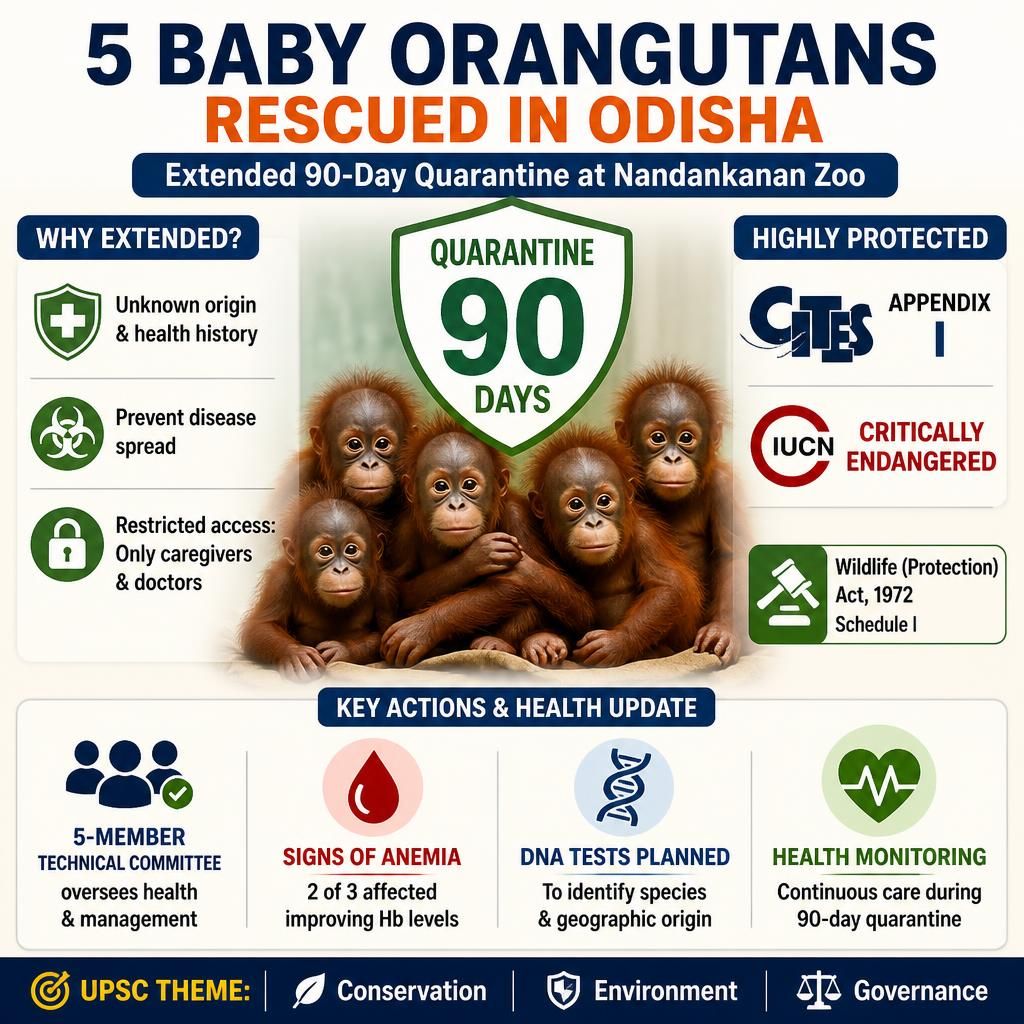
- The orangutans are undergoing an extended 90-day quarantine at Nandankanan Zoological Park in Odisha.
- The Central Zoo Authority (CZA) advised the longer quarantine period as part of biosecurity protocols due to unknown health history and origin.
- Orangutans are listed under Appendix I of the Convention on International Trade in Endangered Species (CITES) and are classified as Critically Endangered by the International Union for Conservation of Nature (IUCN) Red List.
Orangutan.jpg
Detailed Insights:
- The standard quarantine period for animals in Indian zoos is 30 days, but it is extended for high-risk or highly protected species.
- The extended quarantine aims to prevent disease spread and monitor the health of the infant orangutans, whose origin and health history are unclear.
- Only caregivers and doctors are permitted to enter the quarantine facility to minimize external contact and potential contamination.
- A five-member technical committee of experts has been formed by the state government to oversee the health and management of the baby orangutans.
- The rescued infants showed signs of anemia, with two of three affected individuals gradually improving their haemoglobin levels.
- DNA tests are being considered to determine the exact species and geographical origin of the orangutans, which is crucial for conservation efforts.
- Public viewing of the orangutans will not be allowed until a final decision is made by the state government and other statutory bodies.
Key Concepts Involved:
- Central Zoo Authority (CZA): A statutory body in India responsible for regulating and overseeing zoos and their management.
- Convention on International Trade in Endangered Species (CITES): An international agreement regulating trade in wild animals and plants to prevent species extinction.
- CITES Appendix I: Lists species threatened with extinction, for which international trade is generally prohibited except under exceptional circumstances.
- International Union for Conservation of Nature (IUCN) Red List: The world's most comprehensive inventory of the global conservation status of biological species.
- Critically Endangered: The highest risk category for wild species on the IUCN Red List, indicating an extremely high risk of extinction in the wild.

SuperKalam is your personal mentor for UPSC preparation, guiding you at every step of the exam journey.
Download the App


STUDY RESOURCES
CONTACT US
ⓒ Snapstack Technologies Private Limited