GS 2: GovernanceGS 1: Indian SocietyGS 2: Social JusticePrelimsGS 2: Government policies and interventions for development in various sectors
Why Accessible Rehabilitation Is The Need Of The Hour In India, Pg II
India's healthcare system fails to provide accessible rehabilitation, leaving many disabled post-treatment, necessitating urgent policy reforms and community-based solutions.
Practice MCQs
811 Students attempted
Key Highlights:
- India faces a significant challenge in providing accessible rehabilitation services, particularly physiotherapy, post-acute medical care.
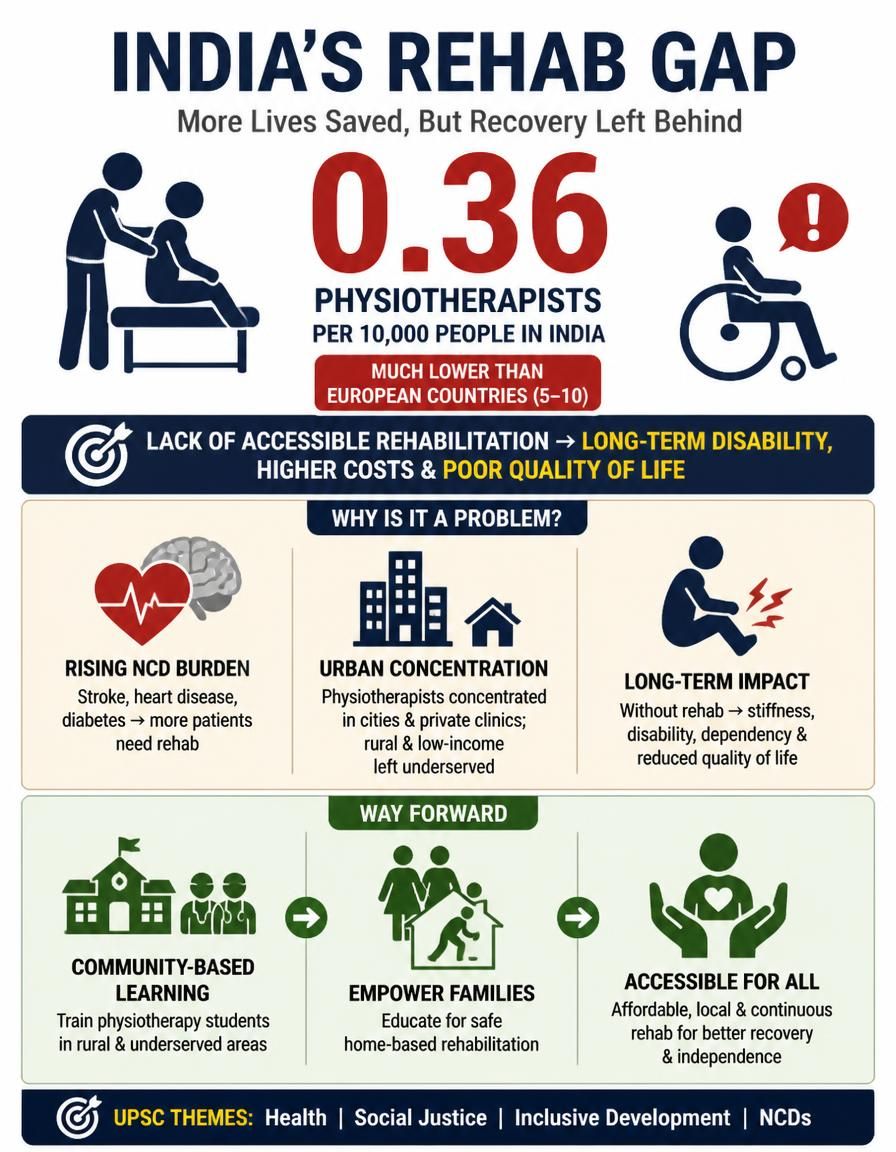
- The country has a low physiotherapist-to-population ratio of 0.36 per 10,000 people, significantly lower than many European nations.
- Lack of accessible rehabilitation leads to long-term disability and reduced quality of life for patients, despite life-saving acute care.
- The issue is exacerbated by the growing burden of non-communicable diseases (NCDs) like stroke and heart disease.
Rehab Gap.jpg
Detailed Insights:
- Acute medical care saves lives, but rehabilitation is crucial for patients to regain independence and quality of life.
- Many patients, especially from low-income families or rural areas, cannot access regular physiotherapy due to distance and cost.
- The current distribution of physiotherapists is concentrated in urban centers and private clinics, leaving underserved populations neglected.
- Long-term complications, such as muscle and joint stiffness, can arise from prolonged immobility without proper rehabilitation.
- Proposed solutions include promoting community-based learning for physiotherapy students in rural and underserved areas.
- Empowering families with knowledge for home-based rehabilitation can reduce the need for constant professional presence.
- Tele-rehabilitation can offer follow-up, exercise demonstrations, and support for patients facing travel difficulties.
- Integrating physiotherapy into Primary Healthcare Centres (PHCs) and rural settings is essential for wider reach and accessibility.
Key Concepts Involved:
- Rehabilitation: The process of restoring functional ability and quality of life to individuals with physical impairments or disabilities.
- Non-Communicable Diseases (NCDs): Chronic diseases that are not passed from person to person, such as heart disease, stroke, cancer, and diabetes.
- Tele-rehabilitation: The delivery of rehabilitation services remotely using information and communication technologies.
- Primary Healthcare Centres (PHCs): The first point of contact for individuals and communities with the healthcare system, providing essential healthcare services.

SuperKalam is your personal mentor for UPSC preparation, guiding you at every step of the exam journey.
Download the App


STUDY RESOURCES
CONTACT US
ⓒ Snapstack Technologies Private Limited