GS 2: Social JusticeGS 2: International RelationsGS 3: Disaster ManagementGS 3: Environment & EcologyPrelims
Keeping Pace With a Succession of Climate Shock Events, Pg9
Nepal's devastating floods underscore South Asia's increasing climate shocks, revealing marginalized communities' extreme vulnerability and the urgent need for regional cooperation.
Practice MCQs
811 Students attempted
Key Highlights:
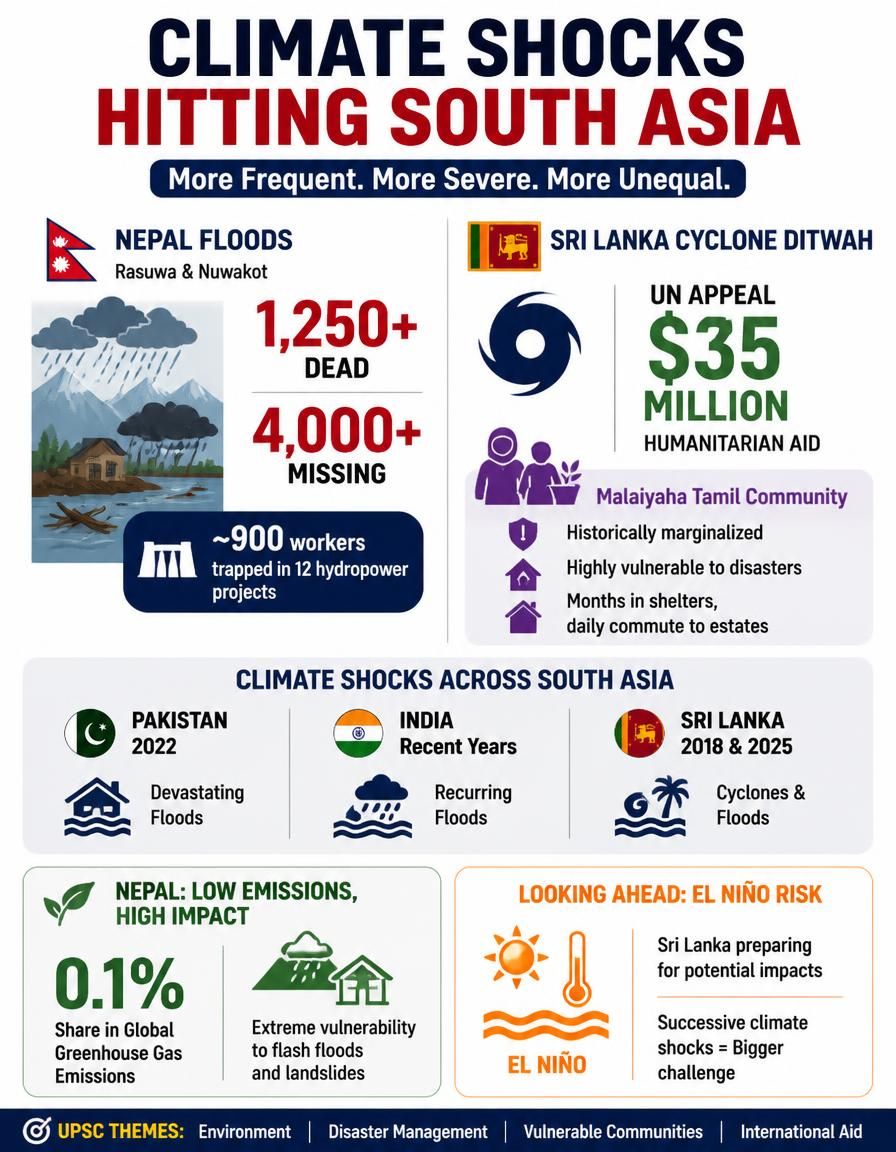
- Nepal recently experienced severe floods in Rasuwa and Nuwakot districts, resulting in over 1,250 deaths and 4,000 missing persons.
- Approximately 900 workers were reportedly trapped in 12 hydropower projects affected by the floods in Nepal.
- Sri Lanka faced Cyclone Ditwah late last year, which disproportionately impacted the Malaiyaha Tamil community in tea and rubber estates.
- The United Nations sought to mobilize $35 million in aid for humanitarian assistance in Sri Lanka following Cyclone Ditwah.
- South Asia has witnessed a succession of major climate shock events, including floods in Pakistan (2022), India (recent years), and Sri Lanka (2018, 2025).
Climate Shocks.jpg
Detailed Insights:
- Nepal, despite contributing only 0.1% to global greenhouse gas emissions, is highly vulnerable to severe climate impacts like flash floods.
- The Malaiyaha Tamil community in Sri Lanka, historically marginalized, faces heightened exploitation and vulnerability to climate shocks.
- Many affected families in Sri Lanka remained in temporary shelters for months, struggling with daily commutes to their work in tea estates.
- Sri Lanka is preparing for the potential effects of El Niño this year, highlighting the challenge of combating successive climate shocks.
- The region's ecological interconnectedness necessitates a collaborative response to the climate crisis, as noted by former diplomat Shyam Saran in 2009.
Key Concepts Involved:
- Climate Shock Events: Sudden, severe weather or climate-related occurrences causing significant disruption and damage.
- Vulnerability: The susceptibility of a community or system to the adverse effects of climate change, often exacerbated by socio-economic factors.
- El Niño: A climate pattern characterized by unusual warming of surface waters in the eastern tropical Pacific Ocean, influencing global weather.

SuperKalam is your personal mentor for UPSC preparation, guiding you at every step of the exam journey.
Download the App


STUDY RESOURCES
CONTACT US
ⓒ Snapstack Technologies Private Limited