GS 1: World GeographyGS 2: International RelationsGS 3: EconomyPrelimsGS 3: Infrastructure: Energy, Ports, Roads, Airports, Railways etc.
LNG Imports Rise As US, Nigeria And Oman Offset Hormuz Volume Loss, Pg1
India boosts LNG imports by 15.4% from US, Nigeria, Oman, offsetting Strait of Hormuz disruptions and West Asia war impact on energy supply.
Practice MCQs
804 Students attempted
Key Highlights:
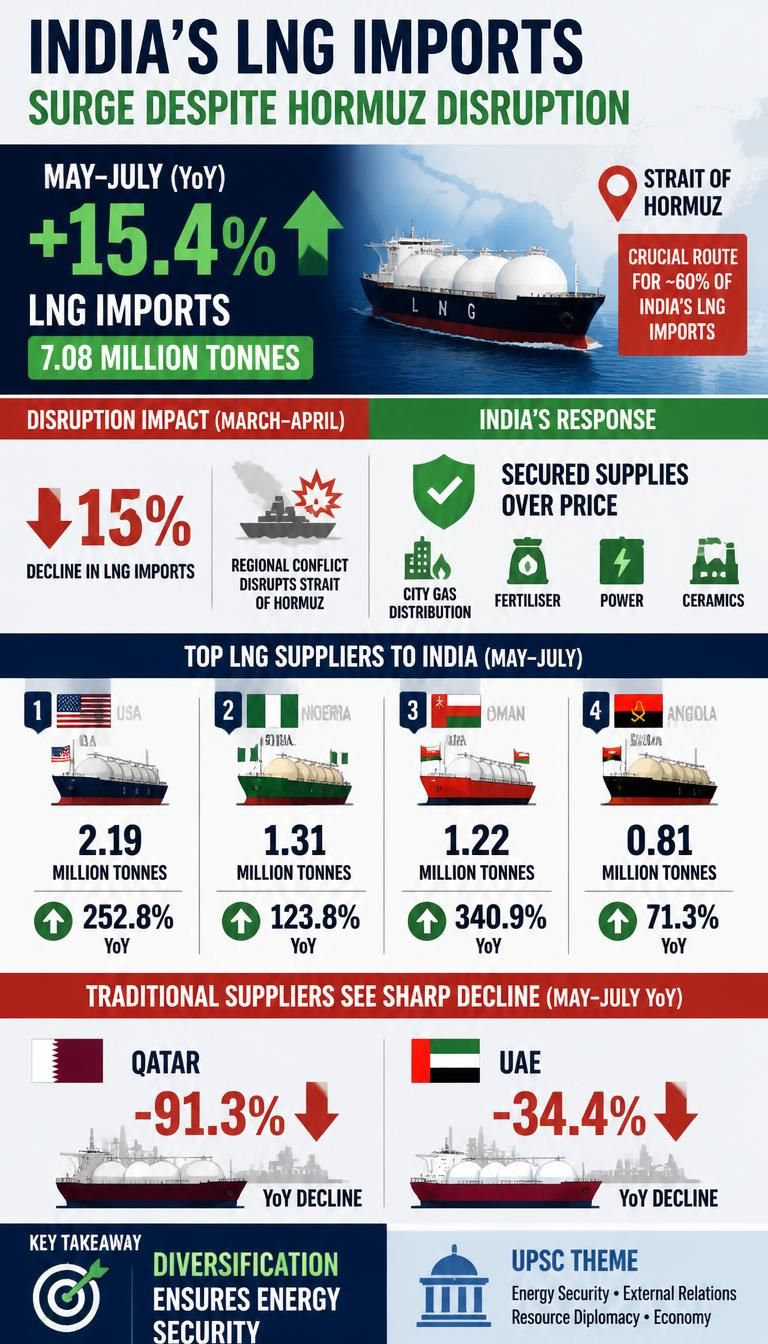
- India's Liquefied Natural Gas (LNG) imports increased by 15.4% in May-July compared to the previous year, reaching 7.08 million tonnes.
- This rise occurred despite disruptions in the Strait of Hormuz, which initially caused a 13% decline in imports during March-April.
- The increase was driven by a diversification of import sources, with the US, Nigeria, Oman, and Angola significantly ramping up supplies.
- The US became India's top LNG supplier in May-July, contributing 2.19 million tonnes, followed by Nigeria (1.31 million tonnes) and Oman (1.22 million tonnes).
- Imports from traditional suppliers like Qatar plummeted by 91.3% and from UAE by 34.4% due to the strait's disruption.
LNG.jpg
Detailed Insights:
- The Strait of Hormuz, a crucial waterway for global energy flows, experienced disruptions due to a regional conflict, impacting about 60% of India's LNG imports.
- India prioritized securing LNG supplies over price considerations to meet demand from sectors like city gas distribution, fertiliser, power, and ceramics.
- LNG imports from the US surged by 252.8% year-on-year, while those from Oman increased by 340.9% in the May-July period.
- Nigeria and Angola also saw substantial increases in their LNG exports to India, by 123.8% and 71.3% respectively.
- Some UAE LNG cargoes recovered in June and July, reportedly using tactics like switching off transponders and exploiting brief windows of opportunity.
- LNG prices are expected to remain high, potentially reaching $19-20 per million British thermal unit, which could push price-sensitive sectors towards alternative fuels.
Key Concepts Involved:
- Liquefied Natural Gas (LNG): Natural gas converted to liquid form for easier storage and transport, primarily by cooling it to about -162°C.
- Strait of Hormuz: A narrow, strategically vital waterway connecting the Persian Gulf to the Gulf of Oman and the Arabian Sea, crucial for global oil and gas shipments.
- City Gas Distribution (CGD): A network that supplies natural gas to domestic, commercial, and industrial consumers in urban areas.

SuperKalam is your personal mentor for UPSC preparation, guiding you at every step of the exam journey.
Download the App


STUDY RESOURCES
CONTACT US
ⓒ Snapstack Technologies Private Limited