GS 3: Economy
Grey market and IPO booms: What retail investors need to watch out for, Pg14
The article examines how unofficial trading in IPO shares and grey market premiums can expose retail investors to risks outside regulated markets.
Practice MCQs
819 Students attempted
Key Highlights:
- An unofficial grey market in yet-to-list IPO shares is gaining traction in India, operating beyond the reach of regulatory mechanisms.
- The grey market premium has become an unofficial indicator of expected listing gains; operators work out of centres like Ahmedabad, Jaipur and Rajkot.
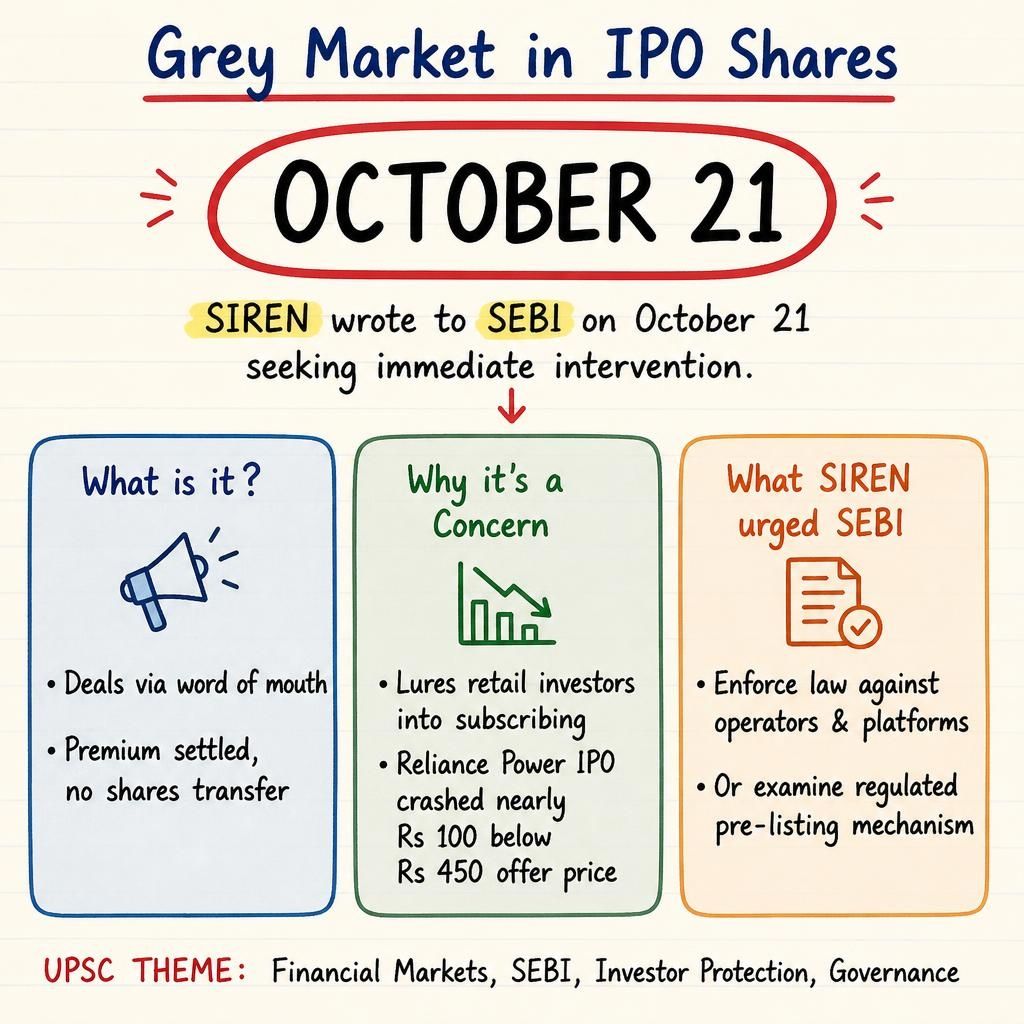
- The Small Investors Welfare Association (SIREN) wrote to the Securities and Exchange Board of India on October 21 seeking immediate intervention.
- SIREN compared the open trading of unofficial premiums on WhatsApp, Telegram and tracking portals to illegal betting activity.
- SEBI did not respond to The Indian Express's queries on the thriving grey market.
Grey Market.jpg
Detailed Insights:
- Grey market deals run on word of mouth with no paperwork; only the difference between the agreed premium and the listing price is settled, with no transfer of shares.
- Market players said high premiums can lure retail investors into subscribing without examining a company's valuation, financials or risks.
- SIREN cited the Reliance Power IPO, whose shares traded at huge pre-listing premiums but crashed nearly Rs 100 below the Rs 450 offer price on listing.
- SIREN asked SEBI either to enforce the law decisively against operators and platforms publishing unofficial rates, or to examine a regulated mechanism for legitimate pre-listing transactions.
- Market players are unsure whether SEBI or state police should act, since the activity is illegal like gambling or betting.
- SEBI regulates securities markets under the Securities and Exchange Board of India Act, 1992; only recognised stock exchanges can offer trading platforms.
Key Concepts Involved:
- Grey market premium: The unofficial premium at which unlisted IPO shares change hands before listing.
- Initial Public Offering: A company's first sale of shares to the public ahead of a stock-exchange listing.
- Securities and Exchange Board of India: The statutory regulator of India's securities markets, set up under a 1992 Act.
- Listing gains: The profit earned when a share lists on the exchange above its issue price.

SuperKalam is your personal mentor for UPSC preparation, guiding you at every step of the exam journey.
Download the App


STUDY RESOURCES
CONTACT US
ⓒ Snapstack Technologies Private Limited