GS 3: Science & TechnologyPrelimsGS 3: BiotechnologyGS 3: Indigenization of Technology and New Technology DevelopmentGS 3: Science and Technology in Everyday Life
Moving Towards a Universal Vaccine Against Pneumonia and Meningitis, Pg II
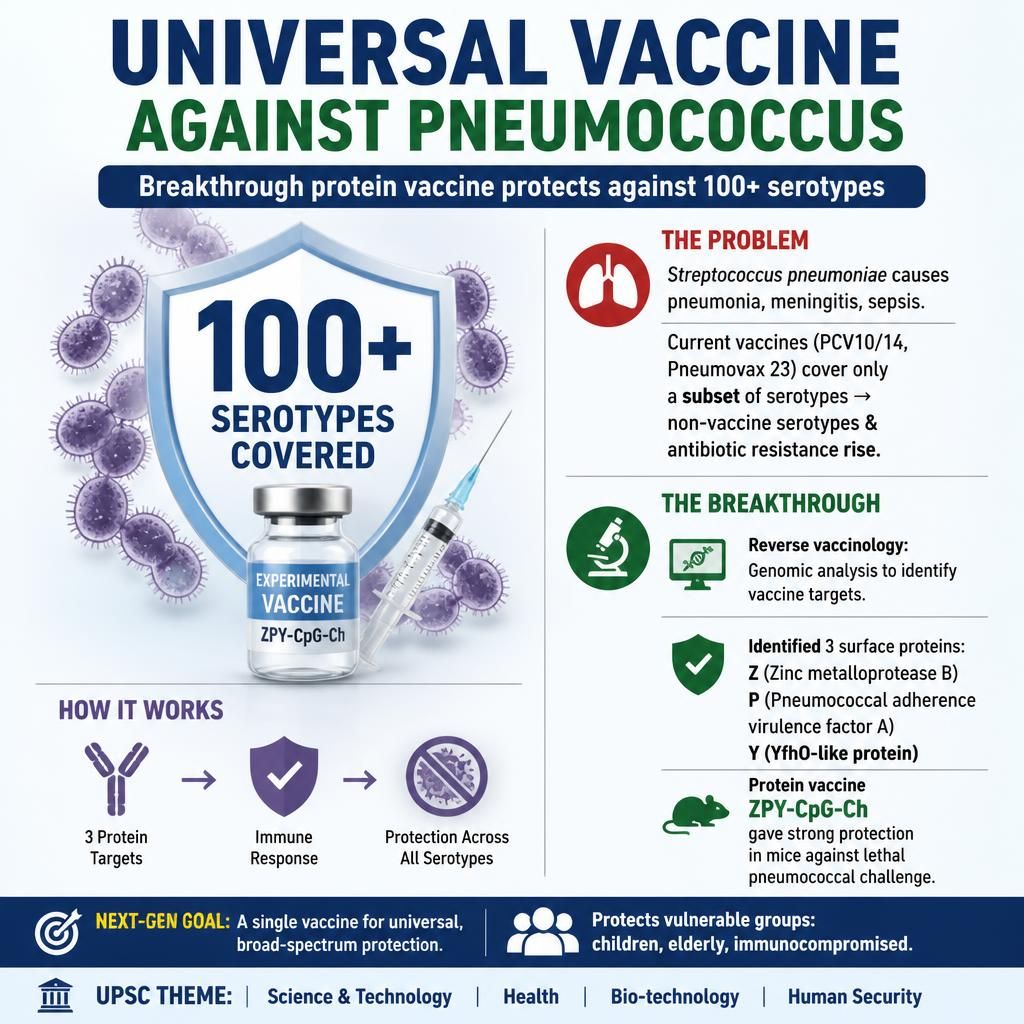
British scientists develop promising experimental universal vaccine (ZPY-CpG-Ch) against pneumonia and meningitis using reverse vaccinology, showing high efficacy in mice.
Practice MCQs
804 Students attempted
Key Highlights:
- Scientists are developing a universal vaccine against pneumococcal diseases caused by the bacterium Streptococcus pneumoniae, which has over a hundred different forms or serotypes.
- Current vaccines, such as Pneumovax 23 and pneumococcal conjugate vaccines (PCVs) like PCV10 and PCV14, protect against only a subset of these serotypes.
- A team of British scientists utilized reverse vaccinology to identify protein targets for a new vaccine approach.
- They developed an experimental protein-based vaccine, ZPY-CpG-Ch, which demonstrated significant protection against lethal doses of S. pneumoniae in laboratory mice.
Vaccine.jpg
Detailed Insights:
- Streptococcus pneumoniae can cause severe infections like pneumonia, meningitis, and sepsis, particularly when the immune system is weakened.
- Existing PCVs target specific capsular polysaccharides, but this can lead to the emergence of non-vaccine serotypes and increased antibiotic resistance.
- Reverse vaccinology is a modern vaccine development technique that uses computational analysis of a pathogen's genome to identify potential vaccine targets, bypassing traditional culture methods.
- The research team identified three surface proteins—zinc metalloprotease B (Z), pneumococcal adherence virulence factor A (P), and YfhO-like (Y)—as promising candidates for a universal vaccine.
- The experimental vaccine ZPY-CpG-Ch combines these proteins with immune response boosters, a synthetic DNA piece called CpG and a sugary polymer called chitosan.
- While ZPY-CpG-Ch protected mice from disease, it did not reduce the bacterial load in their upper respiratory passages, suggesting vaccinated individuals might still spread the infection.
- This research is considered a crucial initial step towards a universal vaccine that could offer broad protection against all S. pneumoniae serotypes and combat antibiotic resistance.
- Pneumococcal Conjugate Vaccines are included in India's Universal Immunisation Program to reduce mortality and morbidity in children.
Scientific/Technical Concepts Involved:
- Serotype: A distinct variation within a species of bacteria or virus, identified by its unique surface antigens.
- Capsular Polysaccharide: A sugary substance forming the outer layer of some bacteria, often used as an antigen in traditional vaccines.
- Reverse Vaccinology: A vaccine development method that uses bioinformatics to analyze pathogen genomes and identify potential vaccine targets.
- Pneumococcal Conjugate Vaccines (PCVs): Vaccines where bacterial polysaccharides are chemically linked to a carrier protein to enhance the immune response, especially in infants.

SuperKalam is your personal mentor for UPSC preparation, guiding you at every step of the exam journey.
Download the App


STUDY RESOURCES
CONTACT US
ⓒ Snapstack Technologies Private Limited