GS 2: GovernanceGS 2: Social JusticeGS 3: EconomyPrelimsGS 3: Indian Economy, Planning, Mobilization of Resources, Growth, Development and Employment
Mental health must anchor public health, Pg7
India must anchor mental health in public policy for Viksit Bharat 2047, addressing the 84.5% treatment gap through community care and financial protection.
Practice MCQs
804 Students attempted
Key Highlights:
- Mental health is identified as a critical anchor for achieving Viksit Bharat 2047 under the Healthcare for All pillar.
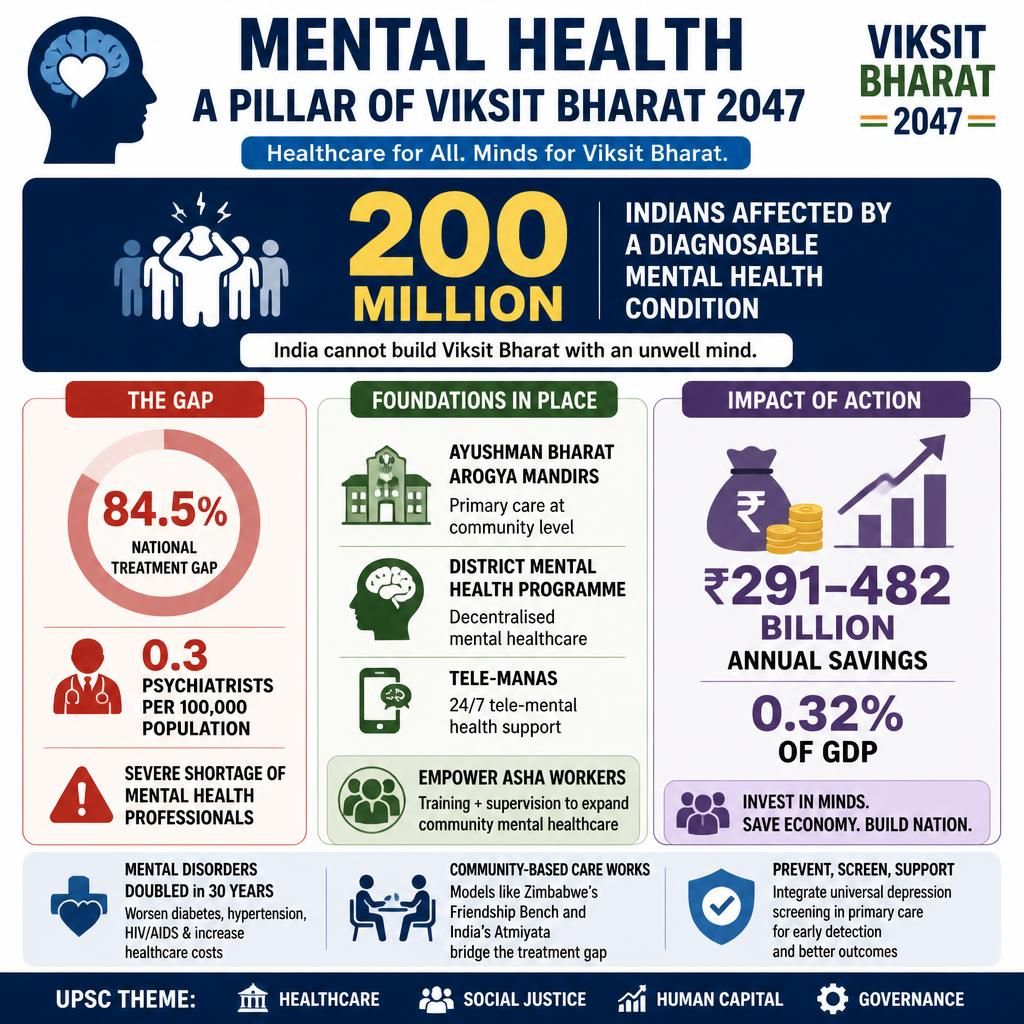
- Approximately 200 million Indians are affected by a diagnosable mental health condition, with a national treatment gap of 84.5%.
- India faces a severe shortage of mental health professionals, with only 0.3 psychiatrists per 100,000 population.
- Existing foundations include Ayushman Bharat Arogya Mandirs, the District Mental Health Programme, and Tele-MANAS.
- Integrating universal depression screening could generate annual savings of ₹291-482 billion, equivalent to 0.32% of GDP.
Mental Health.jpg
Detailed Insights:
- Mental disorders contribute significantly to India's total disease burden, having doubled over the past three decades.
- Mental health issues exacerbate chronic diseases like diabetes, hypertension, and HIV/AIDS, increasing overall healthcare expenditure.
- The government aims to strengthen Ayushman Bharat, expand primary healthcare, and promote preventive care, with mental health being a cross-cutting element.
- Empowering ASHA workers through appropriate training and supervision is crucial for expanding community mental healthcare access.
- Investing in community-based care models, such as Zimbabwe’s Friendship Bench and Atmiyata, can bridge the treatment gap, especially in rural areas.
- Financial protection needs strengthening by extending outpatient mental health benefits under Pradhan Mantri Jan Arogya Yojana and implementing the Mental Healthcare Act, 2017.
Key Concepts Involved:
- Viksit Bharat 2047: India's vision to become a developed nation by its 100th year of independence.
- Treatment Gap: The disparity between the number of people needing mental healthcare and those actually receiving it.
- ASHA Workers: Accredited Social Health Activists, community health workers facilitating healthcare access in rural areas.
- Insurance Parity: Ensuring mental health benefits are comparable to physical health benefits in insurance coverage.

SuperKalam is your personal mentor for UPSC preparation, guiding you at every step of the exam journey.
Download the App


STUDY RESOURCES
CONTACT US
ⓒ Snapstack Technologies Private Limited