GS 2: GovernanceGS 2: PolityGS 3: Internal SecurityPrelimsGS 2: Development Processes and Role of NGOs, SHGs and Other Stakeholders
Constitutional Faultlines in FCRA Bill, Pg8
New FCRA Bill sparks debate on state overreach, allowing provisional vesting and management of civil society assets, challenging constitutional proportionality.
Practice MCQs
804 Students attempted
Key Highlights:
- The Foreign Contribution (Regulation) Amendment Bill, 2026 seeks to regulate foreign contributions in India.
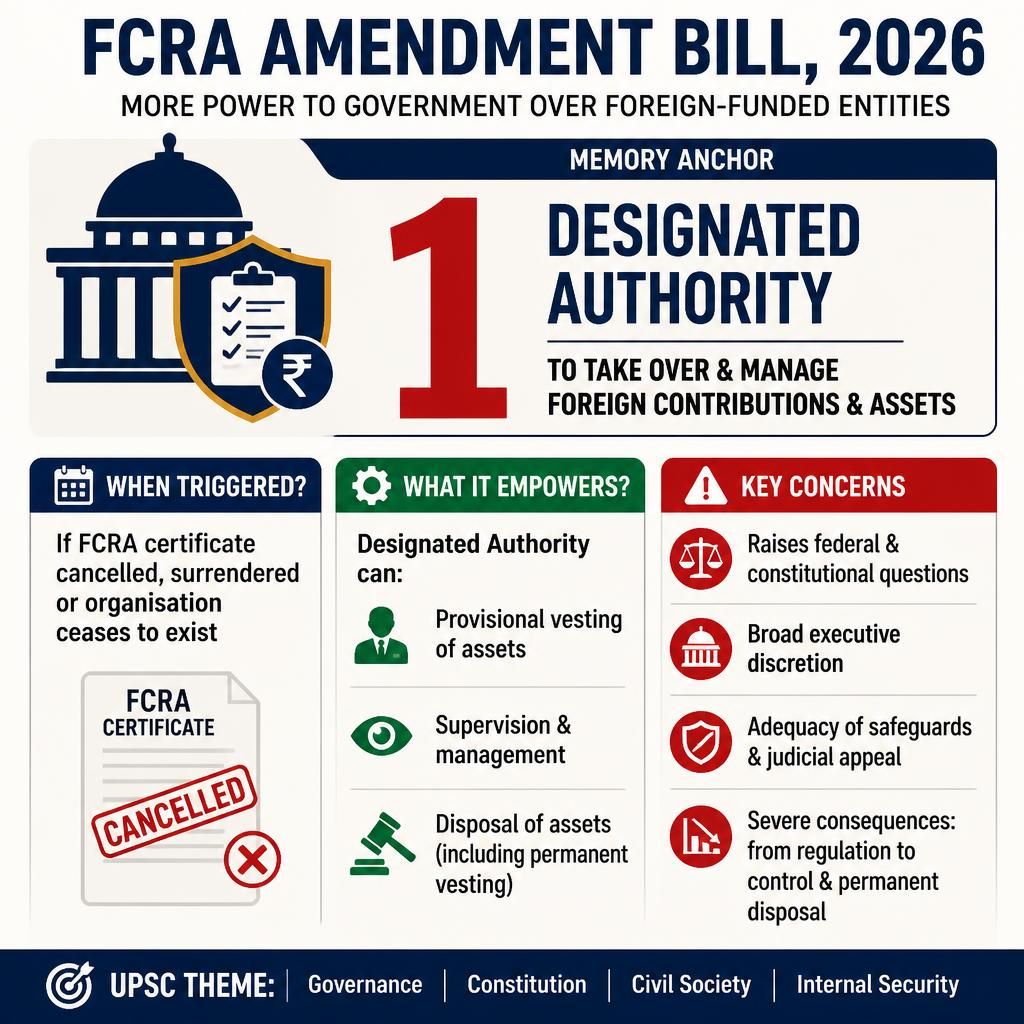
- The Bill introduces a Designated Authority for the provisional vesting, supervision, management, and disposal of foreign contributions and assets.
- If an organization's FCRA certificate is cancelled, surrendered, or ceases to exist, the Central government may appoint this authority.
- The proposed legislation expands statutory consequences, potentially allowing government management of institutional activities and permanent vesting of assets.
FCRA Amendment.jpg
Detailed Insights:
- The Bill raises constitutional questions regarding the extent of state intervention in the assets and activities of institutions receiving foreign funds.
- It moves beyond regulating foreign contributions to potentially exercising executive control over recipient organizations.
- The doctrine of constitutional proportionality is relevant, questioning if the state's means are reasonably connected and balanced with its legitimate objective.
- Concerns exist about the broad discretion delegated to the executive and the adequacy of safeguards for asset restoration and judicial appeal.
- The Bill could significantly increase the consequences of losing FCRA registration, extending to provisional management and potential permanent disposal of assets.
- This amendment is set against a backdrop where thousands of FCRA registrations have ceased operations in the past decade.
Key Concepts Involved:
- Foreign Contribution (Regulation) Act (FCRA): A law that regulates the acceptance and utilization of foreign contributions by individuals, associations, or companies in India.
- Designated Authority: A body proposed by the Bill to manage assets and activities of organizations whose FCRA registration is revoked or ceases.
- Doctrine of Constitutional Proportionality: A legal principle ensuring that state actions are proportionate to their legitimate objectives and do not excessively infringe on rights.

SuperKalam is your personal mentor for UPSC preparation, guiding you at every step of the exam journey.
Download the App


STUDY RESOURCES
CONTACT US
ⓒ Snapstack Technologies Private Limited