GS 2: GovernanceGS 2: PolityPrelimsGS 3: Major Crops, Cropping Patterns and Irrigation SystemsGS 2: Statutory, Regulatory and Quasi Judicial Bodies
Cauvery Needs a Distress-Sharing Pact, Pg12
Tamil Nadu opens Mettur Dam amidst Cauvery water dispute, highlighting urgent need for inter-state distress-sharing pact.
Practice MCQs
804 Students attempted
Key Highlights:
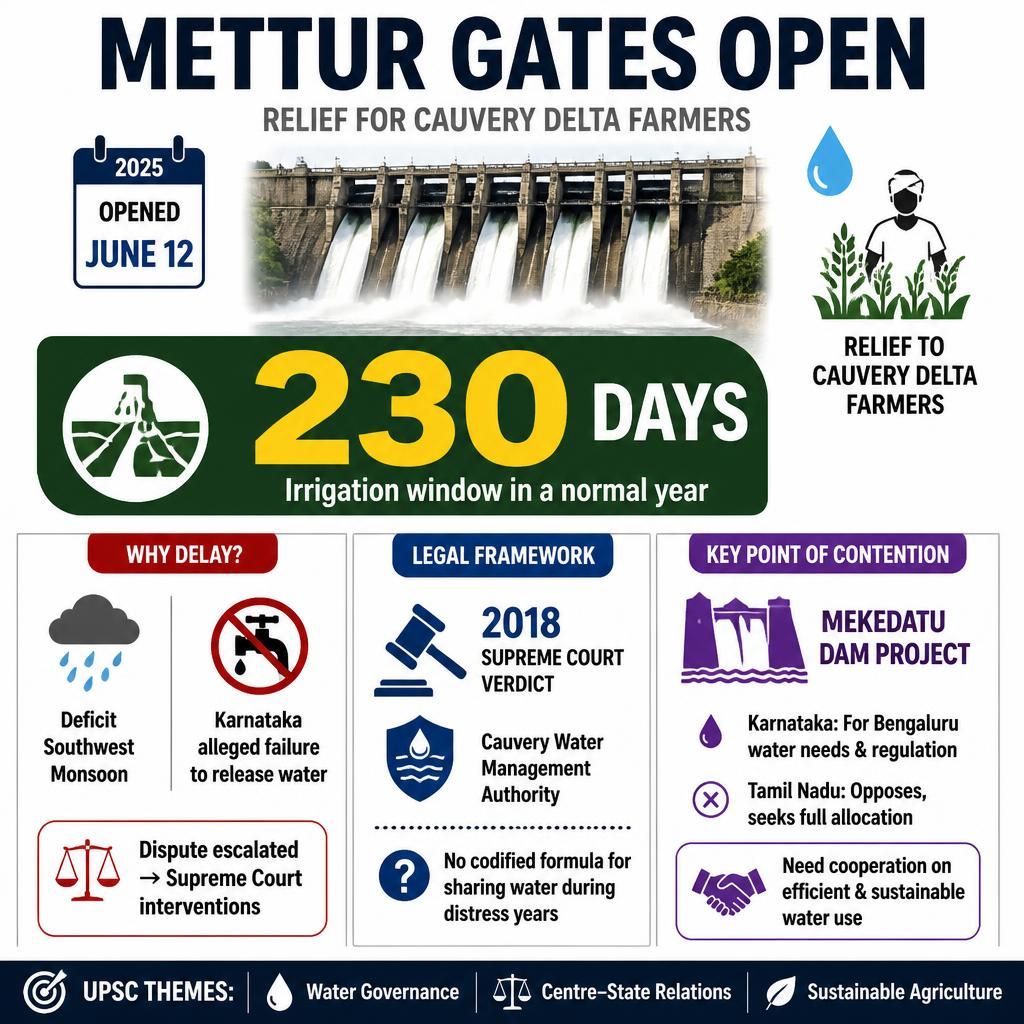
- The Mettur Dam sluice gates were opened by Tamil Nadu Chief Minister C Joseph Vijay, providing relief to Cauvery delta farmers.
- The opening was delayed this year due to a deficit in the southwest monsoon and Karnataka's alleged failure to release water.
- The long-standing water dispute between Tamil Nadu and Karnataka escalated, leading to interventions by the Supreme Court.
- The Cauvery Water Management Authority oversees the 2018 verdict but lacks a codified formula for water-sharing during distress years.
- Karnataka's proposed Mekedatu Dam project on the Cauvery River remains a significant point of contention.
Mettur Dam.jpg
Detailed Insights:
- In a normal year, the Mettur Dam opens on June 12, ensuring a 230-day irrigation window for the region.
- The 2018 Supreme Court verdict emphasized sustainable water use but did not provide a mechanism for sharing water during monsoon deficits.
- The dispute intensified in 2023, marking the first below-par monsoon year since the 2018 verdict.
- Tamil Nadu has indicated its intention to continue legal efforts to secure its allocated share of Cauvery waters.
- Karnataka asserts that the Mekedatu Dam would primarily address Bengaluru's water needs and improve water release regulation.
- The article suggests that riparian states should collaborate on efficient water use strategies rather than solely relying on judicial intervention.
- Proposed solutions include disincentivizing water-intensive crops and promoting decentralized water management.
Key Concepts Involved:
- Riparian states: States or regions located along the banks of a river, sharing its water resources.
- Cauvery Water Management Authority (CWMA): An institution established to implement the Supreme Court's directives regarding the sharing of Cauvery River waters.
- Mekedatu Dam: A proposed multi-purpose dam project by Karnataka on the Cauvery River, intended for drinking water and power generation.

SuperKalam is your personal mentor for UPSC preparation, guiding you at every step of the exam journey.
Download the App


STUDY RESOURCES
CONTACT US
ⓒ Snapstack Technologies Private Limited