GS 1: Physical GeographyGS 3: Disaster ManagementGS 3: Environment & EcologyPrelimsGS 3: Disaster and Disaster Management
What makes Kerala particularly vulnerable to landslides, Pg13
Kerala faces renewed devastating landslides and floods due to intense rainfall, offshore trough, and human interventions, highlighting its inherent vulnerability.
Practice MCQs
797 Students attempted
Key Highlights:
- Recent landslides, mudslides, and flooding in Kerala resulted in at least six fatalities and several missing persons.
- The India Meteorological Department (IMD) attributed the intense rainfall to an offshore trough extending from south Gujarat to Kerala, strong southwesterly winds, and a strong north-south pressure gradient.
- The widespread heavy rainfall occurred over a short period, exacerbated by the cumulative effect of preceding rainfall.
- Kerala's high vulnerability to landslides is concentrated along the Western Ghats, particularly in central and northern districts like Idukki, Wayanad, and Malappuram.
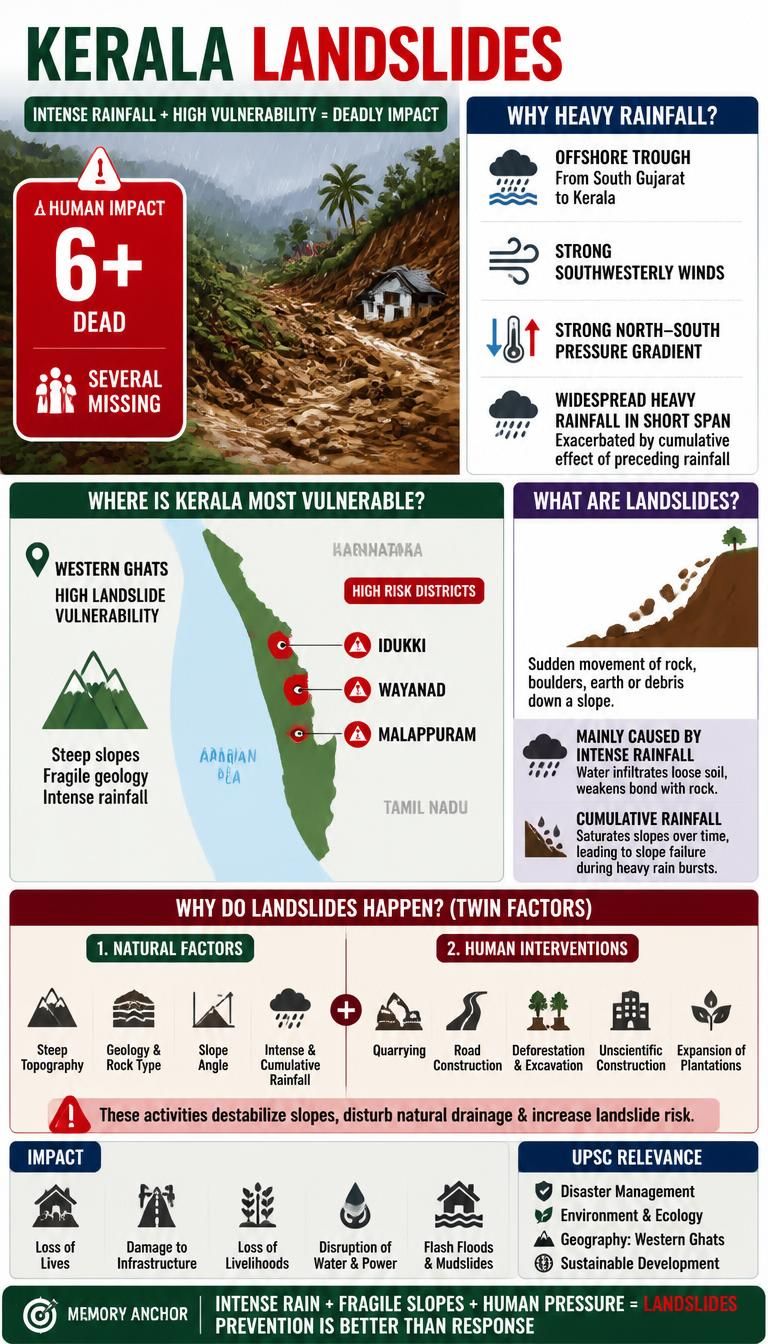
Kerala Landslides.jpg
Detailed Insights:
- Landslides are natural disasters characterized by the sudden movement of rock, boulders, earth, or debris down a slope.
- They are typically caused by a combination of conditioning factors such as soil topography, geology, and slope angles, and triggering factors like intense rainfall.
- Most landslides in India are rain-induced, where water infiltrates loose soil, weakening the bond with the underlying rock.
- Cumulative rainfall saturates slopes over time, making them highly susceptible to failure during subsequent bursts of heavy rain.
- Human interventions, including quarrying, road construction, and expansion of plantations, significantly destabilize slopes and disrupt natural drainage patterns.
- Unscientific construction, large-scale deforestation, excavation, and excessive infrastructure development are major anthropogenic contributors to increased landslide risk.
- The Western Ghats region, with its steep slopes, specific geological formations, and changing land use, is inherently prone to such events.
Key Concepts Involved:
- Landslide: A rapid downward movement of a mass of rock, debris, or earth down a slope, often triggered by heavy rainfall or seismic activity.
- Offshore trough: An elongated area of relatively low atmospheric pressure extending from the coast into the sea, influencing monsoon weather patterns.
- Western Ghats: A mountain range running parallel to the western coast of India, recognized as a biodiversity hotspot and an area prone to geological hazards.
- Anthropogenic activities: Human-induced actions that modify the natural environment, such as deforestation, mining, and construction, often exacerbating natural hazards.
Previous15/15

SuperKalam is your personal mentor for UPSC preparation, guiding you at every step of the exam journey.
Download the App


STUDY RESOURCES
CONTACT US
ⓒ Snapstack Technologies Private Limited