GS 2: International RelationsGS 3: EconomyPrelimsGS 3: Role of External State and Non State ActorsGS 2: Bilateral, Regional and Global Groupings and Agreements
As ceasefire teetered, Tehran plotted wider war via proxies, Pg2
Tehran secretly plotted wider war via proxies during ceasefire, escalating attacks on US allies and global markets in West Asia to pressure Washington.
Practice MCQs
797 Students attempted
Key Highlights:
- Recent drone attacks targeted a major Saudi oil facility and gas tankers at an Egyptian port near the Suez Canal, escalating tensions in West Asia.
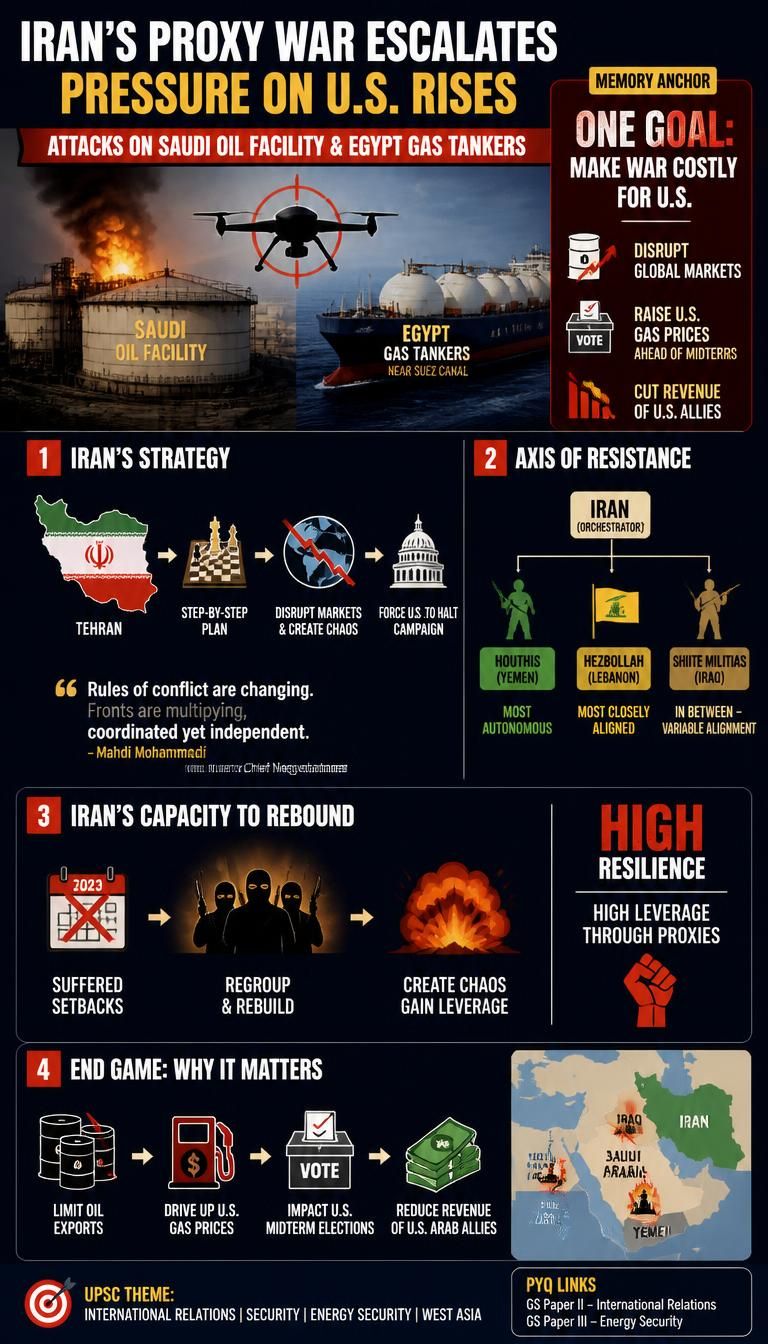
- Iran, through its network of proxy militias known as the Axis of Resistance, is orchestrating these attacks to pressure the United States.
- The strategy, devised during a brief ceasefire, aims to make the conflict costly for the U.S. and its allies.
- Senior Iranian officials confirmed the plan to use proxies to expand the war if U.S. assaults intensified.
Iran War.jpg
Detailed Insights:
- The attacks are part of a step-by-step plan by Iran to disrupt global markets and push the U.S. to halt its campaign against the Islamic Republic.
- Mahdi Mohammadi, a senior adviser to Iran’s chief negotiator, publicly stated that the rules of conflict are changing with multiplying, coordinated yet independent fronts.
- Despite suffering setbacks since 2023, Iran and its allies have demonstrated their capacity to regroup and create chaos, gaining leverage.
- The Houthis in Yemen are considered the most autonomous among Iran's proxies, while Hezbollah coordinates most closely with Tehran.
- Shiite militias in Iraq fall in between, showing varying degrees of willingness to act as a direct arm of Iran.
- A primary motivation for Iran is to limit oil exports from the region, aiming to drive up gas prices in the U.S. ahead of midterm elections and reduce revenue for Washington’s Arab allies.
Key Concepts Involved:
- Axis of Resistance: A network of Iran-backed militant groups and political factions in West Asia, including Hezbollah, Houthis, and various Iraqi Shiite militias.
- Proxy Warfare: A conflict instigated by major powers that do not themselves become directly involved, but rather use third parties to fight on their behalf.

SuperKalam is your personal mentor for UPSC preparation, guiding you at every step of the exam journey.
Download the App


STUDY RESOURCES
CONTACT US
ⓒ Snapstack Technologies Private Limited