GS 2: GovernanceGS 3: Science & TechnologyGS 3: Internal SecurityGS 3: EconomyPrelims
What does the Binance hack mean for investors?, Pg8
World's largest crypto exchange Binance hit by $6 billion cyberattack, raising alarms over digital asset security, state-sponsored hacking, and regulatory oversight.
Practice MCQs
811 Students attempted
Key Highlights:
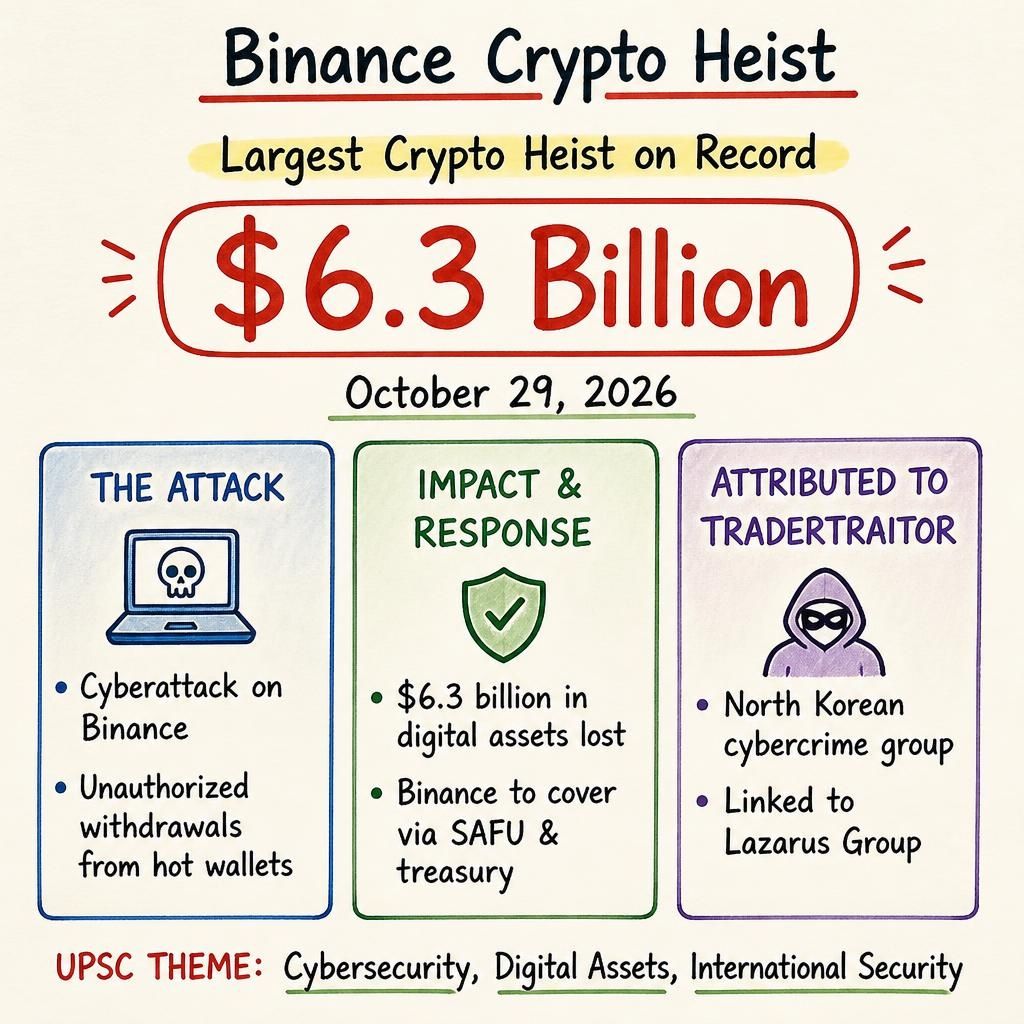
- On October 29, 2026, cryptocurrency exchange Binance suffered a cyberattack resulting in the loss of approximately $6.3 billion in digital assets, making it the largest crypto heist on record.
- Binance announced it would cover all stolen funds using its Secure Asset Fund for Users (SAFU) and corporate treasury.
- Approximately $3 billion of the stolen assets, primarily USDT and USDC stablecoins, were frozen on-chain through collaboration with stablecoin issuers and blockchain partners.
- Blockchain analytics firms Chainalysis and TRM Labs, along with the FBI, attributed the attack to TraderTraitor, a North Korean cybercrime group linked to the Lazarus Group.
Binance Crypto Hack.jpg
Detailed Insights:
- The hack, which occurred across ten blockchains, involved unauthorized withdrawal transactions from Binance's hot wallets.
- Initial investigations by Binance suggested a compromised DevOps engineer's laptop, though further inquiry revealed additional points of breach in a complex attack.
- Binance temporarily suspended withdrawals and engaged law enforcement and blockchain intelligence partners to trace and recover funds.
- The incident highlighted the tension between centralized control (freezing assets) and the decentralized ethos of some crypto advocates.
- This attack follows a 2023 settlement where the U.S. Treasury penalized Binance for failing to report suspicious transactions, complicating the exchange's operations.
- The TraderTraitor group, known for state-sponsored cyberattacks, has previously targeted other crypto exchanges, including the Bybit hack in 2025 and WazirX in 2024.
Key Concepts Involved:
- Cryptocurrency Exchange: A platform allowing users to trade digital currencies for other assets, such as fiat money or other cryptocurrencies.
- Stablecoin: A type of cryptocurrency designed to maintain a stable value by being pegged to a stable asset, typically a fiat currency like the U.S. dollar.
- Decentralised Crypto System: A system where control and decision-making are distributed across multiple participants rather than concentrated in a single central authority.
- Secure Asset Fund for Users (SAFU): An emergency reserve fund established by Binance to protect user assets in cases of security breaches or platform incidents.

SuperKalam is your personal mentor for UPSC preparation, guiding you at every step of the exam journey.
Download the App


STUDY RESOURCES
CONTACT US
ⓒ Snapstack Technologies Private Limited