GS 2: GovernanceGS 3: Science & TechnologyGS 3: Disaster ManagementPrelimsGS 3: Disaster and Disaster Management
Uttarakhand Helicopter Crash: The Factors Behind Recurring Air Accidents, Pg13
Uttarakhand helicopter crash exposes critical safety gaps in Himalayan pilgrimage aviation, raising concerns over regulatory oversight, challenging terrain, and commercial pressures.
Practice MCQs
811 Students attempted
Key Highlights:
- A helicopter crashed last week while returning from Badrinath to Dehradun, killing all six people on board, including the pilot.
- The incident occurred amid adverse weather conditions, highlighting safety risks in Uttarakhand's challenging flying environment.
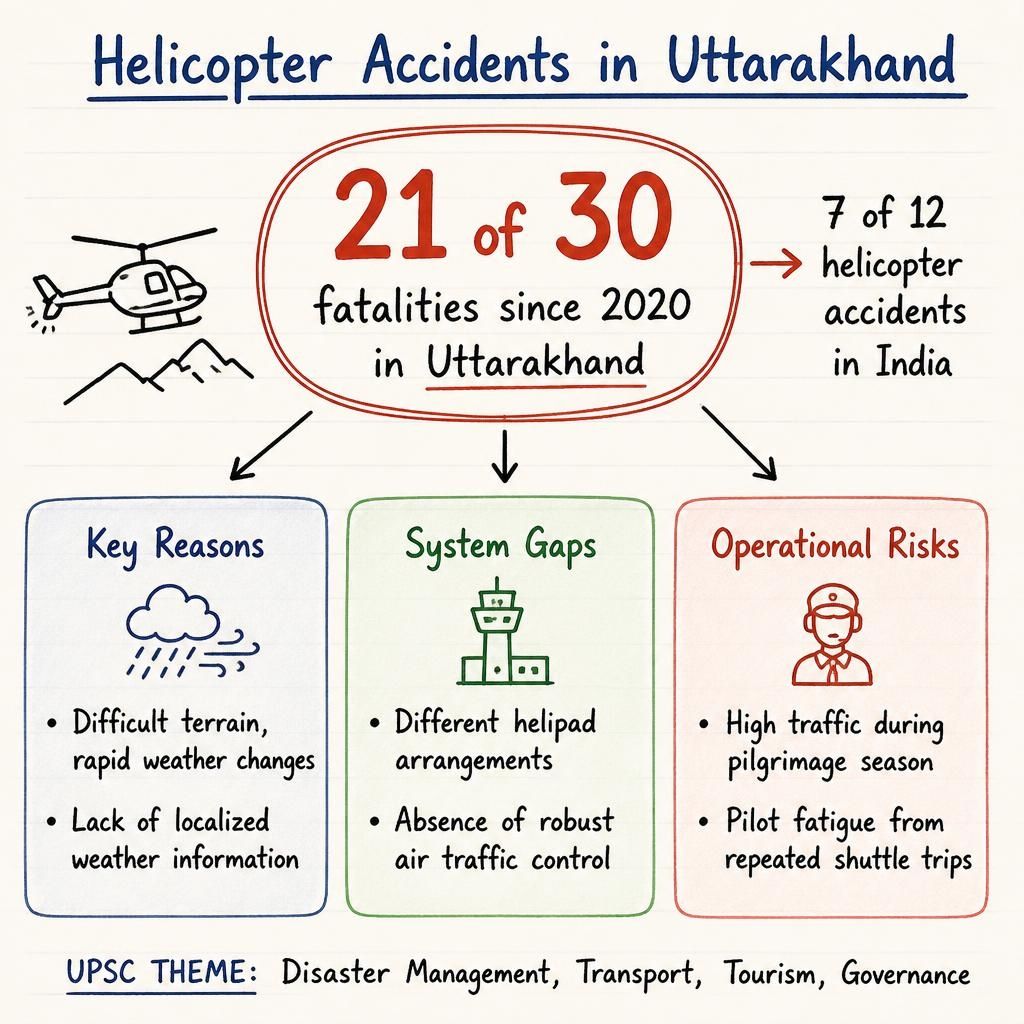
- Since 2020, Uttarakhand has accounted for 7 of the 12 helicopter accidents in India and 21 of the 30 fatalities.
- The accidents raise concerns about the safety of helicopter-based pilgrimage tourism, particularly for the Char Dham pilgrimage.
- Factors contributing to these incidents include difficult terrain, rapidly changing weather, and gaps in safety policy and implementation.
Helicopter Accidents.jpg
Detailed Insights:
- The Ministry of Civil Aviation reported the high incidence of helicopter accidents in Uttarakhand to Parliament in July 2025.
- Helicopter services by private firms have become crucial for Uttarakhand's religious tourism, offering quicker access to Himalayan temples.
- The concentration of flights during pilgrimage season, coupled with unpredictable mountain weather, poses significant operational challenges.
- Mountainous terrain causes sudden wind pattern changes and turbulence, alongside rapid shifts in visibility due to clouds, mist, and rain.
- A major concern is the lack of reliable, localized weather information, as general forecasts are insufficient for specific valley conditions.
- Unlike conventional airports, some helipads in remote mountainous areas operate under different arrangements, complicating air traffic management.
- The absence of robust air traffic control systems in the region has been questioned following multiple accidents.
- Commercial incentives lead to high traffic volumes during peak seasons, raising concerns about safety rules being compromised.
- Pilot fatigue, due to repeated shuttle trips during high-demand periods, is identified as a significant risk factor requiring proper monitoring.
Key Concepts Involved:
- Directorate General of Civil Aviation (DGCA): The statutory body regulating civil aviation safety in India.
- Union List: A list in the Seventh Schedule of the Indian Constitution, where aviation is a subject, giving the central government legislative power.
- Controlled Flight Into Terrain (CFIT): An accident where an airworthy aircraft, under pilot control, unintentionally flies into terrain or an obstacle.
Previous12/12

SuperKalam is your personal mentor for UPSC preparation, guiding you at every step of the exam journey.
Download the App


STUDY RESOURCES
CONTACT US
ⓒ Snapstack Technologies Private Limited