GS 2: GovernanceGS 1: Indian GeographyGS 3: Environment & EcologyGS 3: EconomyPrelims
In fertiliser sales dip, a lesson for policymakers, Pg10
El Niño-induced dry weather slashes fertiliser sales, threatening crop yields and escalating food inflation, urging urgent policy reforms and climate-smart agriculture.
Practice MCQs
811 Students attempted
Key Highlights:
- Sales of all fertilizers, including urea, declined in April-September 2026 compared to the same period in 2025, despite higher production and imports.
- This dip is primarily attributed to subdued farmer demand due to El Niño-induced dry weather conditions.
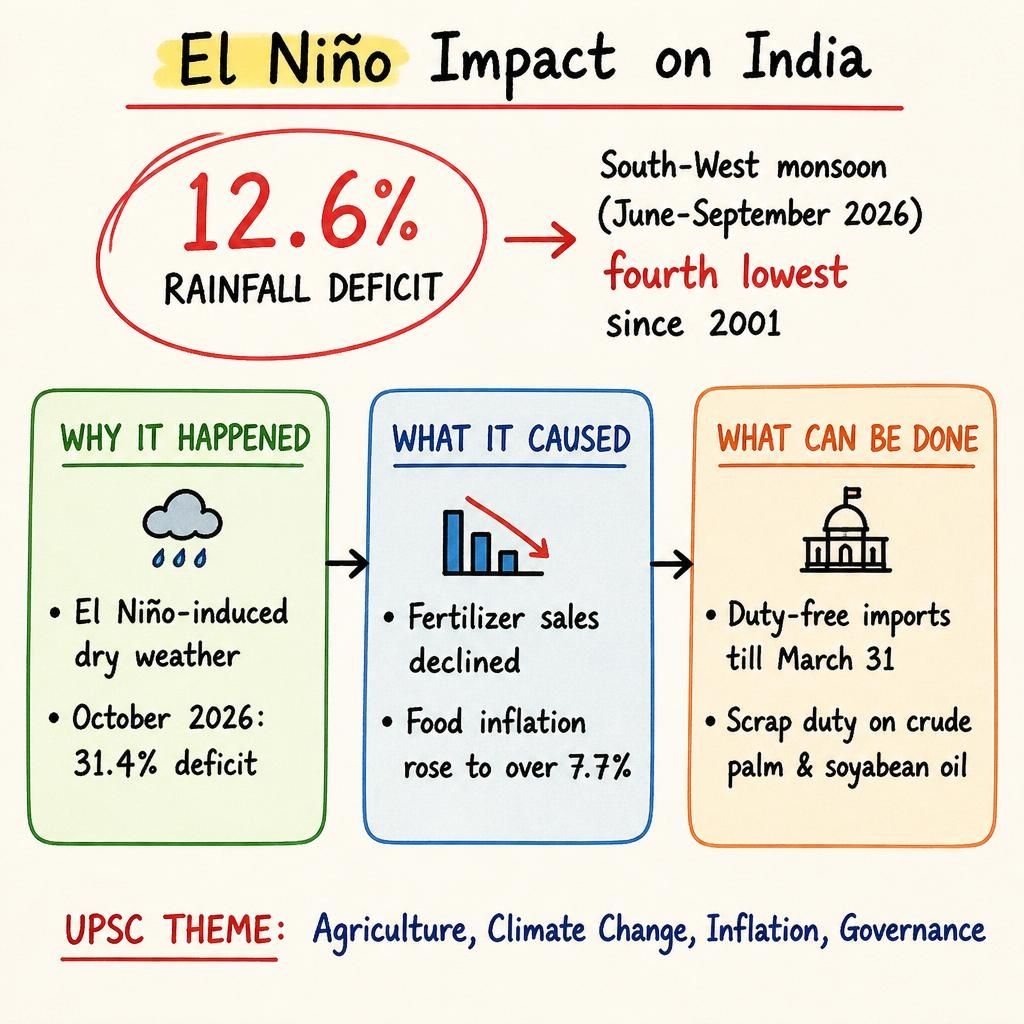
- India experienced a 12.6% rainfall deficit during the South-West monsoon season (June-September 2026), making it the fourth lowest since 2001.
- The reduced fertilizer application is expected to lead to lower Kharif crop yields and impact Rabi season sowings.
- Consumer food inflation rose from 4.2% to over 7.7% year-on-year between April and September 2026.
Fertiliser Impact.jpg
Detailed Insights:
- The rainfall deficit during the South-West monsoon was particularly severe in East, Northeast, and South India, with states like Karnataka experiencing its worst monsoon in 55 years.
- October 2026 also registered a 31.4% rainfall deficit, indicating an intensifying El Niño event, which is projected to persist through January-March 2027.
- Subpar precipitation and warmer winters due to El Niño are expected to negatively affect both acreage and yields of Rabi crops, with total Rabi sowing declining to 18.02 lakh hectares from 28.26 lakh hectares year-on-year.
- A previous strong El Niño from July 2023 to December 2024 also contributed to significant food inflation, averaging over 8.5%.
- Immediate government options to mitigate the impact include permitting duty-free imports of pulses (masoor, chana, yellow peas), raw sugar, and cotton until March 31.
- The government is also considering scrapping the basic customs duty on crude palm and soyabean oil to encourage imports and offset domestic production shortages.
- Long-term policy recommendations emphasize investing in climate-smart breeding and making farmers more efficient users of water, fertilizers, and energy.
- There is a call for a fundamental reordering of the current inefficient subsidy regime and fiscal priorities, recognizing climate change and geopolitical tensions as baseline realities.
Key Concepts Involved:
- El Niño: A climate pattern characterized by the unusual warming of surface waters in the eastern tropical Pacific Ocean, often leading to altered global weather patterns.
- Kharif crops: Crops sown during the monsoon season (June-July) and harvested in autumn (September-October), heavily dependent on rainfall.
- Rabi crops: Crops sown in winter (October-November) and harvested in spring (March-April), requiring adequate soil moisture and irrigation.
- Food inflation: The rate at which the price of food items increases over a period of time, impacting household purchasing power.
- Subsidy regime: A system of government financial support provided to specific industries or groups, often criticized for fiscal burden and market distortions.

SuperKalam is your personal mentor for UPSC preparation, guiding you at every step of the exam journey.
Download the App


STUDY RESOURCES
CONTACT US
ⓒ Snapstack Technologies Private Limited