GS 2: GovernanceGS 2: PolityGS 2: International RelationsGS 3: EconomyPrelims
Sri Lanka: chasing system change, Pg12
Sri Lanka's new government, two years after economic collapse, grapples with reforms, austerity, and public expectations for fundamental "system change."
Practice MCQs
804 Students attempted
Key Highlights:
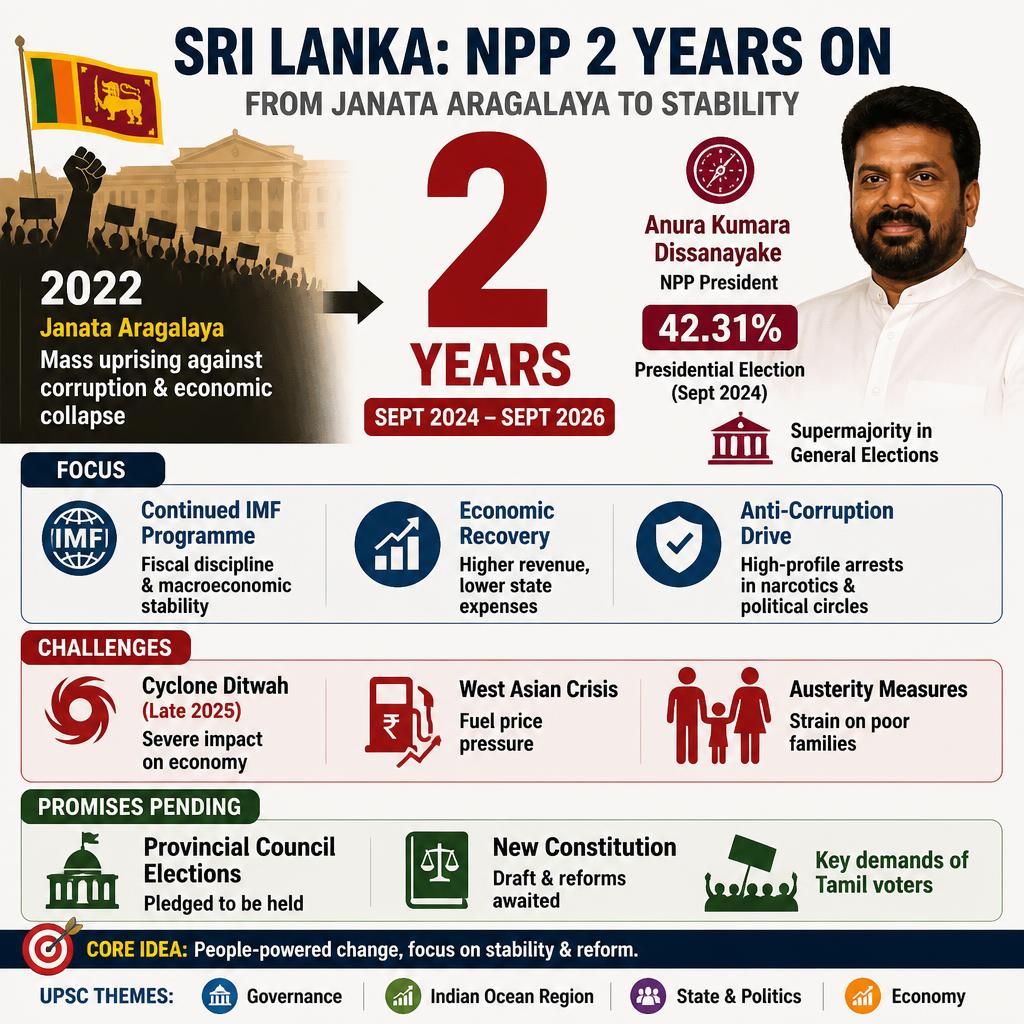
- Sri Lanka experienced a mass uprising, the Janata Aragalaya, in 2022, demanding the resignation of then-President Gotabaya Rajapaksa and "system change."
- Anura Kumara Dissanayake of the National People's Power (NPP) coalition was elected President in September 2024, securing 42.31% of votes, followed by a supermajority in general elections.
- President Dissanayake completed two years in office in September 2026, focusing on economic stability and recovery.
- The NPP government continued with the International Monetary Fund (IMF) program, prioritizing fiscal discipline and macroeconomic stability.
- The administration faced significant challenges, including Cyclone Ditwah in late 2025 and the impact of the West Asian crisis on fuel prices.
Sri Lanka.jpg
Detailed Insights:
- The Janata Aragalaya reflected widespread frustration with the Rajapaksa clan and the entire political class, driven by economic bankruptcy and acute shortages.
- Ranil Wickremesinghe served as an interim president after Rajapaksa's resignation, with varied public reactions to his leadership.
- Anura Kumara Dissanayake's campaign resonated with voters seeking to change the "corrupt political system," offering an alternative to traditional political parties.
- The NPP government has pursued an anti-corruption drive, leading to high-profile arrests of individuals in the narcotics underworld and politicians/bureaucrats.
- Economic policies under the NPP have included strict adherence to IMF targets, leading to increased revenue and reduced state expenses, but also austerity measures impacting poor families.
- Key pending promises include conducting Provincial Council elections and drafting a new constitution, which were significant pledges to Tamil voters.
- The government's efforts to reform legislation, such as the proposed replacement for the Prevention of Terrorism Act, have drawn criticism for not meeting international human rights standards.
- Political analysts view the NPP government as one of "good governance" rather than transformative, noting a missed opportunity to address structural democratic issues.
Key Concepts Involved:
- Janata Aragalaya: A mass uprising or "people's struggle" in Sri Lanka, primarily in 2022, protesting economic crisis and political corruption.
- Executive Presidency: A system of government where the president holds significant executive power, often criticized for its potential for authoritarianism.
- International Monetary Fund (IMF) Programme: A financial assistance package provided by the IMF to countries facing economic crises, typically with conditionalities for fiscal and structural reforms.
- Fiscal Discipline: A government policy focused on controlling public spending, reducing budget deficits, and managing national debt to ensure economic stability.

SuperKalam is your personal mentor for UPSC preparation, guiding you at every step of the exam journey.
Download the App


STUDY RESOURCES
CONTACT US
ⓒ Snapstack Technologies Private Limited