GS 3: EconomyPrelims
July gross GST mop-up grows 15.4% to over Rs 2.11 lakh cr, Pg 13
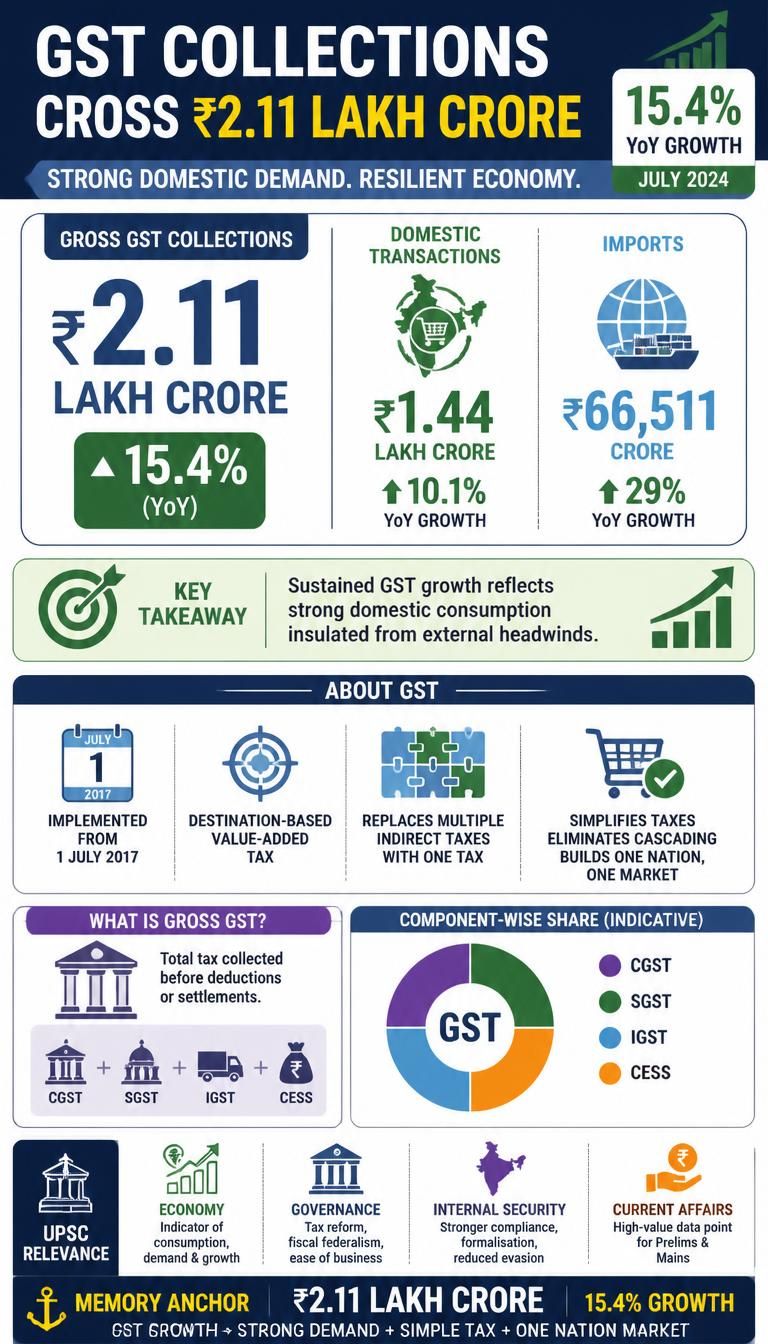
India's Goods and Services Tax (GST) collections rose 15.4% year-on-year to over ₹2.11 lakh crore in July 2026, reflecting robust economic activity.
Practice MCQs
790 Students attempted
Key Highlights:
- India's Goods and Services Tax (GST) collections rose 15.4% year-on-year to over ₹2.11 lakh crore in July 2026, reflecting robust economic activity.
- Growth was driven by higher domestic transactions, which increased 10.1%, and imports, which grew 25.9% over the previous year.
- The July GST collection surpassed ₹1.95 lakh crore recorded in the same month last year, continuing the trend of strong indirect tax revenues.
- The government attributed the higher collections to sustained consumption, resilient economic activity and improved tax compliance.
GST.jpg
Detailed Insights:
- Strong GST collections indicate healthy consumption demand, improved formalisation of the economy and better tax administration.
- Higher revenues from imports may reflect increased imports of finished goods and raw materials, as well as the impact of a relatively weaker rupee.
- Growth in domestic GST collections has remained broad-based despite global economic uncertainties and external headwinds.
- Consistent GST buoyancy strengthens government finances by providing greater fiscal space for public expenditure and infrastructure investment.
- The sustained rise in GST collections also reflects the increasing use of technology-driven compliance measures, including e-invoicing and data analytics.
Key Concepts Involved:
- Goods and Services Tax (GST): A destination-based indirect tax levied on the supply of goods and services across India.
- GST Collection: The total indirect tax revenue collected under the GST regime from domestic transactions and imports.
- E-invoicing: A system that electronically authenticates business invoices to improve GST compliance and reduce tax evasion.
- Tax Buoyancy: The responsiveness of tax revenue growth to growth in economic activity.

SuperKalam is your personal mentor for UPSC preparation, guiding you at every step of the exam journey.
Download the App


STUDY RESOURCES
CONTACT US
ⓒ Snapstack Technologies Private Limited