GS 3: Disaster ManagementPrelims
A call for disaster drills for Indians, Pg 11
India must institutionalise disaster preparedness through regular mock drills as extreme weather events become more frequent and intense.
Practice MCQs
790 Students attempted
Key Highlights:
- The article argues that India must institutionalise disaster preparedness through regular mock drills as extreme weather events become more frequent and intense.
- It highlights that heatwaves, floods, cyclones and cloudbursts now affect large parts of the country, making disaster readiness a public necessity rather than an emergency response.
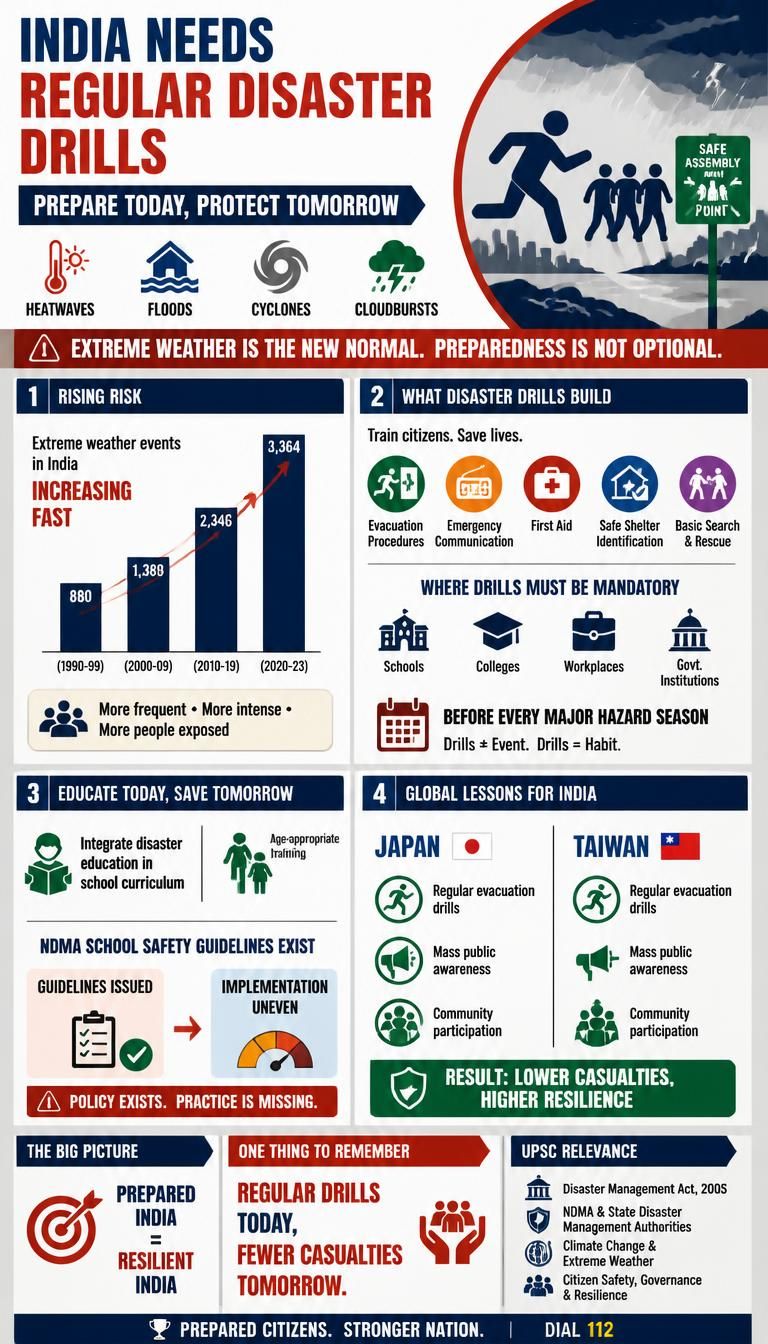
- The author recommends mandatory disaster drills in schools, colleges, workplaces and government institutions before every major hazard season.
- Community awareness, early warning dissemination and practical emergency training are identified as critical to reducing casualties during disasters.
Drills.jpg
Detailed Insights:
- Climate change has increased the frequency and intensity of extreme weather events, while rapid urbanisation has heightened people's exposure to disaster risks.
- Disaster drills should train citizens in evacuation procedures, emergency communication, first aid, safe shelter identification and basic search-and-rescue skills.
- Schools should integrate disaster education into the curriculum, with age-appropriate training so children learn safety practices from an early age.
- The article notes that although the National Disaster Management Authority (NDMA) has issued school safety guidelines, implementation of regular drills remains uneven across states.
- Examples from Japan and Taiwan demonstrate how periodic evacuation drills, public awareness and community participation improve resilience during earthquakes, tsunamis and other disasters.
- Strengthening local governance through Gram Panchayats, Urban Local Bodies (ULBs) and district authorities can build a culture of preparedness and enable faster emergency response.
Key Concepts Involved:
- Disaster Risk Reduction (DRR): Measures aimed at preventing or minimising disaster risks and reducing vulnerability to hazards.
- National Disaster Management Authority (NDMA): India's apex body responsible for disaster management policies, guidelines and preparedness.
- Mock Drill: A simulated emergency exercise conducted to test preparedness, coordination and response mechanisms.
- Early Warning System: A mechanism that detects hazards in advance and provides timely alerts to minimise loss of life and property.

SuperKalam is your personal mentor for UPSC preparation, guiding you at every step of the exam journey.
Download the App


STUDY RESOURCES
CONTACT US
ⓒ Snapstack Technologies Private Limited