GS 2: GovernanceGS 2: International RelationsGS 3: EconomyPrelimsGS 3: Effects of Liberalization on the Economy
Rupee Slide: Panic Is No Policy, Pg16
Amidst rapid rupee depreciation, RBI's proposed LRS restrictions face criticism for being a panic-driven, bureaucratic response lacking a coherent strategy.
Practice MCQs
804 Students attempted
Key Highlights:
- The Indian Rupee depreciated by almost 7% in the last 12 months, falling from 88.84 to 94.95 against the US dollar.
- The Reserve Bank of India (RBI) proposed drastic measures under the Liberalised Remittance Scheme (LRS) to control dollar outflows.
- Proposed LRS changes include disallowing resident individuals from buying foreign real estate and shares, and reducing the current account transaction limit to $50,000 from $250,000 annually.
- The government advised citizens to reduce fuel consumption, avoid gold purchases, and postpone overseas travel to conserve dollars.
- RBI sold an estimated $75-80 billion between June and October to defend the rupee and hiked policy rates.
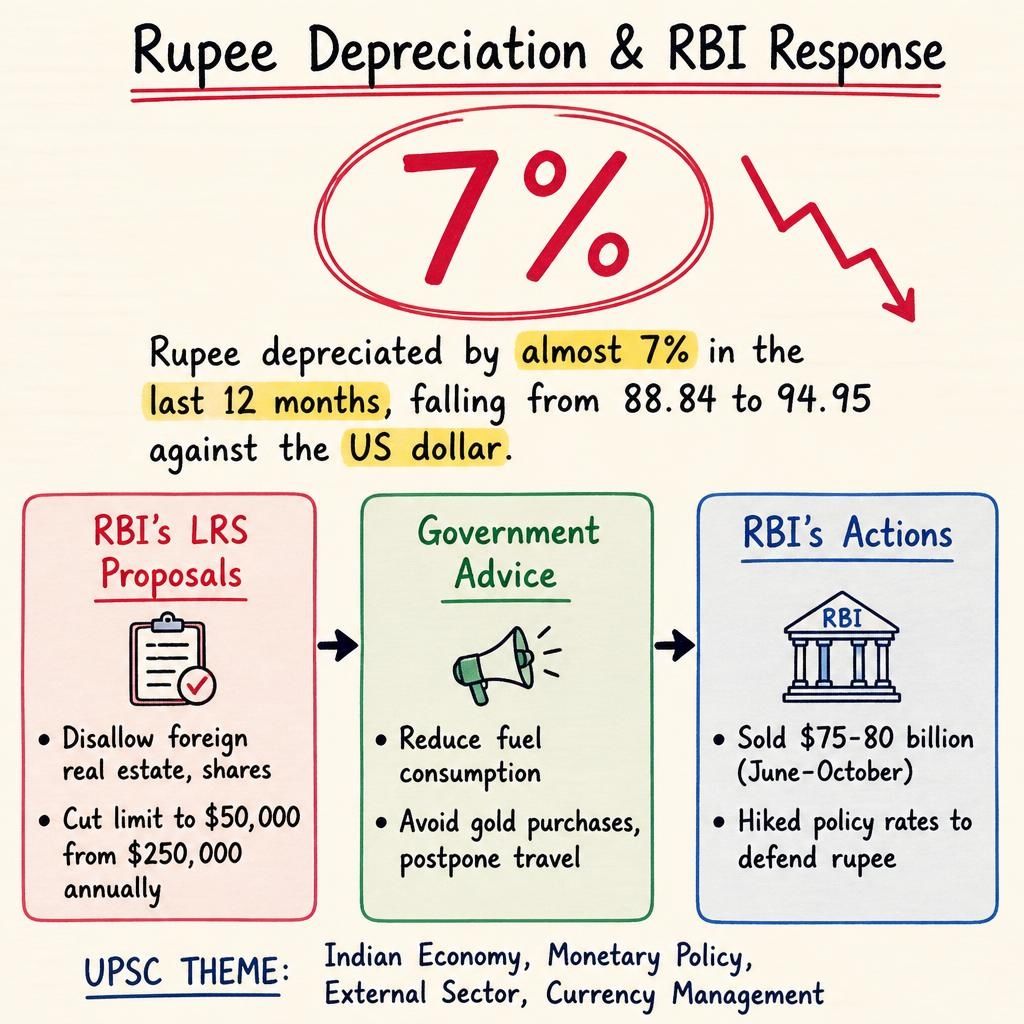
Rupee Depreciation.jpg
Detailed Insights:
- Rupee depreciation significantly increases the cost of imports, such as crude oil and gold, and makes foreign travel and education more expensive.
- Global financial instability, driven by high crude oil prices exceeding $115 a barrel and ongoing geopolitical conflicts, contributes to the rupee's fall.
- Rising US government borrowing leads to higher US bond yields, making the US dollar more attractive and drawing capital away from emerging markets.
- The yield difference between 10-year US bonds (around 5%) and Government of India bonds (around 7.5%) is at a two-decade low.
- India's macroeconomic fundamentals are robust with strong growth and controlled inflation, but concerns persist regarding private sector investment and job creation.
- India's foreign exchange reserves stand at a comfortable $720 billion, despite significant dollar sales by the RBI to stabilize the currency.
- The RBI also increased key policy rates, aiming to make rupee-denominated assets more appealing to foreign investors.
Key Concepts Involved:
- Liberalised Remittance Scheme (LRS): A facility allowing resident individuals to remit money abroad for various permissible current and capital account transactions up to a specified limit.
- Foreign Exchange Reserves: Assets held by a central bank in foreign currencies, used to back liabilities, influence monetary policy, and manage exchange rates.
- Foreign Direct Investment (FDI): An investment made by a firm or individual in one country into business interests located in another country.
- Foreign Portfolio Investment (FPI): Investment by foreign entities in financial assets like stocks and bonds in a foreign country, without gaining control of the company.

SuperKalam is your personal mentor for UPSC preparation, guiding you at every step of the exam journey.
Download the App


STUDY RESOURCES
CONTACT US
ⓒ Snapstack Technologies Private Limited