GS 3: Science & TechnologyPrelimsGS 3: BiotechnologyGS 3: Science and Technology in Everyday LifeGS 2: Health Sector
Gene Therapy Aims for a Cure by Silencing Hepatitis B DNA, Pg13
Scientists develop novel gene therapy using epigenetic control to silence hepatitis B viral DNA, offering a promising path to a lasting functional cure.
Practice MCQs
804 Students attempted
Key Highlights:
- Scientists have developed a new gene therapy, CRMA-1001, for Hepatitis B, reported in Nature Biomedical Engineering.
- The therapy aims for a functional cure by silencing the viral DNA through epigenetic control, rather than directly targeting the virus.
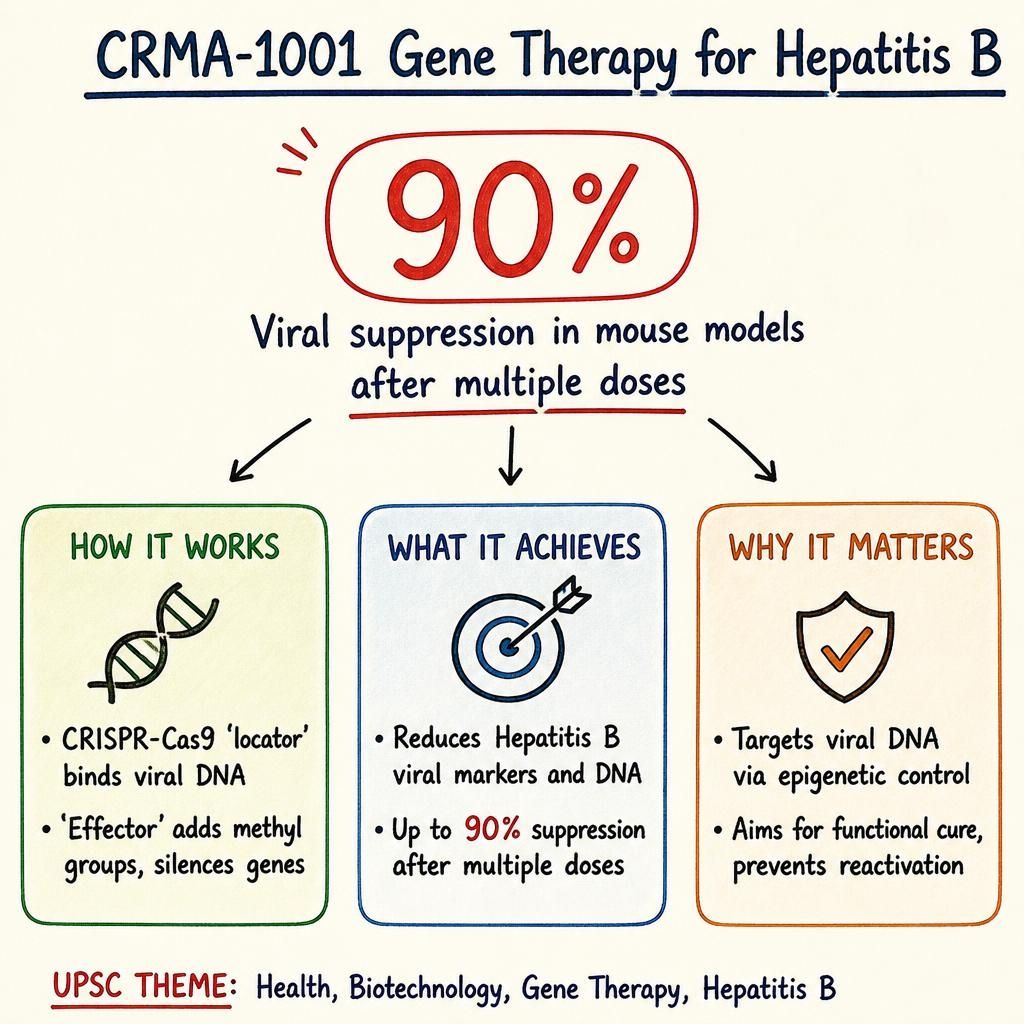
- CRMA-1001 utilizes a CRISPR-Cas9 based 'locator' to target viral DNA and an 'effector' to add methyl groups, delivered via an mRNA platform.
- In mouse models, the treatment significantly reduced Hepatitis B viral markers and DNA levels, achieving up to 90% suppression after multiple doses.
- This approach offers a potential solution to the virus's ability to rebound from current treatments that do not eliminate its DNA.
Gene Therapy.jpg
Detailed Insights:
- Current treatments for Hepatitis B often fail to eliminate the viral DNA, allowing the virus to persist silently in liver cells and reactivate later.
- The virus can 'hide' from the immune system by methylating cytosines in its DNA, which silences its genes and prevents new virus production.
- CRMA-1001 specifically targets and methylates the viral genome, preventing the cell's machinery from reading the viral genes.
- The 'locator' component of CRMA-1001 uses CRISPR-Cas9 to precisely identify and bind to a specific sequence within the viral DNA.
- The 'effector' component then adds methyl groups to nearby cytosines and includes proteins that help switch off the viral genes.
- A functional cure implies that the virus is thoroughly suppressed to undetectable levels, eliminating active disease signs, even if the viral DNA remains present.
- An ongoing Phase I/II clinical trial is further investigating the long-term effects and potential for viral reactivation of CRMA-1001.
Scientific/Technical Concepts Involved:
- Epigenetic Control: Changes in gene activity that do not involve alterations to the underlying DNA sequence.
- DNA Methylation: A biochemical process where a methyl group is added to a DNA base, typically cytosine, often leading to gene silencing.
- CRISPR-Cas9: A powerful gene-editing tool that allows precise targeting and modification of specific DNA sequences.
- mRNA Platform: A technology that delivers messenger RNA into cells, instructing them to produce specific proteins for therapeutic purposes.
- Functional Cure: A state in chronic viral infections where the virus is suppressed to undetectable levels, and the patient shows no active disease symptoms.

SuperKalam is your personal mentor for UPSC preparation, guiding you at every step of the exam journey.
Download the App


STUDY RESOURCES
CONTACT US
ⓒ Snapstack Technologies Private Limited